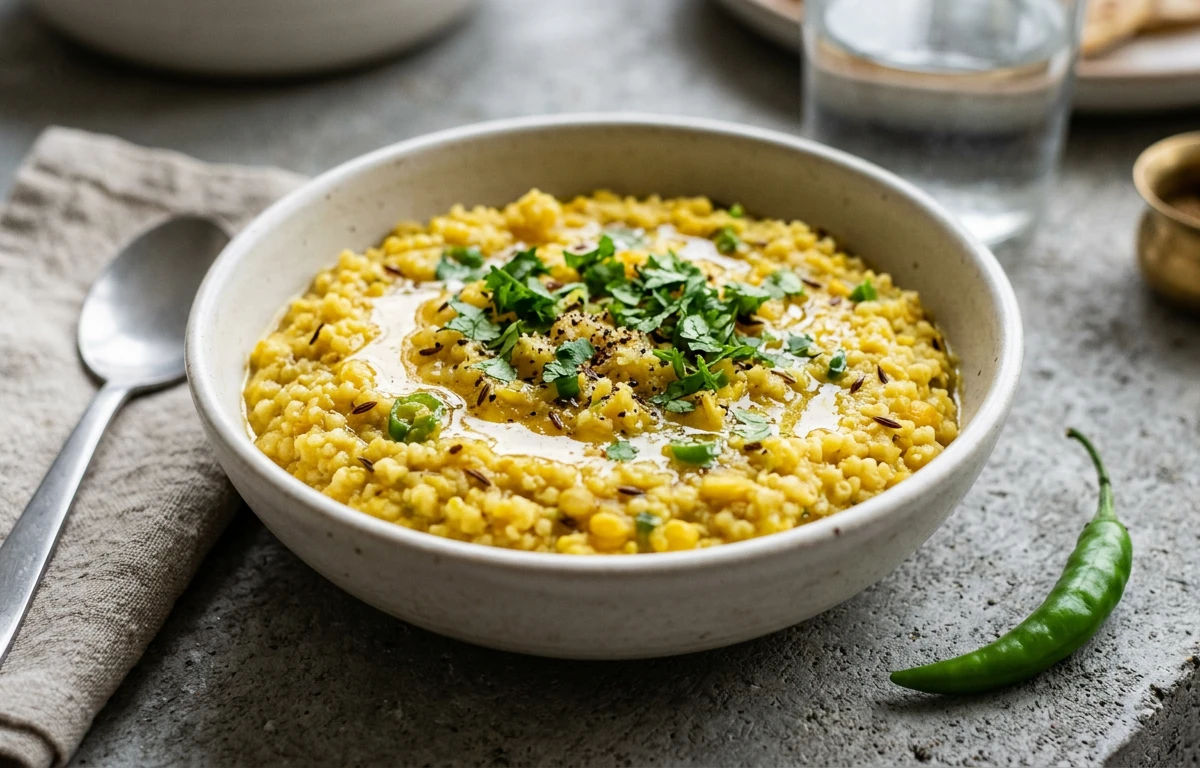
Simple Millet & Lentil Khichdi
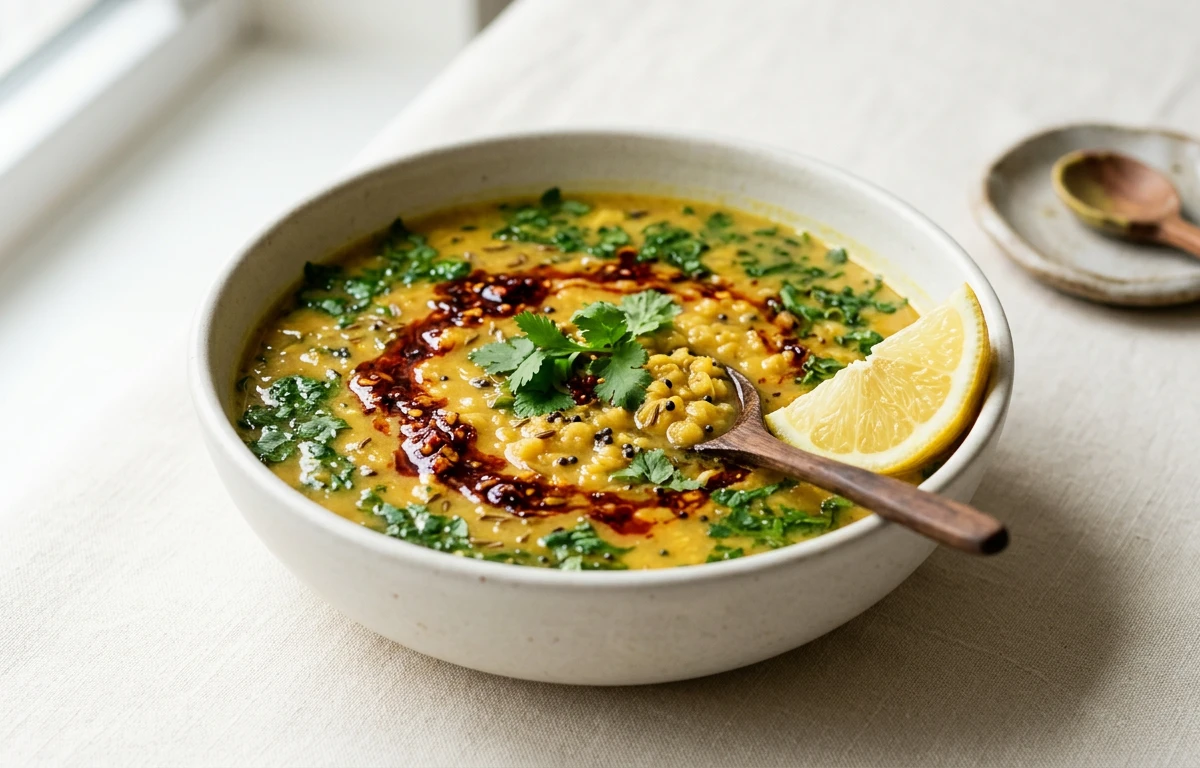
A warm, comforting one-pot meal made with earthy pearl millet and split yellow lentils, gently spiced with cumin and turmeric. This khichdi is soft, lightly creamy, and incredibly easy to digest — perfect for a light lunch or a cozy dinner. Ready in under 30 minutes with minimal prep.
For 4 servings
- prep
Soak and prep the grains.
1.Soak bajra in 2 cups of water for 30 minutes, then drain.2.Wash moong dal 2-3 times in fresh water until the water runs clear.3.Finely chop the ginger and slit the green chili.TIPSoaking bajra softens the grain and helps it cook evenly with the lentils. - temper · ~1 min
Make the tempering.
1.Heat 1 tbsp ghee in the pressure cooker over medium heat.2.Add cumin seeds and let them splutter for 30 seconds.3.Add hing, turmeric powder, chopped ginger, and green chili. Sauté until fragrant, about 30 seconds.TIPKeep the heat medium — high heat burns the cumin and makes the dish bitter. - mix
Combine everything in the cooker.
1.Add the drained bajra and washed moong dal to the cooker.2.Pour in 5 cups of water and add salt.3.Stir well to combine everything evenly. - pressure cook · ~15 min
Pressure cook the khichdi.
Close the lid and cook on medium-high heat until the first whistle. Lower the heat and cook for 3 more whistles. Turn off the heat and let the pressure release naturally.
TIPNatural release is key — it lets the millet finish cooking gently and absorb all the flavors. - mix
Mash and adjust consistency.
Open the cooker once the pressure drops. Mash the khichdi lightly with the back of a ladle. If too thick, stir in 0.25 to 0.5 cup of hot water to reach a soft, porridge-like consistency.
- garnish
Finish and serve.
1.Drizzle the remaining 1 tsp ghee on top.2.Sprinkle with fresh chopped coriander leaves.3.Serve hot with a side of yogurt or pickle.
What to keep in mind.
7 tips from the recipe — small details that make a real difference to the final dish.
- 1Soak the bajra for at least 30 minutes to ensure even cooking and a soft texture.
- 2Natural pressure release is essential — don't force it, or the millet may turn chewy.
- 3Adjust the consistency after cooking: add hot water for a looser, porridge-like khichdi.
- 4Use a light hand when mashing; you want some grain texture, not a paste.
- 5For deeper flavor, toast the cumin in ghee just until it splutters — do not burn.
- 6Make ahead: khichdi thickens as it sits; reheat with a splash of hot water to revive.
- 7Serve with a squeeze of lemon and a dollop of ghee for the classic finish.
Adapt it for your goals.
Vegan
Replace ghee with coconut oil or a neutral vegetable oil for the tempering and finish — perfect for a plant-based diet without sacrificing the warm, comforting flavor.
low spiceLow-spice
Skip the green chili and use only a pinch of turmeric and cumin — ideal for those with a sensitive palate or for feeding young children.
protein packedProtein-packed
Add a handful of chopped spinach or a small diced carrot along with the grains for extra fiber, color, and nutrients without altering the cooking time.
Why this is on our healthy list.
Gut-Friendly Fiber
Pearl millet (bajra) and yellow lentils (moong dal) both provide soluble fiber, which supports healthy digestion and helps maintain steady energy levels.
Rich in Plant Protein
The combination of millet and lentils creates a complete protein source, making this a satisfying and nutritious meal for vegetarians.
Naturally Gluten-Free
Bajra is a naturally gluten-free grain, and moong dal is a legume — this dish is suitable for those with gluten sensitivities or celiac disease.
Anti-Inflammatory Spices
Turmeric and ginger are known for their anti-inflammatory properties, while asafoetida (hing) aids digestion and reduces bloating.
Frequently asked questions
Yes, but cooking time and water ratio may differ. Pearl millet is starchier and creates a creamier texture; other millets like foxtail or finger millet will work but may need a bit more water or longer cooking.