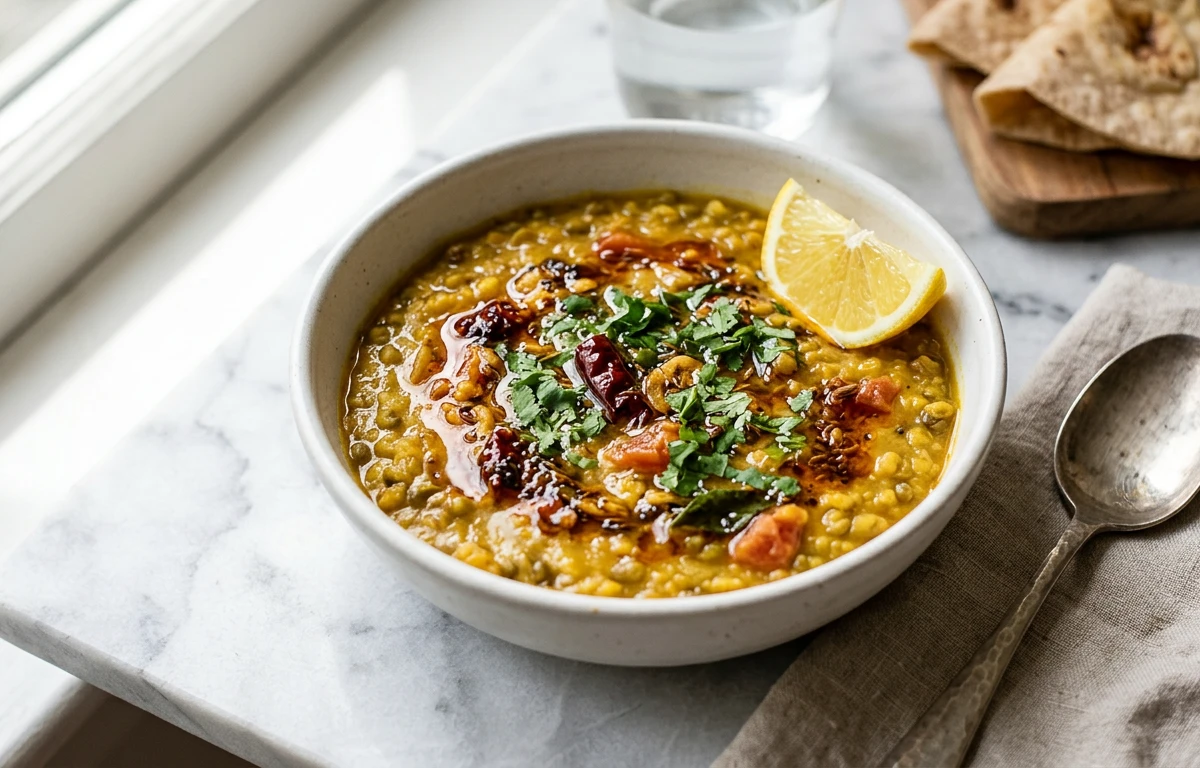
Simple Mung Bean Dal
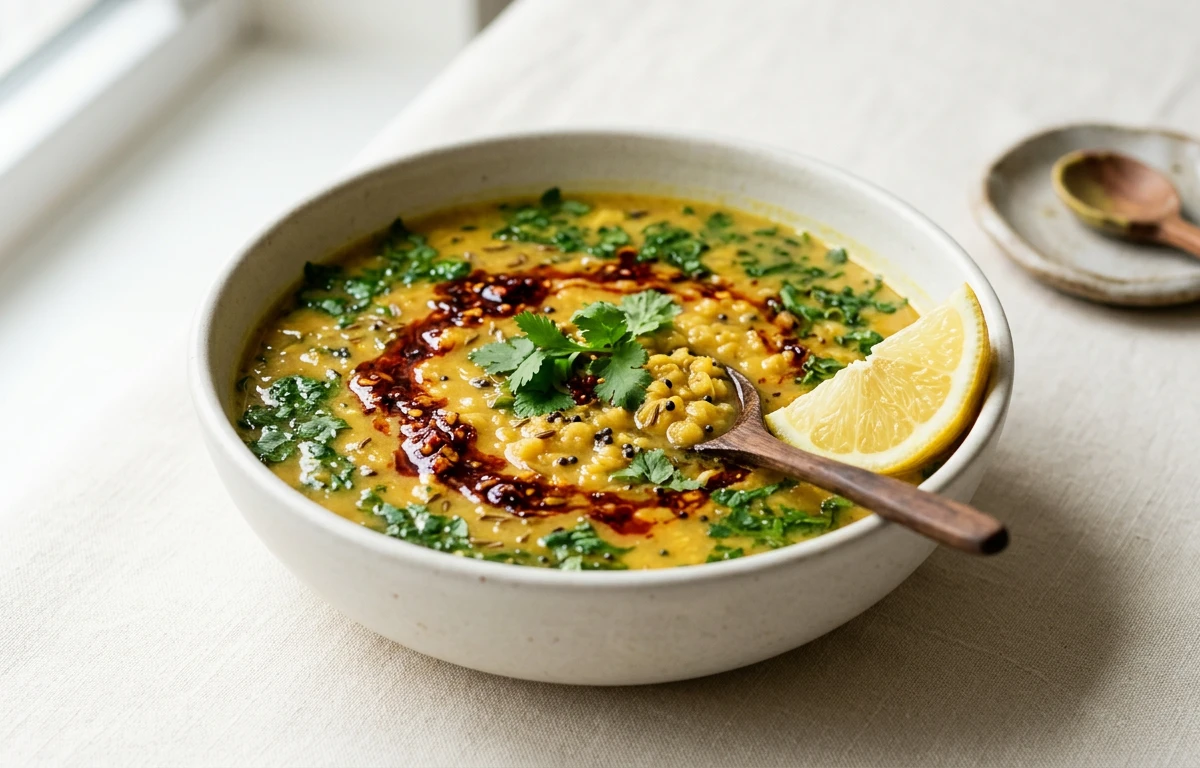
A light, everyday mung bean dal with a golden turmeric hue and the earthy aroma of cumin and ginger. This gentle, protein-rich lentil dish cooks quickly, making it a perfect weeknight comfort meal that pairs beautifully with steamed rice and a dollop of ghee.
For 4 servings
- prep
Wash and soak the mung dal.
Rinse the yellow mung dal in several changes of water until the water runs clear. Drain and soak in fresh water for 20 minutes, then drain again.
TIPSoaking the dal reduces cooking time and makes it easier to digest. - pressure cook · ~15 min
Pressure cook the dal with turmeric.
Add the soaked and drained dal to the pressure cooker with 3 cups of water and the turmeric powder. Close the lid and pressure cook on medium-high heat for 3 whistles, then lower the heat and cook for another 5 minutes. Let the pressure release naturally.
- mix · ~5 min
Mash the dal and add tomato.
Once the pressure releases, open the lid and whisk the dal vigorously until smooth. Stir in the chopped tomato and salt. If the dal is too thick, add a little hot water to reach a pourable consistency. Bring to a gentle simmer over low heat.
TIPWhisking the dal while warm gives it a creamy texture without adding any fat. - temper · ~4 min
Make the tempering.
1.Heat ghee in a small pan over medium heat until shimmering.2.Add cumin seeds and let them sizzle and turn golden (30 seconds).3.Add asafoetida and stir for a few seconds until fragrant.4.Add chopped garlic, ginger, and green chili; sauté until the garlic turns light golden (1-2 minutes).5.Add red chili powder, stir briefly, and immediately pour the tempering over the simmering dal.TIPPour the tempering from a slight height for a dramatic sizzle — the hot ghee hitting the dal releases an incredible aroma. - simmer · ~3 min
Simmer the dal to blend the flavors.
Stir the tempering into the dal, cover, and let it simmer on low heat for 2-3 minutes. Turn off the heat and stir in the fresh lemon juice.
- garnish
Garnish with fresh coriander leaves and serve hot.
Ladle the dal into serving bowls and scatter the chopped coriander leaves on top. Serve immediately with steamed rice or roti.
What to keep in mind.
7 tips from the recipe — small details that make a real difference to the final dish.
- 1Soak the mung dal for 20 minutes to ensure even cooking and better digestibility.
- 2Whisk the cooked dal vigorously while warm for a creamy, velvety texture without extra cream.
- 3Don't skip the asafoetida in the tempering — it adds a subtle onion-garlic note and aids digestion.
- 4Add the red chili powder off the heat or just after the garlic turns golden to prevent burning.
- 5For a thinner consistency, stir in hot water after mashing; cold water will make the dal grainy.
- 6Let the pressure release naturally for perfectly tender dal that doesn't turn mushy.
- 7Drizzle lemon juice only after turning off the heat to preserve its fresh, bright flavor.
Adapt it for your goals.
Vegan
Replace ghee with coconut oil or any neutral cooking oil in the tempering. The dal remains creamy and aromatic, perfect for plant-based diets.
low oilLow-oil
Skip the tempering entirely and stir in a teaspoon of cumin powder and a pinch of asafoetida directly into the simmering dal. This cuts oil without losing core flavor.
with spinachWith spinach
Add a handful of chopped spinach along with the tomato in step 3. It boosts iron and color, turning the dal into a more nutrient-dense one-pot meal.
high proteinHigh-protein
Stir in 1/2 cup of cooked, shredded chicken or cubed paneer after the tempering. Simmer for 2 minutes for a protein-packed dal that's more satiating.
spicier versionSpicier version
Add an extra slit green chili and 1/4 teaspoon of garam masala along with the red chili powder in the tempering for a bolder, warmer heat profile.
Why this is on our healthy list.
Rich in Plant Protein
Mung dal is one of the easiest-to-digest legumes, providing a solid plant-based protein source that supports muscle repair and keeps you full longer.
Natural Anti-Inflammatory
Turmeric and ginger in this dish offer curcumin and gingerol, known for their anti-inflammatory properties and digestive support.
Gut-Friendly and Light
Soaking and pressure-cooking the dal reduces antinutrients like phytic acid, making the lentils gentle on digestion while still fiber-rich.
Low in Saturated Fat
With just 2 teaspoons of ghee for the entire pot, this dal is low in saturated fat while still delivering essential fat-soluble vitamins from the spices.
Frequently asked questions
Yes. Soak the dal for 1 hour, then simmer in 4 cups of water for 25–30 minutes in a regular pot until soft, skimming any foam. Mash and proceed.