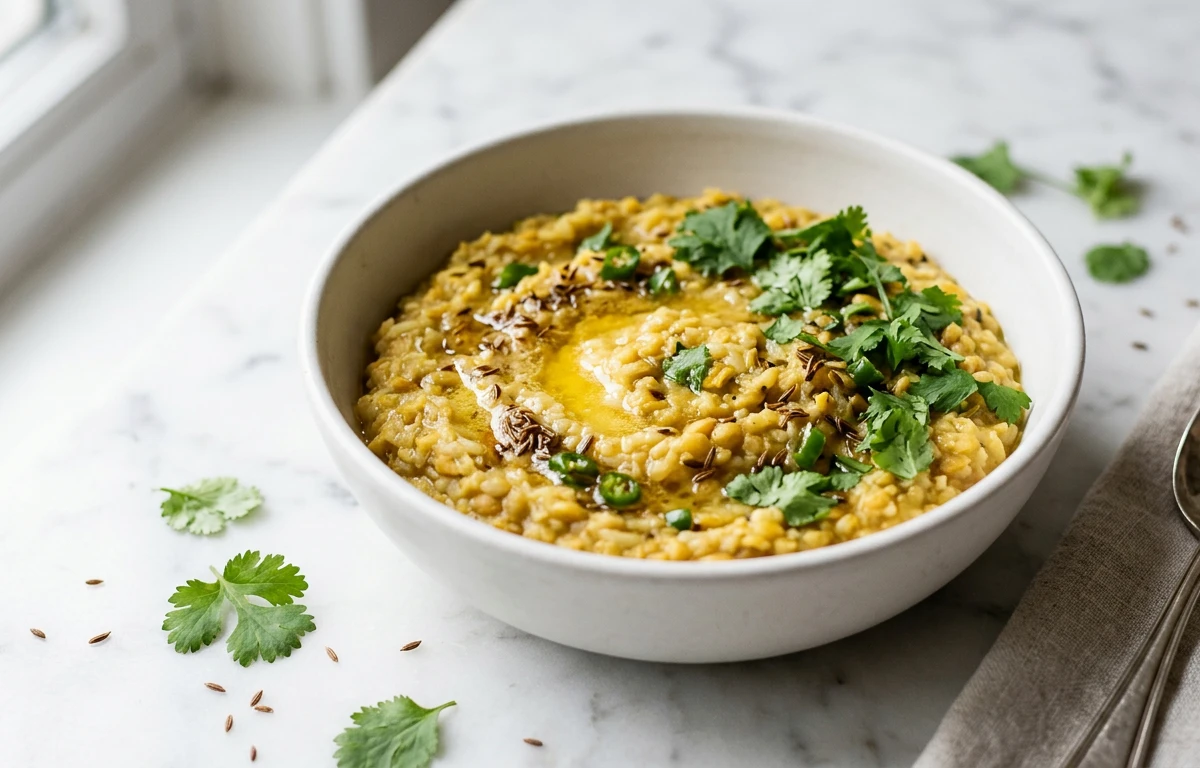
Simple Mung Dal Khichdi
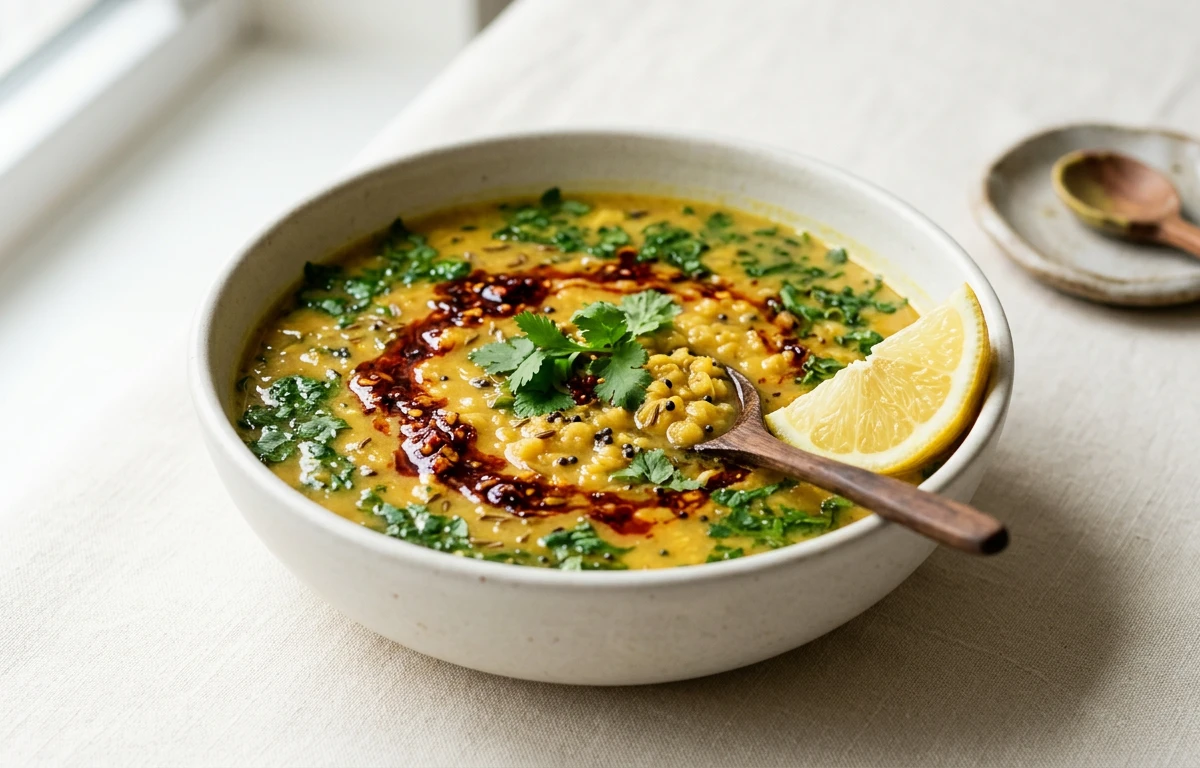
A warm, comforting one-pot meal of rice and split mung lentils cooked until soft and creamy. Lightly spiced with cumin and ginger, this gentle Indian classic is easy to digest and ready in under 30 minutes — perfect for a simple lunch or dinner.
For 4 servings
- prep · ~15 min
Wash and soak the rice and dal.
Combine rice and mung dal in a bowl. Rinse with water 2-3 times until water runs clear. Soak in fresh water for 15 minutes, then drain.
- temper · ~2 min
Temper the spices.
1.Heat 1 tsp ghee in a pressure cooker over medium heat.2.Add cumin seeds and let them sizzle for 30 seconds.3.Add chopped ginger and sauté until fragrant (30-45 seconds). - mix · ~1 min
Add the dal, rice, and seasonings.
Add the drained rice and dal to the cooker. Stir in turmeric powder and salt. Pour in 3.5 cups of water and mix well.
- pressure cook · ~10 min
Pressure cook the khichdi.
Close the pressure cooker lid with the weight on. Cook on medium-high heat. After the first whistle, reduce heat to low and cook for 2 more whistles (about 8-10 minutes). Turn off the heat and let the pressure release naturally.
- mix · ~1 min
Mash and adjust consistency.
Open the lid once the pressure drops. Mash the khichdi lightly with the back of a ladle. If it's too thick, stir in a splash of hot water to reach a soft, porridge-like consistency. Check salt and adjust if needed.
- garnish · ~1 min
Finish with ghee and garnish.
Drizzle the remaining 1 tsp ghee over the hot khichdi. Sprinkle with chopped coriander leaves and serve warm.
What to keep in mind.
6 tips from the recipe — small details that make a real difference to the final dish.
- 1Soaking the rice and dal for at least 15 minutes softens them, leading to a creamier khichdi with less cooking time.
- 2Let the pressure release naturally for a full 10 minutes; quick-release can splatter and make the dal grainy.
- 3Use a heavy-bottomed pressure cooker to prevent the dal from sticking and burning at the bottom.
- 4For an ultra-smooth, baby-food-like texture, mash the khichdi thoroughly with a potato masher instead of a ladle.
- 5Make ahead: khichdi thickens as it cools; store it with an extra 1/4 cup hot water and reheat gently, stirring often.
- 6If your khichdi is too watery after cooking, simmer it uncovered on low heat for 2-3 minutes to thicken.
Adapt it for your goals.
Vegan
Substitute the ghee with coconut oil or a neutral vegetable oil. Use the same amount to temper spices and finish; the flavor will be milder but still comforting.
low oilLow-oil
Reduce ghee to just 1/2 tsp for tempering and skip the finishing drizzle. The khichdi stays creamy and flavorful from the lentils and ginger alone.
high proteinHigh-protein
Swap half the rice for an equal amount of quinoa (rinsed). Cook with the same water ratio; quinoa adds complete protein and a slightly nuttier taste.
jainJain
Skip the ginger and use asafoetida (hing) instead. Replace ghee with oil. Avoid onion and garlic entirely — this version stays within Jain dietary guidelines.
spicySpicy
Add 1 finely chopped green chili along with the ginger, and toss in 1/2 tsp garam masala after tempering. The heat balances the creamy lentils beautifully.
Why this is on our healthy list.
Easily Digestible Protein
Mung dal is known in Ayurveda as a tridoshic food — it provides high-quality plant protein that is gentle on the stomach and ideal for recovery or light meals.
Rich in Satiating Fiber
Both mung beans and rice supply soluble fiber, which helps keep you full longer and supports steady digestion without bloating.
Natural Anti-Inflammatory
Turmeric and ginger in this dish contain curcumin and gingerol, compounds traditionally used to reduce inflammation and soothe the digestive tract.
Low in Fat, High in Energy
With just 2 teaspoons of ghee per serving (roughly 3 grams of fat), this khichdi provides sustained carbohydrate energy without being heavy.
Frequently asked questions
Yes! Use a heavy pot with a tight lid. Simmer the soaked rice and dal in 4 cups of water for 25-30 minutes, stirring occasionally, until soft and porridge-like.