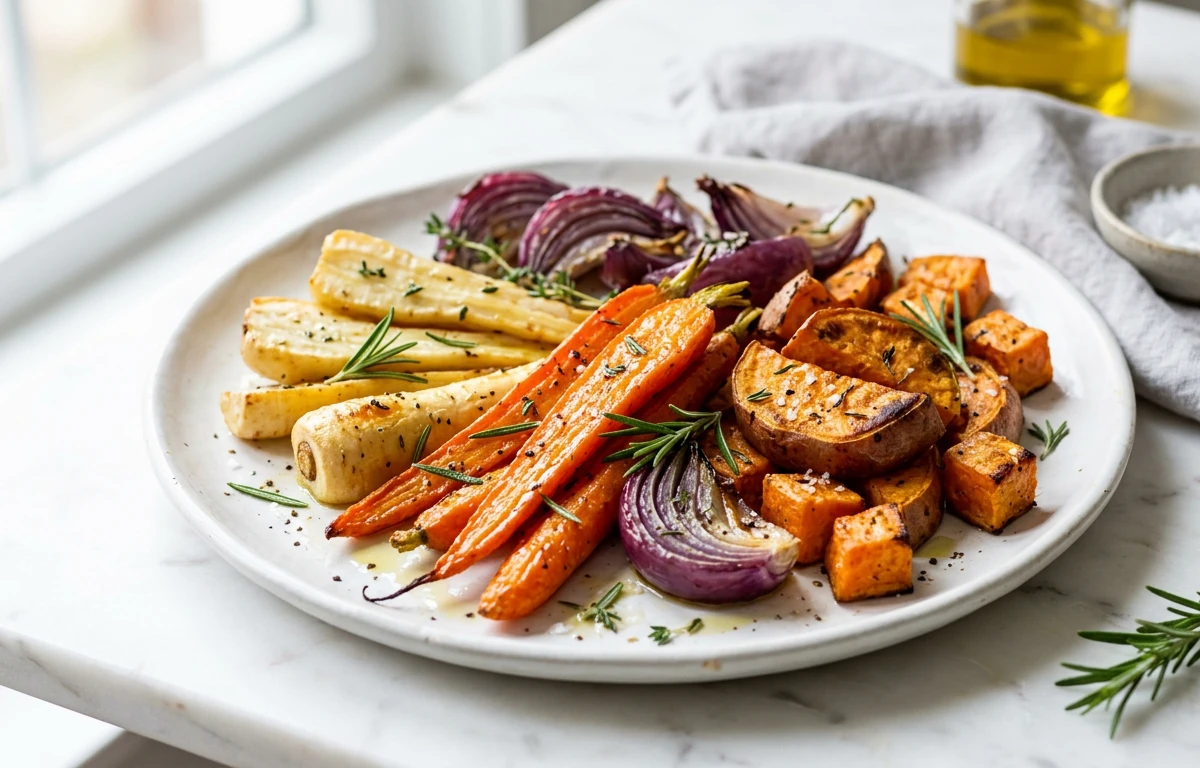
Simple Olive Oil Roasted Vegetables
A colorful medley of bell peppers, zucchini, carrot, and red onion tossed in olive oil and roasted until tender with lightly caramelized edges. This hands-off side dish brings out the natural sweetness of vegetables and works with almost any meal.
For 4 servings
- prep
Preheat the oven and prep the baking sheet.
Preheat the oven to 425°F (220°C). Line a large rimmed baking sheet with parchment paper if using.
- prep
Cut all the vegetables.
1.Cut bell pepper into 1-inch chunks.2.Halve zucchini lengthwise, then slice into ½-inch half-moons.3.Peel and slice carrot into ¼-inch rounds.4.Cut red onion into 1-inch wedges, keeping root end intact so wedges hold together.5.Smash and roughly chop the garlic cloves.TIPKeep vegetable pieces similar in size so they roast evenly. - mix
Toss vegetables with olive oil and seasonings.
Place all the cut vegetables and garlic on the baking sheet. Drizzle with olive oil, sprinkle with salt, black pepper, and oregano. Toss with your hands until every piece is evenly coated, then spread in a single layer. Avoid overcrowding — use two sheets if needed.
TIPCrowded vegetables steam instead of roast. Give them space for those caramelized edges. - roast · ~30 min
Roast the vegetables until tender and caramelized.
Roast for 25-30 minutes, tossing once halfway through. Vegetables are done when the carrots are fork-tender and edges of the peppers and onions show light charring.
TIPIf you like extra color, switch to broil for the last 2 minutes — watch closely so they don't burn. - serve
Serve warm or at room temperature.
What to keep in mind.
5 tips from the recipe — small details that make a real difference to the final dish.
- 1Cut all vegetables to uniform 1-inch pieces to ensure even roasting.
- 2Do not crowd the baking sheet—use two pans if necessary for proper browning.
- 3Toss the vegetables with oil and seasonings directly on the sheet to save a bowl.
- 4Add a splash of balsamic vinegar halfway through roasting for deeper caramelization.
- 5Roasted vegetables can be stored in an airtight container in the fridge for up to 4 days.
Adapt it for your goals.
Herb-swap
Replace dried oregano with fresh rosemary or thyme for a different aromatic profile—great with roasted chicken or fish.
spicySpicy
Add ½ teaspoon red pepper flakes along with the oregano for a subtle heat that complements the sweetness of the roasted vegetables.
high proteinHigh-protein
Add 1 can of drained chickpeas to the sheet before roasting for extra protein and fiber, making the dish a more substantial side or light main.
Why this is on our healthy list.
Rich in Vitamin A
Carrots are an excellent source of beta-carotene, which the body converts into vitamin A for healthy vision and immune function.
Antioxidant Power
Bell peppers and red onions provide vitamin C and various antioxidants that help protect cells from oxidative stress.
Low in Calories
This vegetable medley is naturally low in calories while being high in water and fiber, making it a satisfying, nutrient-dense side dish.
Frequently asked questions
Fresh vegetables are recommended because frozen ones release excess water, which prevents caramelization and leads to steaming rather than roasting.