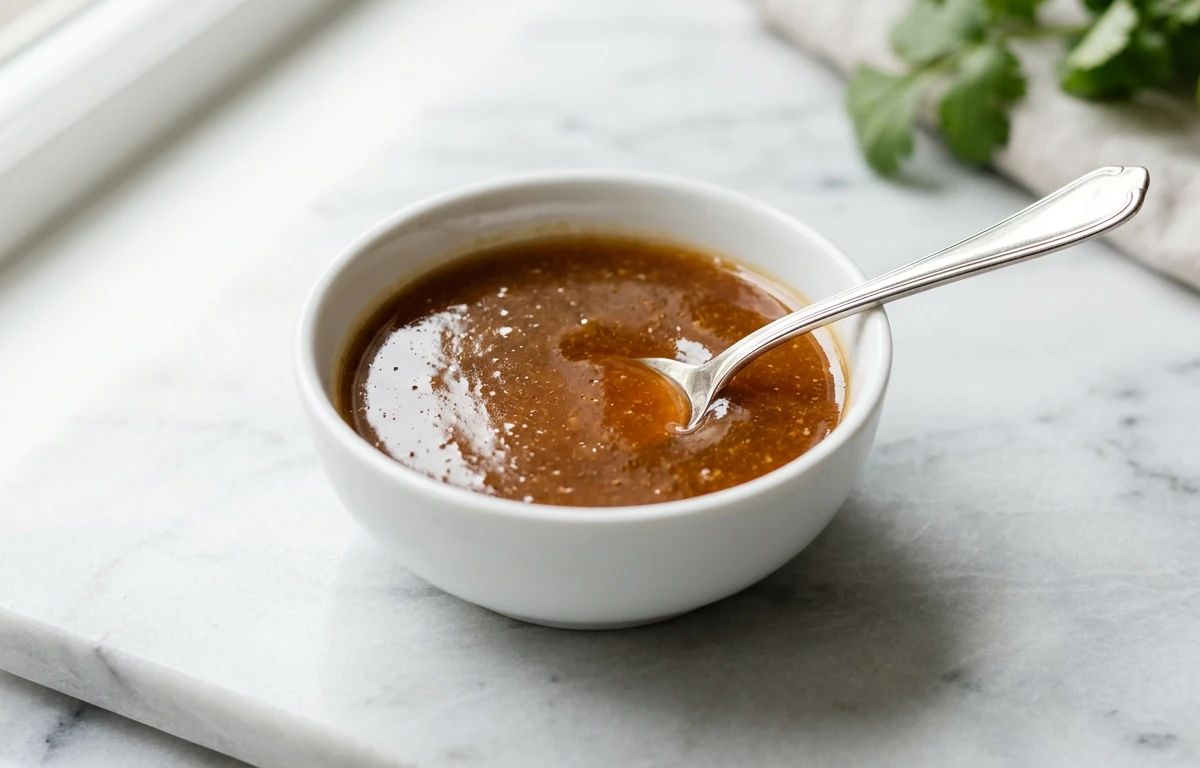
Simple Pad Thai Sauce Base
A perfectly balanced, tangy-sweet sauce that is the heart of any great Pad Thai. This simple base combines tamarind's signature sourness with palm sugar sweetness and savory fish sauce, ready in just minutes.
For 4 servings
- prep · ~2 min
Dissolve the palm sugar.
In a small bowl, combine the finely chopped palm sugar with warm water. Stir until the sugar is completely dissolved to prevent a grainy sauce.
TIPWarm water helps the hard palm sugar dissolve faster. Avoid boiling water, which can alter the taste. - mix · ~1 min
Combine the base ingredients.
1.Add the tamarind paste and fish sauce to the dissolved sugar mixture.2.Whisk vigorously until the sauce is uniform and smooth, about 1 minute. - simmer · ~3 min
Simmer the sauce until slightly thickened.
1.Pour the mixture into a small saucepan over low heat.2.Simmer gently for 2-3 minutes, stirring constantly, until the sauce coats the back of a spoon.TIPKeep the heat very low. Overheating can make the fish sauce taste metallic and the sugar bitter. - rest · ~10 min
Cool the sauce.
Remove from heat and allow it to cool to room temperature. The sauce will thicken further as it cools.
TIPTaste it once cooled. The perfect Pad Thai sauce should have a balanced sweet, sour, and salty kick. Adjust with a tiny bit more tamarind or fish sauce if needed.
What to keep in mind.
6 tips from the recipe — small details that make a real difference to the final dish.
- 1Use dark, sticky palm sugar for the richest caramel-like flavor; grate it finely so it dissolves quickly.
- 2Always taste your tamarind paste first—some brands are more sour than others, so adjust with a splash of water or lime juice.
- 3Simmer the sauce on the lowest heat possible; high heat can make the fish sauce turn bitter and metallic.
- 4This sauce keeps well in a sealed jar in the fridge for up to 2 weeks—just reheat gently before using.
- 5If you can't find palm sugar, substitute with light brown sugar packed firmly, but expect a slightly less complex sweetness.
- 6For a silkier texture, whisk in 1 teaspoon of tamarind paste at the end off heat if the sauce tastes too sweet.
Adapt it for your goals.
Gluten-free
Use a certified gluten-free tamarind paste and a gluten-free fish sauce (or substitute with soy sauce/tamari) to make this sauce safe for gluten-sensitive diets.
veganVegan
Replace fish sauce with a vegan alternative (e.g., mushroom sauce or soy sauce + a pinch of kelp powder) to keep the savory depth while making the sauce entirely plant-based.
low sodiumLow-sodium
Use a low-sodium fish sauce or cut the amount by half and add a splash of water or lime juice to maintain the liquid volume, reducing overall salt without losing tanginess.
extra sourExtra-sour
Add an extra 1–2 teaspoons of tamarind paste or a squeeze of fresh lime juice when the sauce cools for those who prefer a puckeringly sour pad thai.
Why this is on our healthy list.
Rich in Antioxidants from Tamarind
Tamarind is packed with polyphenols and flavonoids that help combat oxidative stress and support overall cellular health.
Low-Calorie Flavor Base
This sauce delivers intense sweet-savory-sour flavor with minimal calories, making it ideal for weight-conscious cooking.
Fermented Ingredients Aid Digestion
Fish sauce, a fermented product, introduces beneficial enzymes and probiotics that can support gut health when consumed as part of a balanced diet.
Palm Sugar Provides Slow-Release Energy
Unlike refined white sugar, palm sugar has a lower glycemic index and supplies small amounts of minerals like potassium and iron.
Frequently asked questions
Not recommended—tamarind's complex sourness is irreplaceable. Lime juice will make the sauce one-dimensionally tart and won't give the same depth. Use tamarind paste even if you have to order it online.