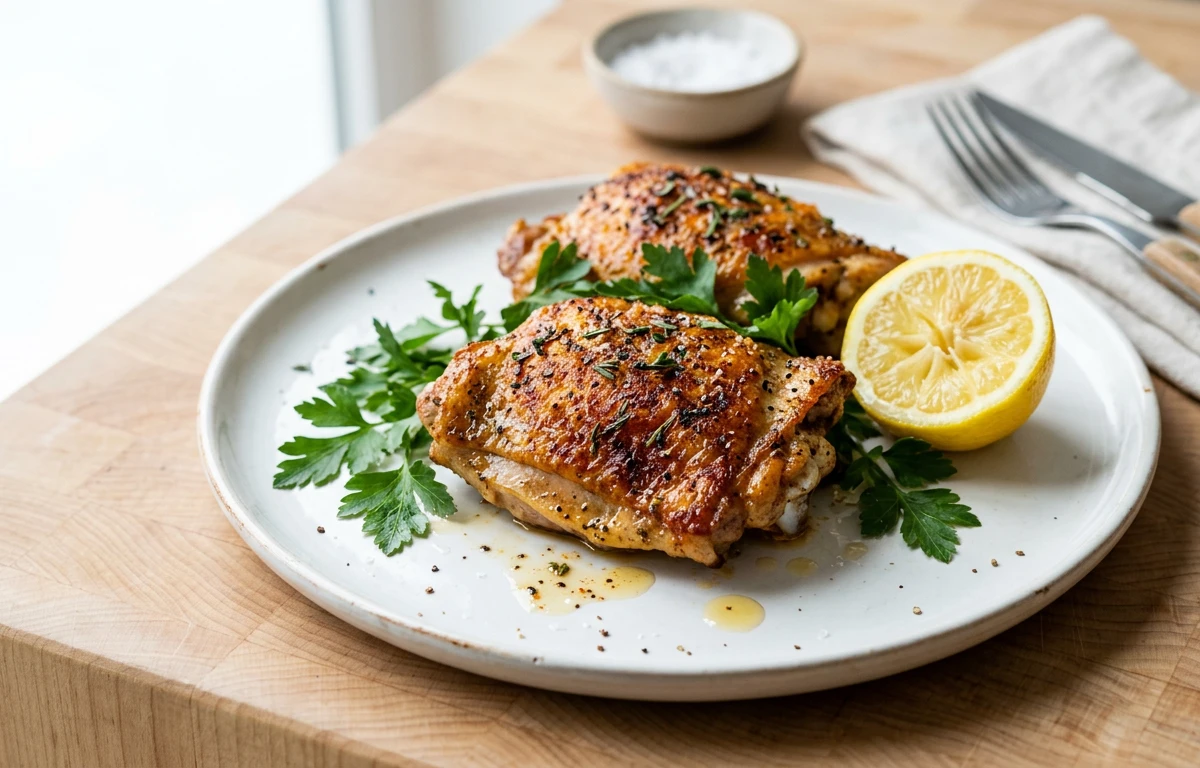
Simple Pan-Seared Chicken Thighs
Beautifully golden, crispy-skinned chicken thighs with juicy, tender meat inside. A simple stovetop method that delivers restaurant-quality results with minimal ingredients and effort. Perfect for weeknight dinners and meal prep, these pan-seared thighs are versatile and packed with flavor.
For 4 servings
- prep · ~2 min
Pat the chicken thighs completely dry.
Use paper towels to press firmly on both sides of each thigh. Removing surface moisture is essential for achieving a crisp, golden sear.
TIPDon't skip this step — wet chicken steams instead of sears, leaving the skin rubbery. - prep · ~1 min
Season the chicken generously.
Season both sides of each thigh evenly with salt, black pepper, and garlic powder. Press the seasoning gently into the meat so it adheres well.
- prep · ~10 min
Let the chicken rest at room temperature.
Arrange the seasoned thighs on a plate and let them sit for 10 minutes. Cold chicken straight from the fridge seizes up in a hot pan and cooks unevenly.
- saute · ~2 min
Heat the skillet and add oil.
Place the heavy skillet over medium-high heat. Add the oil and swirl to coat the bottom. Heat until the oil shimmers and just begins to smoke lightly.
TIPUse medium-high, not high heat — high heat burns the skin before the meat cooks through. - fry · ~7 min
Lay the chicken thighs skin-side down and don't move them.
Place each thigh skin-side down in the hot pan, leaving space between them. Press down gently with tongs for even contact. Sear undisturbed for 6 to 7 minutes until the skin is deep golden brown and releases easily from the pan.
TIPFight the urge to peek or flip early — the skin releases naturally once properly seared. - fry · ~6 min
Flip and cook the second side.
Use tongs to flip each thigh. Cook for 5 to 6 minutes more, until the internal temperature at the thickest part reaches 74°C (165°F).
- rest · ~5 min
Rest the chicken thighs before serving.
Transfer the thighs to a clean plate and rest for 5 minutes. This allows the juices to redistribute, keeping the meat moist and tender.
TIPTent loosely with foil to keep warm without steaming the crispy skin. - serve
Plate and serve the pan-seared chicken thighs.
Arrange the rested thighs on a platter or individual plates. Spoon any resting juices over the top and serve warm.
What to keep in mind.
6 tips from the recipe — small details that make a real difference to the final dish.
- 1Use a heavy skillet like cast iron for even heat distribution and a better sear.
- 2Pat the chicken thighs dry with paper towels just before seasoning, not earlier, so the surface stays dry.
- 3Let the chicken rest at room temperature for 10 minutes before cooking to ensure even doneness.
- 4Don't overcrowd the pan; leave at least 1 inch between thighs to prevent steaming.
- 5Use an instant-read thermometer to check for 165°F at the thickest part for perfectly cooked meat.
- 6Rest the cooked thighs for 5 minutes tented with foil to keep the skin crisp while juices redistribute.
Adapt it for your goals.
Herb-crusted
Add 1 teaspoon dried thyme or rosemary to the seasoning mix for an aromatic, earthy flavor that complements the chicken.
spicySpicy
Add 1/2 teaspoon smoked paprika and a pinch of cayenne pepper to the seasoning for a smoky, mild heat.
lemon garlicLemon-garlic
After flipping, add 2 sliced garlic cloves and a sprig of thyme to the pan, then squeeze fresh lemon juice over the finished thighs for brightness.
low sodiumLow-sodium
Reduce salt to 1/4 teaspoon and use a no-salt seasoning blend; ideal for those watching sodium intake.
Why this is on our healthy list.
High-Quality Protein
Chicken thighs provide complete protein essential for muscle repair and maintenance, with about 22 grams per 3-ounce serving.
Rich in Iron and Zinc
Dark meat chicken is a good source of heme iron and zinc, which support immune function and oxygen transport.
Low in Carbohydrates
This dish contains no added sugars or starches, making it suitable for low-carb and keto-friendly diets.
Minimal Added Fat
Using just 1 tablespoon of oil and relying on the chicken's own rendered fat keeps the dish lighter than fried alternatives.
Frequently asked questions
The most common reason is not patting the chicken dry enough before seasoning; any moisture on the skin will steam instead of sear, preventing crispiness.