Simple Roasted Cabbage Wedges
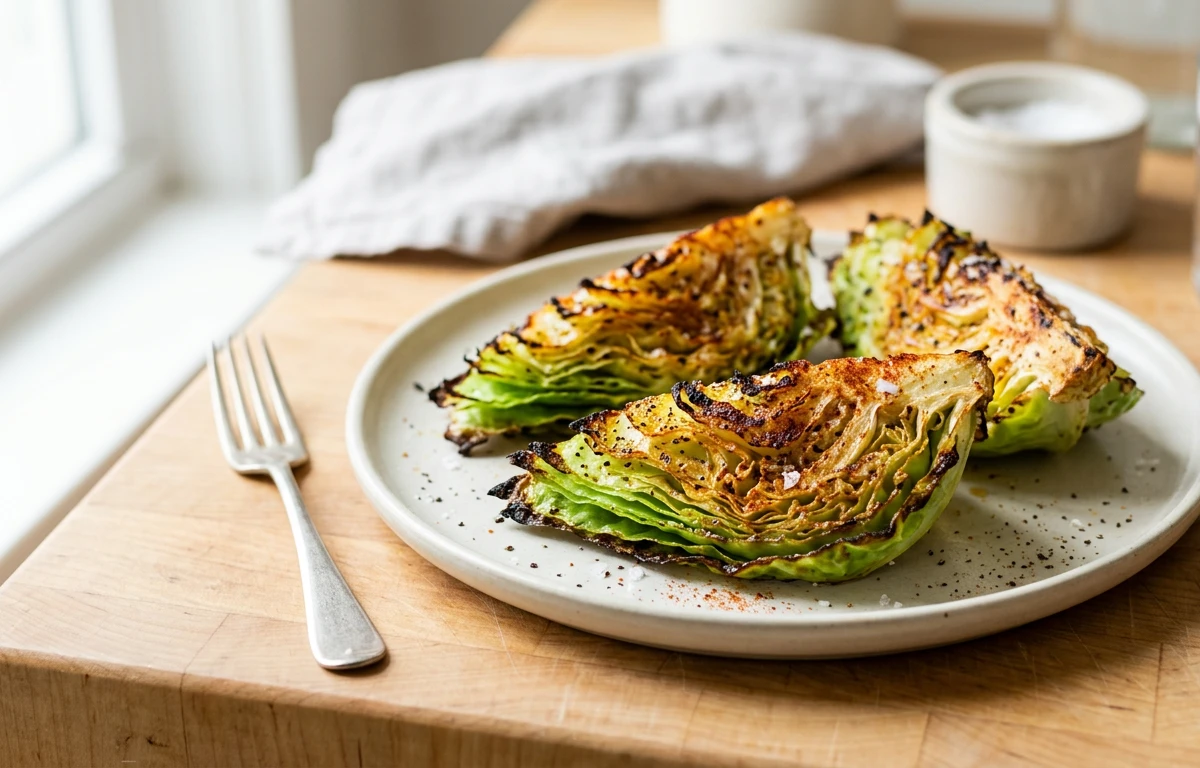
Caramelized edges and tender, sweet centers make these roasted cabbage wedges surprisingly irresistible. With just a handful of pantry staples, humble green cabbage transforms into a gorgeous side dish with nutty, buttery flavor and crispy golden-brown bits.
For 4 servings
- prep
Preheat oven and prep the baking sheet.
Position a rack in the middle of the oven and preheat to 425°F (220°C). Line a large baking sheet with parchment paper for easier cleanup.
TIPHigh heat is crucial for caramelization — don't be tempted to roast at a lower temperature. - prep
Slice the cabbage into wedges.
1.Remove any loose or bruised outer leaves from the cabbage.2.Place cabbage on a cutting board, core-side down, and cut in half through the core.3.Cut each half into quarters through the core, yielding 4 wedges.4.Leave a bit of core attached to each wedge to hold the leaves together.TIPDon't remove the core entirely — it holds the wedge together and becomes tender when roasted. - mix
Season the cabbage wedges.
Arrange wedges on the baking sheet cut-side up. Drizzle evenly with olive oil, then sprinkle with salt, black pepper, and minced garlic. Rub gently to coat both sides of each wedge.
- roast · ~30 min
Roast the cabbage until golden and tender.
1.Place the baking sheet in the preheated oven.2.Roast for 15 minutes, then carefully flip each wedge using a spatula.3.Continue roasting 12-15 minutes more until edges are deeply golden and charred in spots.4.Check doneness: a knife should slide easily through the thickest part of the core.TIPDon't crowd the pan — give each wedge space so the edges crisp rather than steam. - serve
Finish with lemon juice and serve hot.
Transfer wedges to a serving platter. Squeeze fresh lemon juice over the top while still hot. Serve immediately.
TIPA generous squeeze of lemon brightens the deep roasted flavor — don't skip it.
What to keep in mind.
6 tips from the recipe — small details that make a real difference to the final dish.
- 1Leave the core intact on each wedge so the leaves stay together during roasting.
- 2Pat the cabbage wedges dry with a paper towel before oiling for better browning.
- 3Flip wedges only once to develop a deep golden crust without breaking them apart.
- 4Use a rimmed baking sheet to catch any juices and prevent a mess in the oven.
- 5If your wedges are very large, extend the second roasting interval by 3–5 minutes.
- 6Serve immediately after adding lemon juice; the acidity fades quickly as the dish cools.
Adapt it for your goals.
Spicy
Add 1/2 teaspoon red pepper flakes or a drizzle of sriracha with the garlic for a punch of heat that balances the sweet roasted cabbage.
cheesyCheesy
Sprinkle 2 tablespoons grated Parmesan or pecorino over the wedges during the last 5 minutes of roasting for a salty, crispy crust.
herbaceousHerbaceous
Toss the wedges with 1 teaspoon dried thyme or oregano before roasting, or garnish with fresh parsley or chives for an earthy, aromatic twist.
balsamic glazedBalsamic-glazed
Drizzle 1 tablespoon balsamic vinegar over the wedges 2 minutes before removing them from the oven for a tangy-sweet glaze that complements the caramelized edges.
Why this is on our healthy list.
Rich in Vitamin C
Green cabbage is an excellent source of vitamin C, which supports immune function and collagen production.
High in Fiber
Each wedge provides a good amount of dietary fiber, aiding digestion and promoting a feeling of fullness.
Low in Calories
With just a tablespoon of olive oil per serving, these wedges are a low-calorie side dish that fits many eating plans.
Contains Glucosinolates
Cabbage is rich in glucosinolates, sulfur-containing compounds linked to antioxidant and anti-inflammatory benefits.
Frequently asked questions
Yes, red cabbage works well, though it may need 3–5 extra minutes of roasting and will have a slightly firmer texture.