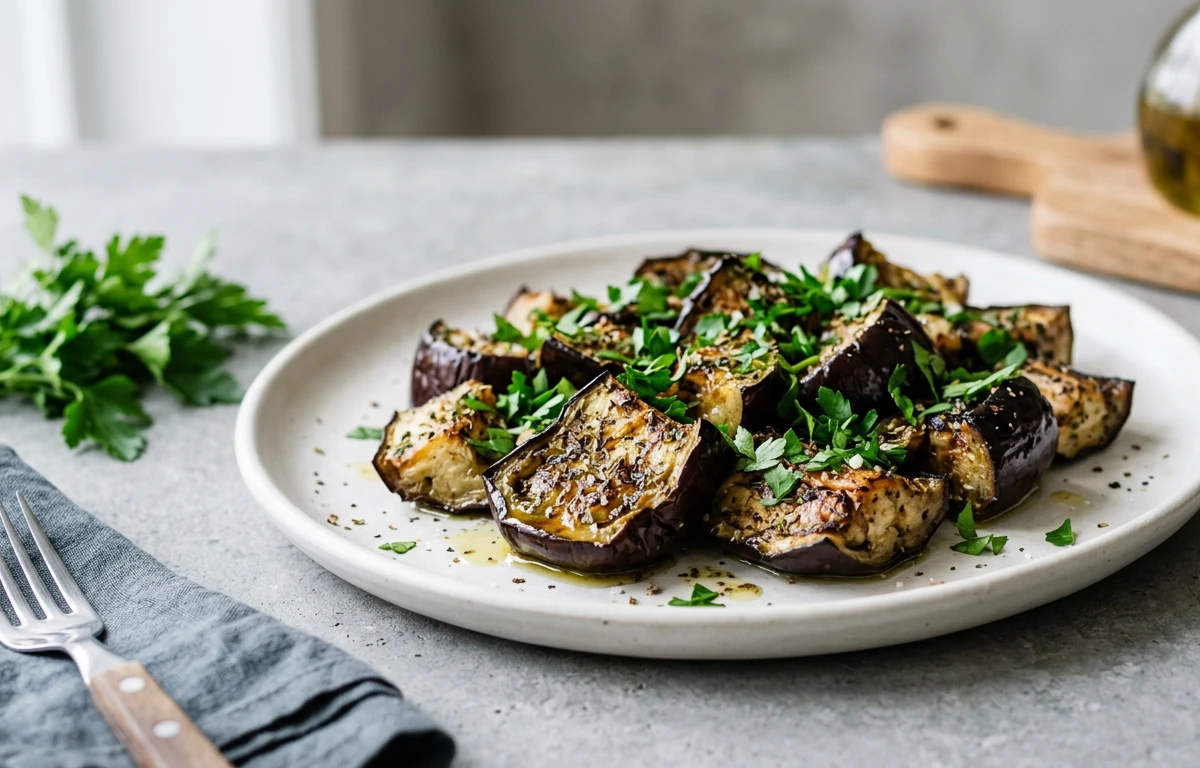
Simple Roasted Herbed Eggplant
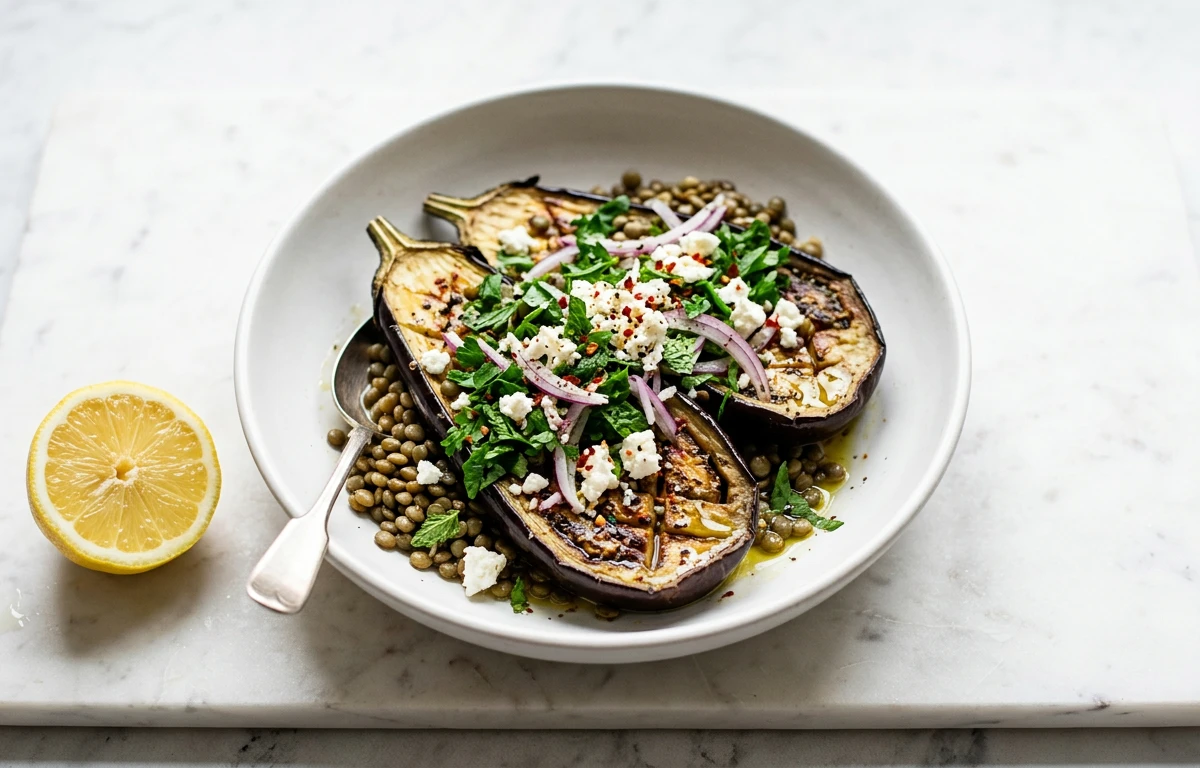
Thick, tender slices of eggplant roasted until caramelized on the edges and creamy in the center. Fresh garlic and a simple blend of dried herbs infuse every bite, finished with a bright squeeze of lemon. An effortless Mediterranean-style side that comes together with just 10 minutes of prep.
For 4 servings
- prep
Preheat the oven and prep the baking sheet.
1.Preheat the oven to 400°F (200°C).2.Line a large baking sheet with parchment paper. - prep
Slice the eggplant and season.
Cut the eggplant into 1/2-inch thick rounds. In a large mixing bowl, toss the slices with olive oil, minced garlic, dried oregano, dried basil, salt, and black pepper until every piece is well coated.
TIPArrange the slices in a single layer with a little space between them — overcrowding creates steam instead of a golden roast. - roast · ~30 min
Roast until golden and tender.
1.Spread the seasoned eggplant slices in a single layer on the prepared baking sheet.2.Roast for 25 to 30 minutes, flipping halfway through, until the edges are caramelized and the centers are soft and creamy. - garnish
Finish with lemon and parsley, then serve.
Transfer the roasted eggplant to a serving platter. Drizzle with fresh lemon juice and scatter chopped parsley over the top. Serve warm or at room temperature.
What to keep in mind.
6 tips from the recipe — small details that make a real difference to the final dish.
- 1Slice the eggplant into even 1/2-inch rounds for uniform roasting.
- 2Salting the slices for 20 minutes before roasting draws out moisture and reduces bitterness.
- 3Flip each slice halfway through roasting for even caramelization on both sides.
- 4Let the roasted eggplant rest 5 minutes after baking for the centers to set.
- 5Store leftovers in an airtight container in the fridge for up to 3 days; reheat in a skillet for crisp edges.
- 6For extra depth, add a sprinkle of smoked paprika or cumin along with the dried herbs.
Adapt it for your goals.
Vegan
This recipe is already vegan; simply substitute agave or maple syrup for a touch of sweetness if desired.
gluten freeGluten-free
Naturally gluten-free; double-check dried herbs for any added wheat starch, though most are safe.
spicySpicy
Add 1/4 to 1/2 teaspoon red pepper flakes along with the dried herbs for a gentle heat that complements the garlic and lemon.
cheesyCheesy
Sprinkle grated Parmesan or crumbled feta over the slices during the last 5 minutes of roasting for a salty, crispy topping.
herb swapHerb swap
Replace dried basil and oregano with dried thyme and rosemary for an equally aromatic but earthier flavor profile.
Why this is on our healthy list.
Rich in Fiber
Eggplant skin provides insoluble fiber that supports digestive regularity and helps maintain a healthy gut.
Low in Calories
With only about 20 calories per cup, eggplant is a naturally low-energy-dense food that aids in weight management.
Good Source of Antioxidants
The deep purple skin contains nasunin, an anthocyanin antioxidant that helps protect cells from oxidative stress.
Heart-Healthy Fats
Extra virgin olive oil provides monounsaturated fats that support cardiovascular health when used in moderation.
Frequently asked questions
No, the skin becomes tender and slightly chewy when roasted, and it holds the slices together. Leave it on for texture and nutrients.