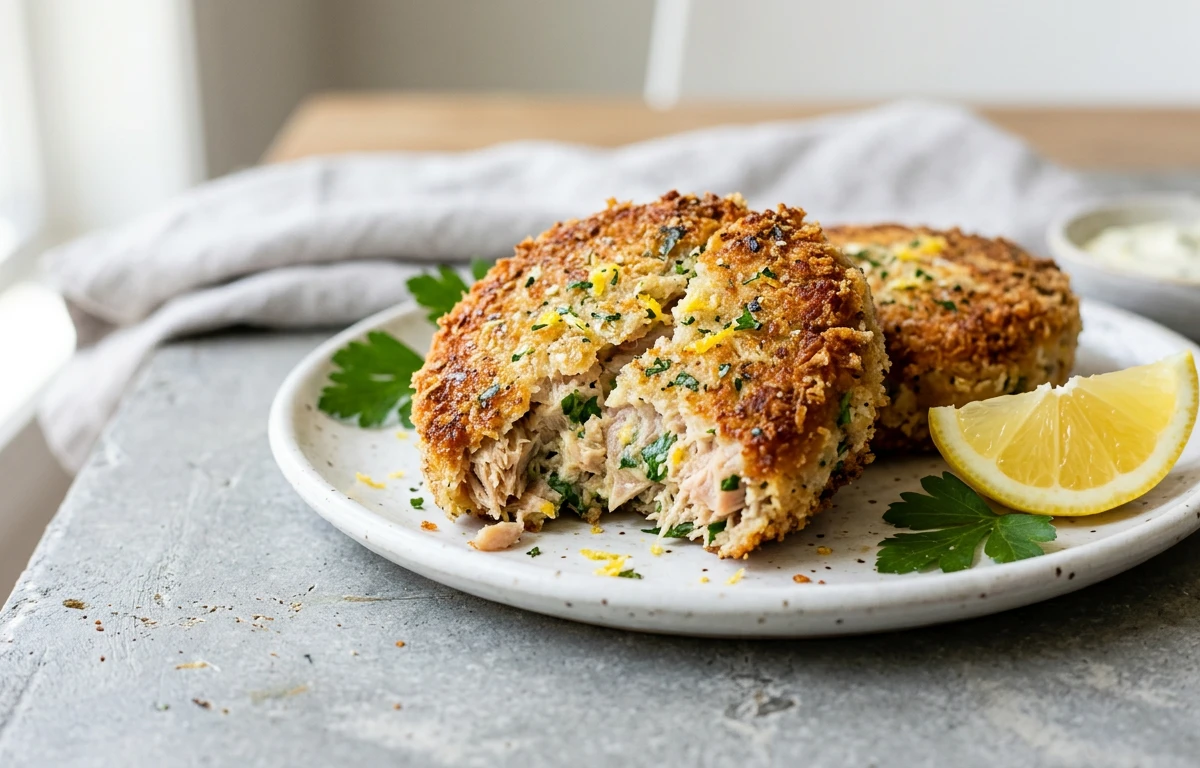
Simple Salmon or Tuna Fish Cakes
Crispy on the outside and tender on the inside, these easy salmon fish cakes come together in minutes. Made with flaked salmon, mashed potatoes, and fresh herbs, they are pan-fried until golden brown. A quick weeknight dinner that pairs perfectly with a simple salad or tartar sauce.
For 4 servings
- boil · ~12 min
Boil the potatoes.
Place the chopped potatoes in a pot and cover with cold water. Bring to a boil over high heat, then reduce to a simmer and cook until fork-tender, about 10 to 12 minutes. Drain well and let them steam dry for a minute.
- boil · ~8 min
Poach the salmon.
While the potatoes cook, place the salmon fillet in a shallow pan and cover with water. Bring to a gentle simmer over medium heat and cook until the fish flakes easily, about 8 minutes. Drain and transfer to a bowl.
- saute · ~5 min
Saute the aromatics.
Warm 1 teaspoon of olive oil in a small pan over medium heat. Add the diced onion and cook until soft and translucent, about 3 to 4 minutes. Add the minced garlic and sauté for 1 more minute until fragrant. Remove from heat.
- mix · ~5 min
Mash and mix the fish cake mixture.
1.Mash the boiled potatoes in a large bowl until smooth.2.Flake the poached salmon into the bowl, discarding any stray bones.3.Add the sautéed onion and garlic, beaten egg, 1/2 cup breadcrumbs, mustard, lemon juice, parsley, salt, pepper, and paprika.4.Mix gently until just combined. Do not overmix or the cakes will be dense.TIPOverworking the mix makes fish cakes heavy. Fold gently until the ingredients just hold together. - prep · ~5 min
Shape the fish cakes.
Divide the mixture into 8 equal portions. Shape each portion into a patty about 1/2 inch thick. Lightly coat both sides of each patty with the extra 1/4 cup breadcrumbs.
- rest · ~10 min
Chill the fish cakes briefly.
Place the shaped patties on a plate and refrigerate for 10 minutes. This helps them hold their shape during frying.
TIPChilling is the secret step that keeps them from falling apart in the pan. - fry · ~8 min
Pan-fry until golden.
Heat the remaining olive oil in a large non-stick skillet over medium heat. Add the fish cakes in a single layer and cook for 3 to 4 minutes per side until deep golden brown and heated through. Work in batches if needed, keeping cooked cakes warm on a plate.
TIPResist the urge to flip early — a deep golden crust releases naturally from the pan. - serve
Serve hot with lemon.
Transfer the fish cakes to a serving platter and tuck lemon wedges alongside. Serve immediately while hot and crisp.
What to keep in mind.
5 tips from the recipe — small details that make a real difference to the final dish.
- 1Let the mashed potatoes steam dry for a minute after draining to remove excess moisture.
- 2Chilling the shaped patties for at least 10 minutes is crucial to prevent them from falling apart.
- 3Use a non-stick skillet and resist flipping early — wait until a deep golden crust forms.
- 4Flake the salmon while still warm; it combines more easily with the potato mixture.
- 5For extra crispy cakes, panko breadcrumbs can replace regular breadcrumbs for coating.
Adapt it for your goals.
Low-oil
Skip the pan-fry and bake the fish cakes at 400°F for 15-18 minutes, flipping once, for a lighter version that still turns golden.
high proteinHigh-protein
Replace half the potato with an extra 200g of salmon or canned tuna to boost protein while keeping the cakes moist.
jainJain
Omit onion and garlic, and use a pinch of asafoetida (hing) along with chopped fresh dill and green chili for flavor.
gluten freeGluten-free
Use gluten-free breadcrumbs or crushed rice cereal for coating, and ensure the mustard is certified gluten-free.
Why this is on our healthy list.
Rich in Omega-3s
Salmon provides EPA and DHA fatty acids, which support heart and brain health.
Good Source of Vitamin D
Salmon is one of the best natural dietary sources of vitamin D, important for bone health.
Moderate Calorie Control
Using potatoes as a binder instead of heavy cream or cheese keeps these cakes filling yet moderate in calories.
Frequently asked questions
Yes — drain and flake canned salmon (skip the poaching step). Reduce salt since canned salmon is often salted.