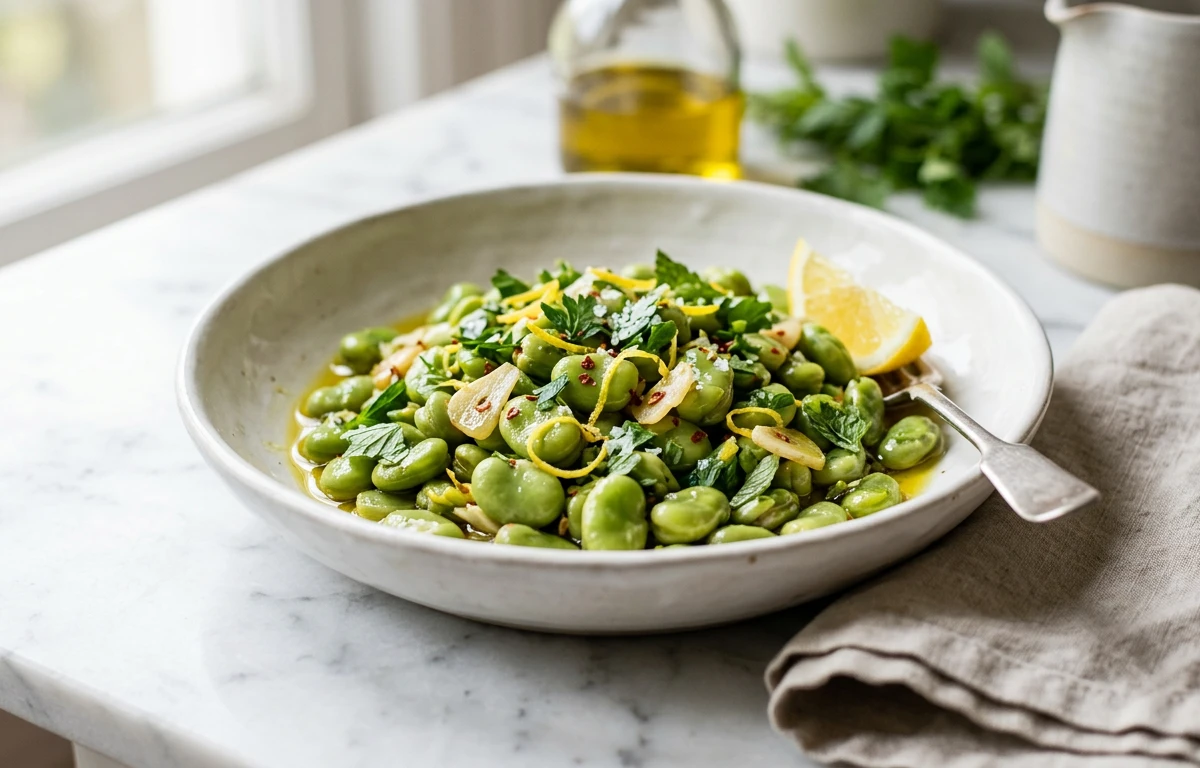
Simple Sautéed Fava Beans with Garlic & Lemon
Bright, tender fava beans sautéed with golden garlic and finished with a squeeze of lemon. This Mediterranean-inspired side dish comes together in minutes and tastes like spring on a plate — fresh, vibrant, and incredibly satisfying.
For 4 servings
- prep
Shell the fava beans.
Remove the beans from their pods. If using fresh fava beans, you'll need about 1.5 lb in pods to yield 1.5 cups of shelled beans. Set the shelled beans aside.
- boil · ~2 min
Blanch the fava beans.
1.Bring a pot of water to a rolling boil and add a pinch of salt.2.Drop in the shelled fava beans and boil for 1 minute.3.Drain immediately and transfer to a bowl of ice water to stop cooking.4.Once cool, drain again and pinch each bean to slip off the pale outer skin, revealing the bright green inner bean. - saute · ~2 min
Sauté garlic until golden.
1.Warm the olive oil in a large skillet over medium heat.2.Add the sliced garlic and cook, stirring gently, until it turns pale golden at the edges and fragrant (about 1 to 2 minutes).3.Watch closely — garlic burns fast and turns bitter.TIPDon't let the garlic brown — golden is the sweet spot for a mellow, nutty flavor. - saute · ~3 min
Add fava beans and red pepper flakes.
1.Tip the blanched and peeled fava beans into the skillet.2.Add the pinch of red pepper flakes.3.Toss everything together and sauté for 2 to 3 minutes until the beans are heated through and lightly coated in the garlic oil. - mix · ~1 min
Finish with lemon, salt, and parsley.
1.Remove the skillet from heat.2.Squeeze the juice of half a lemon over the beans.3.Sprinkle with the finishing pinch of salt, fresh black pepper, and chopped parsley.4.Toss gently to combine. - serve
Serve warm or at room temperature.
Transfer to a serving dish. These beans taste great warm right out of the pan, or at room temperature as part of an antipasti spread. Drizzle with a little extra olive oil if you like.
What to keep in mind.
6 tips from the recipe — small details that make a real difference to the final dish.
- 1For the creamiest texture, always double-peel fresh fava beans — blanch first, then slip off the skins.
- 2If using frozen shelled favas, blanch for 30 seconds instead of 1 minute to preserve their delicate texture.
- 3Don't overcrowd the skillet; sauté in a single layer so the beans heat through evenly without steaming.
- 4Taste a bean before adding the final salt — fava beans vary in saltiness depending on their age and variety.
- 5Make ahead: blanch and peel the beans up to 2 days ahead; store covered in the fridge, then finish the sauté just before serving.
- 6Leftover beans are excellent folded into a grain salad or mashed onto crostini with a drizzle of olive oil.
Adapt it for your goals.
Vegan
This recipe is already vegan — just ensure your bread or serving sides are plant-based. The olive oil and lemon keep it completely dairy-free.
Extra HerbaceousExtra Herbaceous
Replace parsley with a mix of fresh mint and dill for a brighter, more aromatic profile that pairs beautifully with fava beans.
Lemony ZestLemony-Zest
Add 1 teaspoon of finely grated lemon zest along with the juice for an extra layer of citrus fragrance that cuts through the bean's richness.
Spicy UpgradeSpicy Upgrade
Double the red pepper flakes or add a small diced fresh chili (like serrano or Fresno) along with the garlic for a pleasant heat that complements the lemon.
Cheese FinishCheese Finish
Finish with a handful of shaved pecorino or crumbled feta — the salty, tangy cheese adds depth and turns this side into a light main over toast.
Why this is on our healthy list.
Rich in Plant Protein
Fava beans are one of the highest-protein legumes, making this dish a satisfying protein boost for vegetarian and vegan meals.
High in Dietary Fiber
A serving of fava beans provides a significant amount of fiber, which supports healthy digestion and helps maintain steady energy levels.
Packed with Iron and Folate
Fava beans naturally contain iron and folate — key nutrients for red blood cell production and overall vitality.
Heart-Healthy Fats
The extra virgin olive oil in this dish provides monounsaturated fats that are beneficial for cardiovascular health when used as part of a balanced diet.
Frequently asked questions
Yes, for the best texture. The waxy outer skin is tough and bitter; peeling reveals the tender, bright green inner bean that makes this dish so silky.