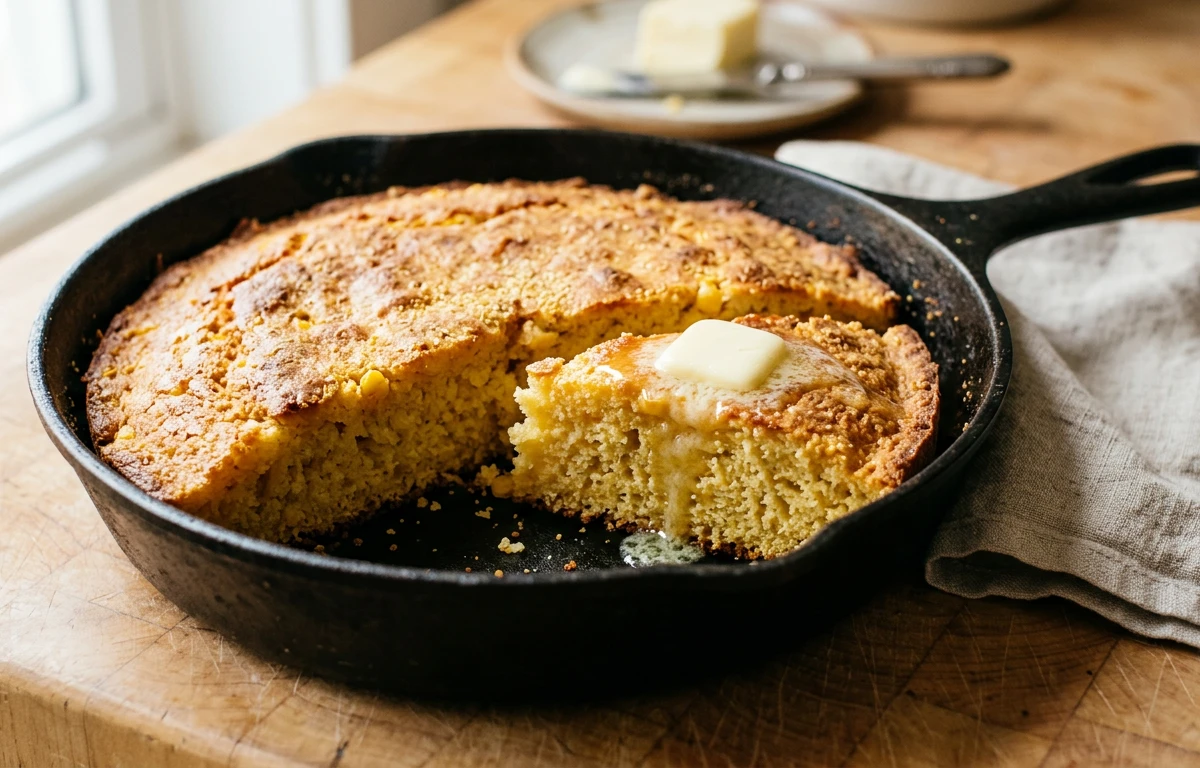
Simple Skillet Cornbread
Golden, crispy-edged cornbread baked in a hot cast iron skillet for that signature crunchy crust. The inside stays tender and moist with a subtle sweetness that pairs perfectly with chili, barbecue, or just a pat of butter. A true Southern classic ready in under 30 minutes.
For 8 servings
- prep
Preheat the oven and heat the skillet.
1.Place a 9-inch cast iron skillet in the oven. Preheat oven to 425°F (220°C) with the skillet inside.2.Let the skillet heat up while you prepare the batter.TIPThe hot skillet is the secret to a crispy crust — don't skip the preheat. - mix
Combine the dry ingredients.
1.In a large mixing bowl, whisk together cornmeal, flour, sugar, baking powder, baking soda, and salt.2.Make a well in the center of the dry mixture. - mix
Mix the wet ingredients.
1.In a medium bowl, whisk together buttermilk and egg until well blended.2.Pour the wet ingredients into the well of the dry mixture.3.Stir gently with a spatula just until combined — a few small lumps are fine. Do not overmix.TIPOvermixing develops gluten and makes the cornbread tough. Stop the moment the flour disappears. - prep
Melt butter in the hot skillet.
1.Carefully remove the hot skillet from the oven using oven mitts.2.Drop the butter into the skillet and swirl until fully melted, coating the bottom and sides evenly.3.Pour the melted butter into the batter, reserving a thin coating on the skillet.4.Stir the butter into the batter until just incorporated.5.Immediately pour the batter into the hot, buttered skillet, spreading it evenly with the spatula.TIPThe batter should sizzle when it hits the skillet — that's how you know the crust will be perfect. - bake · ~22 min
Bake until golden and set.
1.Return the skillet to the oven and bake 20 to 22 minutes.2.Check for doneness — the top should be golden brown and a toothpick inserted in the center should come out clean.3.Let cool in the skillet for 5 minutes before slicing.TIPFor an extra-dark, crispy bottom, leave the skillet on the stovetop over low heat for the first 2 minutes of baking. - serve
Slice and serve warm.
1.Run a butter knife around the edge to loosen.2.Turn the cornbread out onto a cutting board or slice directly in the skillet.3.Serve warm with butter, honey, or alongside chili or barbecue.
What to keep in mind.
6 tips from the recipe — small details that make a real difference to the final dish.
- 1Preheat the cast iron skillet in the oven for at least 15 minutes for a deep golden crust.
- 2Use medium-grind yellow cornmeal for the best texture — fine grind can turn pasty, coarse grind won't cook through.
- 3Let the batter rest for 5 minutes after mixing to allow the cornmeal to hydrate and soften.
- 4Do not overmix the batter; a few lumps are fine and keep the crumb tender.
- 5For a cleaner slice, use a serrated knife and cut while the cornbread is still warm.
- 6Leftover cornbread can be stored wrapped in foil at room temperature for up to 2 days, or frozen for up to 3 months.
Adapt it for your goals.
Jalapeño-cheddar
Fold in 1/2 cup shredded sharp cheddar and 1-2 diced jalapeños (seeds removed for less heat) into the batter. Adds a savory, cheesy kick perfect for serving with soups or chili.
honey sweetenedHoney-sweetened
Increase sugar to 3 tablespoons and replace 1/4 cup buttermilk with 1/4 cup honey. This creates a sweeter, slightly denser cornbread that pairs beautifully with coffee or as a dessert base.
herb & black pepperHerb & black pepper
Stir in 2 tablespoons chopped fresh chives or parsley and 1 teaspoon cracked black pepper. This savory variation complements roasted meats and salads without overpowering.
gluten freeGluten-free
Replace all-purpose flour with a 1:1 gluten-free baking flour blend (ensure it contains xanthan gum). The cornmeal itself is naturally gluten-free, so only the small amount of flour needs substituting.
corn & baconCorn & bacon
Fold in 1/2 cup fresh or frozen (thawed) corn kernels and 1/4 cup cooked, crumbled bacon. Adds smoky, sweet pops and extra texture for a hearty side dish.
Why this is on our healthy list.
Good Source of Whole Grains
Cornmeal is a whole-grain ingredient that provides dietary fiber, which supports healthy digestion and helps keep you full longer.
Rich in Calcium from Buttermilk
Buttermilk contributes calcium and probiotics, promoting bone health and aiding digestion.
Lower in Sugar Than Many Recipes
With just one tablespoon of sugar for the whole skillet, this cornbread is less sweet than many traditional recipes, making it a versatile side rather than a dessert.
Contains Healthy Fats from Butter
Butter provides fat-soluble vitamins A, D, E, and K, and the moderate amount used here adds richness without excessive saturated fat.
Frequently asked questions
Yes, white cornmeal works fine and will produce a slightly milder, less sweet flavor, though the color will be paler. Adjust baking time as needed.