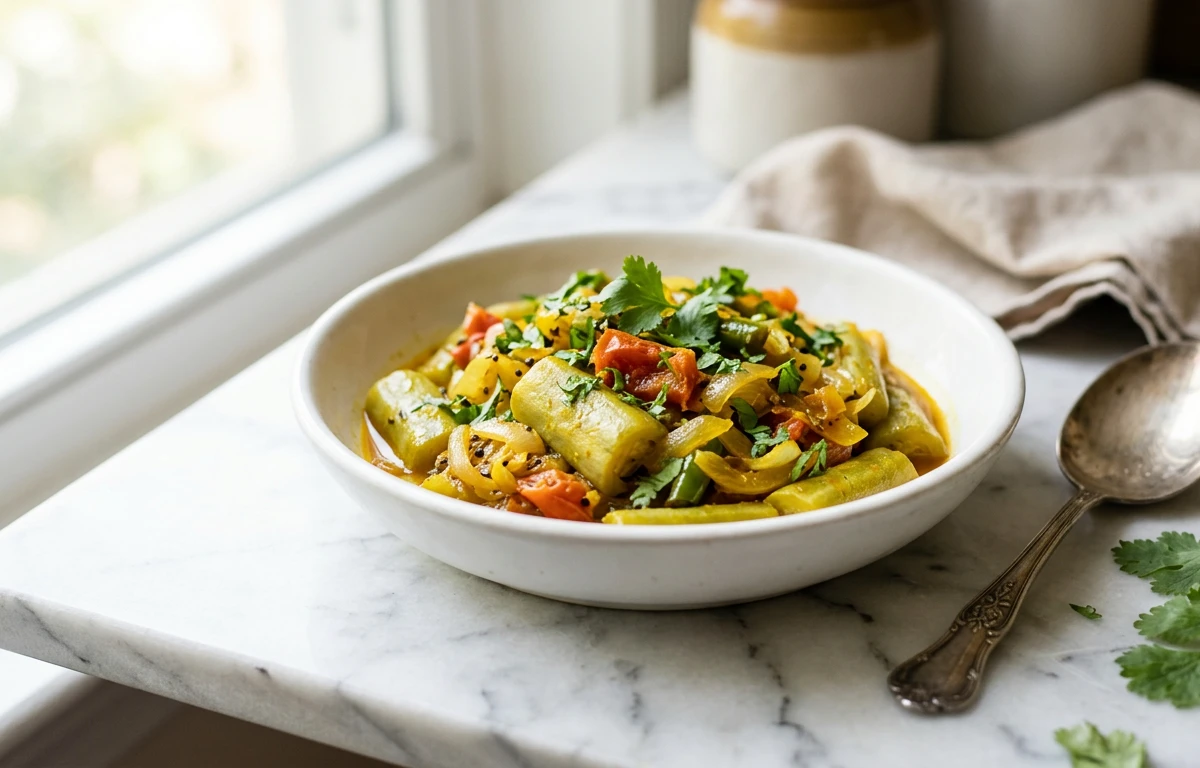
Simple Snake Gourd Sabzi
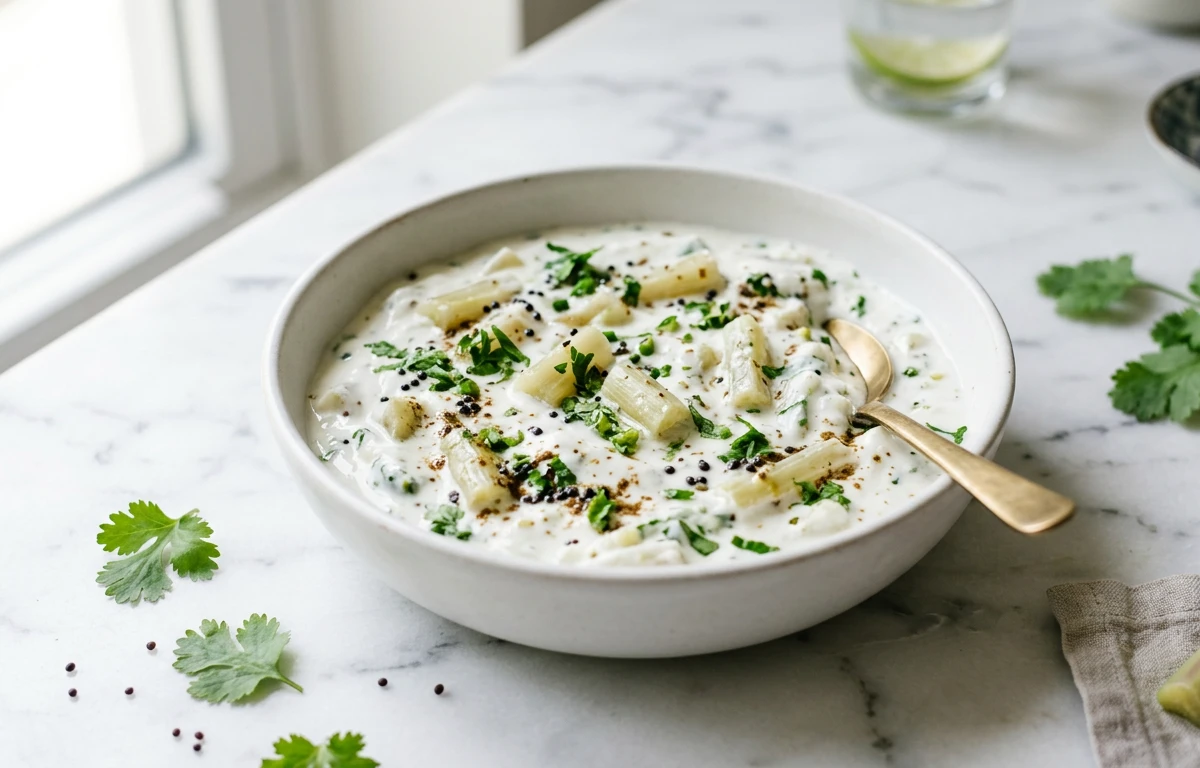
A light, everyday dry sabzi made with tender snake gourd cooked in a tempered blend of mustard seeds, curry leaves, and mild spices. This South Indian-style preparation has a delicate sweetness and soft texture that pairs beautifully with roti or dal rice.
For 4 servings
- prep · ~5 min
Prep the snake gourd.
1.Wash the snake gourd and pat dry.2.Peel the skin lightly using a peeler or knife — remove only the ridges if the gourd is tender.3.Slice lengthwise, scoop out the seeds and pith with a spoon.4.Chop into small bite-sized pieces (about 1 cm cubes).TIPChoose a young, tender snake gourd. Press the flesh with your nail — if it yields easily, it's fresh and will cook faster without bitterness. - temper · ~2 min
Make the tempering.
1.Heat oil in a kadai or pan over medium heat until shimmering.2.Add mustard seeds and let them splutter (30 seconds).3.Add cumin seeds and let them sizzle for 10 seconds.4.Drop in curry leaves and slit green chilies. Stir for 15 seconds until fragrant.TIPKeep the heat at medium. Mustard seeds burn quickly on high heat and turn bitter. - saute · ~4 min
Saute the onions.
1.Add the chopped onion to the tempering.2.Stir and cook until translucent (3-4 minutes).3.Sprinkle turmeric powder and stir for 20 seconds. - saute · ~10 min
Cook the snake gourd.
1.Add the chopped snake gourd pieces to the pan.2.Sprinkle salt and mix well to coat the gourd with the tempering.3.Cover and cook on low heat for 8-10 minutes, stirring once halfway.4.Cook until the gourd pieces are tender but still hold their shape — no need to add water; the gourd releases its own moisture.TIPSnake gourd cooks in its own steam. Don't add water — it will make the sabzi mushy. If it sticks to the pan, sprinkle just a teaspoon of water. - mix · ~1 min
Finish with fresh coconut.
1.Once the gourd is tender and any residual moisture has dried up, turn off the heat.2.Sprinkle the grated coconut over the sabzi and mix gently.3.Check seasoning and adjust salt if needed. - garnish · ~1 min
Garnish with coriander leaves and serve hot.
1.Transfer the sabzi to a serving bowl.2.Scatter fresh coriander leaves on top.3.Serve immediately with roti or dal rice.
What to keep in mind.
6 tips from the recipe — small details that make a real difference to the final dish.
- 1Select tender snake gourds by pressing the flesh with your nail; if it yields easily, it's fresh and less bitter.
- 2Do not add water while cooking; the gourd releases enough moisture to steam itself tender.
- 3Remove the spongy pith and seeds thoroughly to prevent a mushy texture and bitter taste.
- 4Cook covered on low heat to trap steam; stir only once to keep pieces intact.
- 5Add fresh coconut only after turning off the heat to preserve its texture and fresh flavor.
- 6Leftover sabzi can be refrigerated for up to 2 days; reheat in a dry pan to avoid sogginess.
Adapt it for your goals.
Dal tadka twist
Add a spoonful of cooked toor dal (pigeon pea lentils) along with the gourd for a heartier, protein-rich version that pairs beautifully with rice.
low oilLow-oil
Reduce oil to 1 teaspoon and use a non-stick pan; the moisture from the gourd is enough to cook it, making this a lighter option.
peanut finishPeanut finish
Replace fresh coconut with 2 tablespoons of crushed roasted peanuts for a nutty, crunchy variation common in Andhra-style cooking.
veganVegan
This recipe is naturally vegan; skip the optional ghee and use any plant-based oil to keep it fully vegan-friendly.
Why this is on our healthy list.
Low in Calories
Snake gourd is extremely low in calories, making this sabzi a great choice for weight management without sacrificing flavor.
Rich in Dietary Fiber
The snake gourd and onion provide fiber that aids digestion and promotes gut health.
Hydrating Properties
Snake gourd has high water content, helping keep the body hydrated and supporting overall hydration.
Frequently asked questions
Look for young, tender snake gourds that are firm and bright green. Press the flesh with your nail — if it indents easily, it's fresh and will cook without bitterness.