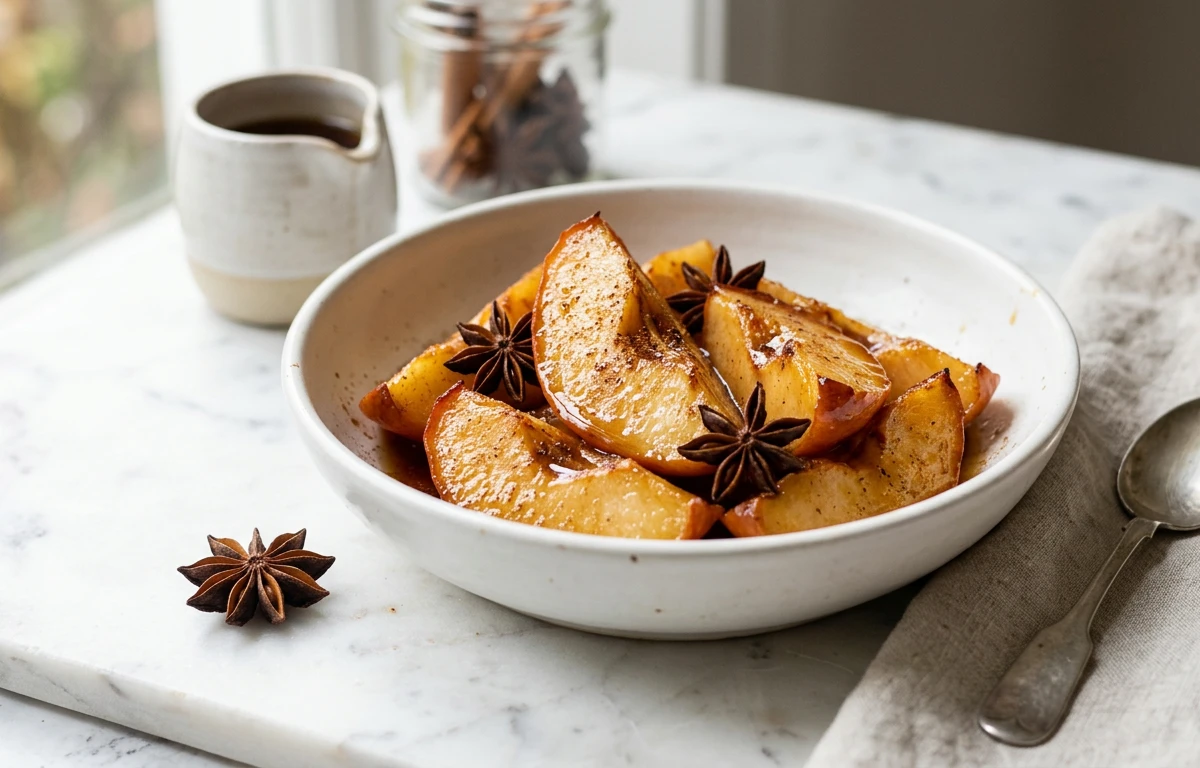
Simple Spiced Baked Quince
A rustic, aromatic dessert where tart quince transforms into tender, rose-hued slices after a long, slow bake with honey, cinnamon, and star anise. The fruit's natural pectin creates a luscious, syrupy glaze that clings to every piece. Perfect served warm with a dollop of yogurt or a scoop of vanilla ice cream.
For 4 servings
- prep · ~10 min
Preheat the oven and prepare the quince.
1.Preheat the oven to 350°F (175°C).2.Using a sharp knife, cut each quince into quarters. Leave the skin on for color and texture.3.Remove and discard the woody core and seeds from each quarter.4.Arrange the quarters in a single layer in the baking dish.TIPQuince flesh oxidizes quickly. Squeeze a bit of lemon juice over the cut pieces as you work to keep them from browning too much. - prep · ~2 min
Make the spiced honey syrup.
1.In a small bowl, whisk together the honey, water, lemon juice, and a pinch of salt until smooth.2.Pour the mixture evenly over the quince.3.Tuck the cinnamon sticks and star anise into the liquid between the fruit pieces. - bake · ~60 min
Bake covered until tender.
1.Cover the baking dish tightly with aluminum foil.2.Bake for 60 minutes, until the quince is easily pierced with a paring knife and has taken on a blush-pink hue.TIPThe slow, covered bake is crucial. Quince is rock-hard when raw and needs the steam to soften properly. - bake · ~30 min
Uncover and bake until glazed.
1.Remove the foil from the baking dish.2.Continue baking for another 25-30 minutes, basting the quince with the pan juices once halfway through.3.Bake until the juices have reduced to a glossy syrup and the edges of the quince look slightly caramelized.TIPWatch closely during the last 10 minutes. The honey syrup can go from perfectly glazed to burnt quickly. - assemble · ~10 min
Rest and serve.
1.Remove the dish from the oven and let it rest for 10 minutes. The syrup will thicken slightly as it cools.2.Spoon the warm quince and syrup into serving bowls.3.Top with a dollop of thick yogurt and a scattering of chopped pistachios.TIPFor the best flavor, discard the cinnamon sticks and star anise before serving, or leave them in the dish as a beautiful rustic garnish.
What to keep in mind.
6 tips from the recipe — small details that make a real difference to the final dish.
- 1Use a sharp, heavy knife to cut quince — their dense flesh is surprisingly tough.
- 2Rub cut quince with lemon juice immediately to prevent rapid browning.
- 3Arrange quince in a single layer so they cook evenly and absorb syrup.
- 4Baste the quince halfway through the uncovered bake for a more even glaze.
- 5Let the quince rest 10 minutes after baking so the syrup thickens naturally.
- 6Discard star anise and cinnamon sticks before serving if you prefer a milder spice flavor.
Adapt it for your goals.
Vegan
Replace honey with maple syrup or agave nectar. The flavor shifts slightly but remains aromatic and luscious — perfect for plant-based diets.
low sugarLow-sugar
Reduce honey to 2 tbsp and add 2 tbsp of allulose or erythritol. The quince will still soften but the syrup will be lighter — great for those watching sugar intake.
citrus twistCitrus twist
Add 2 strips of orange zest along with the cinnamon and star anise. The citrus brightens the dish and complements quince's floral notes beautifully.
spice swapSpice swap
Replace star anise with a split vanilla bean and a pinch of cardamom. The result is warmer, more perfumed — a lovely winter alternative.
Why this is on our healthy list.
Rich in Vitamin C
Quince provides a good amount of vitamin C, supporting immune function and skin health, especially when the peel is left on.
Natural Pectin for Gut Health
The high pectin content in quince acts as a soluble fiber, aiding digestion and promoting a healthy gut microbiome.
Source of Antioxidants
Cinnamon, star anise, and quince peel are rich in antioxidants that help combat oxidative stress and inflammation.
Mineral Boost from Pistachios
Pistachios add a crunch of potassium, vitamin B6, and healthy fats, balancing the dessert with satiety and nutrients.
Frequently asked questions
No — leaving the skin on helps the slices hold their shape, adds color, and contributes pectin for a thicker syrup. Just wash them well.