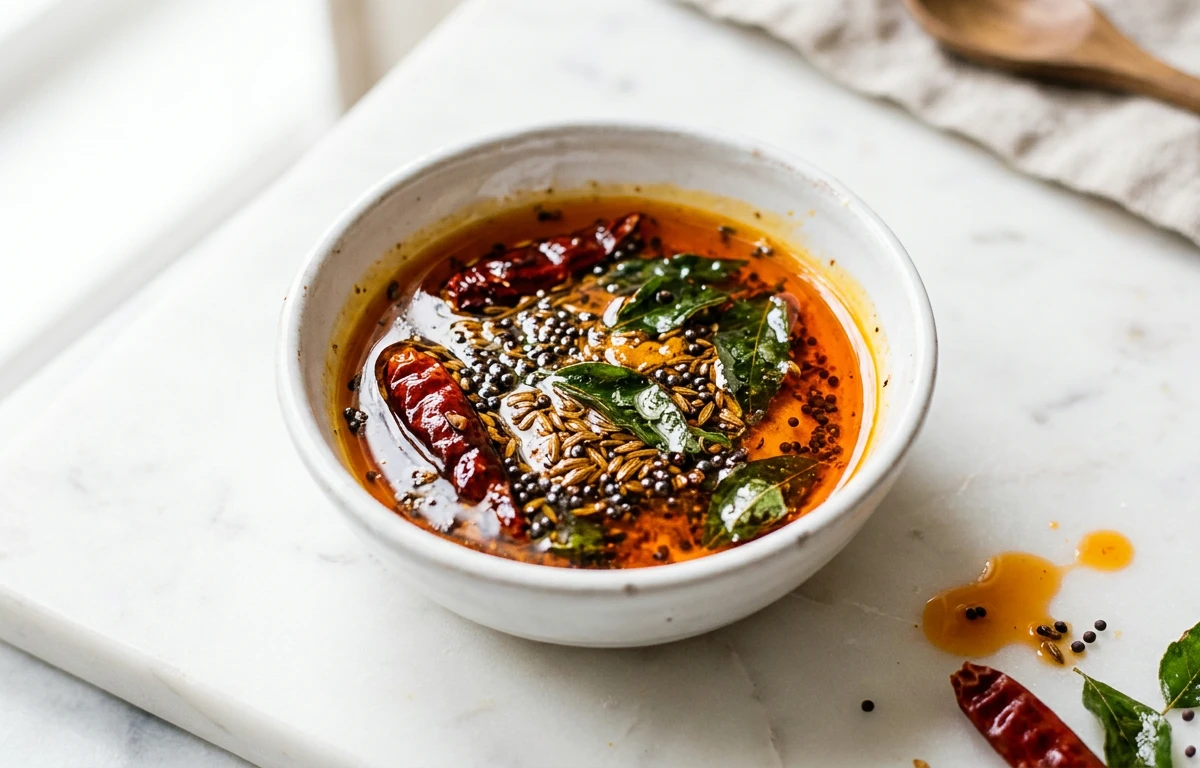
Simple Tadka for Dal
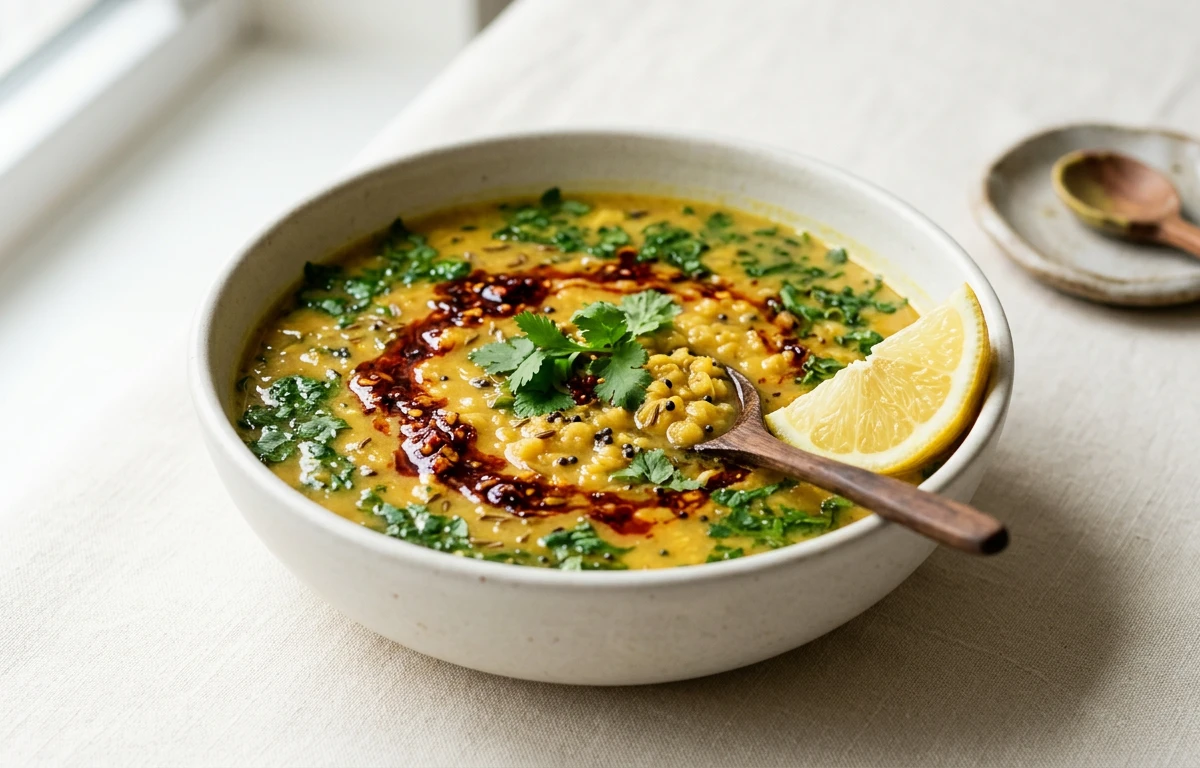
A fragrant sizzling tempering of cumin, garlic, and red chili that transforms plain boiled lentils into a deeply aromatic bowl of comfort. This simple tadka takes just five minutes and is the soul of every Indian dal, drizzled hot over the dal just before serving.
For 4 servings
- prep · ~2 min
Prep garlic and chilies.
1.Peel and thinly slice 4 garlic cloves.2.Break 2 dried red chilies in half. Remove seeds for milder heat. - temper · ~2 min
Make the tadka.
1.Heat 2 tbsp ghee in a small tadka pan over medium heat until shimmering.2.Add 1 tsp cumin seeds and let them crackle for 20-30 seconds.3.Add sliced garlic and fry until lightly golden but not burnt (30-40 seconds).4.Drop in broken dried red chilies and a pinch of asafoetida. Swirl the pan for 10 seconds.5.Switch off the heat and immediately add a pinch of red chili powder. The residual heat will bloom it.TIPDon't let the garlic turn dark brown — it turns bitter. Pull the pan off heat the moment it hits golden. - garnish
Pour the tadka over hot dal and serve immediately.
Hold a lid over the dal pot as you pour so the sizzling ghee doesn't splatter. Do not stir right away — let the tadka float on top for a minute before mixing for maximum aroma.
TIPServe immediately while the tadka is still crackling on the surface of the dal. The sizzle is part of the experience.
What to keep in mind.
6 tips from the recipe — small details that make a real difference to the final dish.
- 1Always heat the ghee until it shimmers before adding cumin seeds — this ensures proper crackling.
- 2Slice garlic cloves thinly and uniformly so they fry evenly without burning.
- 3Remove seeds from dried red chilies if you prefer a milder, more aromatic tadka.
- 4Add the red chili powder only after switching off the heat to prevent it from turning bitter.
- 5Pour the hot tadka over dal just before serving; the contrast of hot oil on warm dal amplifies the aroma.
- 6Let the tadka rest on top of the dal for a minute before stirring to lock in the fragrance.
Adapt it for your goals.
Vegan
Substitute ghee with coconut oil or a neutral oil like avocado oil. The tadka will still be fragrant, with a slightly different richness that pairs well with lentil soups.
onion tomato tadkaOnion-tomato tadka
After the cumin crackles, add 1/4 cup finely chopped onion and fry until golden, then add 1 small chopped tomato and cook until soft. This adds a tangy, savory layer perfect for a thicker dal.
extra spicyExtra-spicy
Use 4 dried red chilies instead of 2 and add 1/2 teaspoon of crushed red pepper flakes along with the red chili powder. Ideal for those who love a fiery kick.
garlic heavyGarlic-heavy
Double the garlic to 8 cloves and slice them thicker so they caramelize on the edges while staying soft in the center. Great for garlic lovers who want a sweeter, more robust flavor.
Why this is on our healthy list.
Rich in Digestive Aids
Cumin seeds and asafoetida are traditionally used in Indian cooking to aid digestion and reduce bloating, making this tadka a gut-friendly addition to any lentil meal.
Antioxidant Boost from Garlic
Garlic provides allicin, a sulfur compound with antioxidant properties that support immune health and may help reduce inflammation.
Healthy Fats from Ghee
Ghee is a source of conjugated linoleic acid (CLA) and butyrate, which can support gut health and provide sustained energy without the lactose found in butter.
Low-Calorie Flavor Enhancer
This tadka adds intense flavor to dal without relying on heavy cream or cheese, making it a calorie-conscious way to elevate a simple protein-rich dish.
Frequently asked questions
Yes, but ghee has a higher smoke point and a nuttier flavor. If using butter, watch it closely as it can burn faster. A neutral oil like sunflower or coconut oil works well for a dairy-free version.