Slow-Cooked Mutton Paya Soup
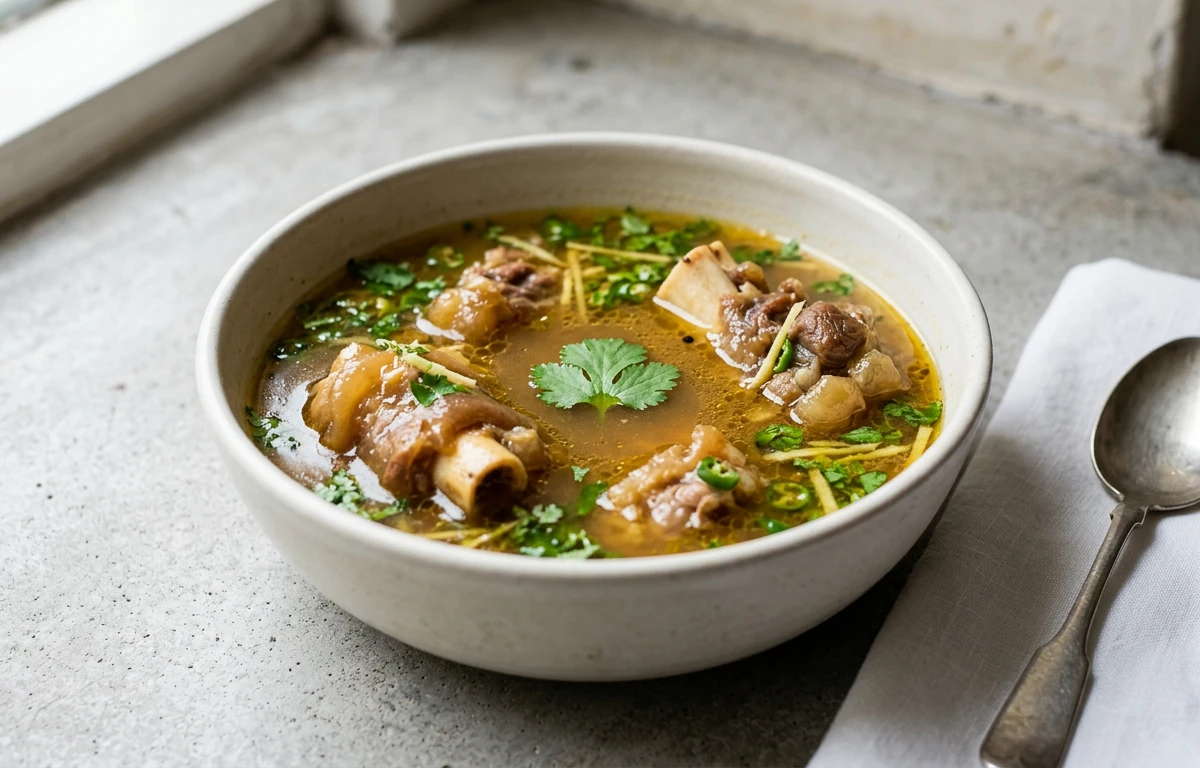
A deeply nourishing and traditional South Asian soup, Slow-Cooked Mutton Paya is made from mutton trotters and sometimes head, simmered for hours with aromatic spices until the meat is fall-off-the-bone tender and the broth is rich, gelatinous, and incredibly flavorful.
For 6 servings
Thoroughly clean the mutton trotters and head pieces. This often involves singeing any remaining hair over an open flame, scraping, and washing multiple times with salt and flour to ensure cleanliness. Chop into manageable pieces if not already done by the butcher.
Heat oil in a large heavy-bottomed pot or pressure cooker over medium heat. Add sliced onions and sauté for 10-12 minutes until deeply golden brown. Add ginger paste, garlic paste, and slit green chilies, sauté for another 2-3 minutes until fragrant.
Introduce whole spices (cinnamon stick, green and black cardamom, cloves, black peppercorns, bay leaves) and sauté for 1 minute until aromatic. Add the cleaned mutton trotters and head pieces, turmeric powder, red chili powder, coriander powder, cumin powder, and salt. Mix well and sear the mutton for 5-7 minutes until lightly browned.
Pour in 2.5-3 liters of hot water, ensuring the mutton is fully submerged. Bring the mixture to a rolling boil.
For Pressure Cooker: Close the lid and cook on high pressure for 45-60 minutes after the first whistle, then reduce heat to low and cook for another 30 minutes. Let the pressure release naturally. For Stovetop: Reduce heat to the lowest setting, cover, and simmer for 3-4 hours, or until the meat is extremely tender and falling off the bone. Skim off any foam that rises to the surface during the first hour.
Once cooked, the meat should be gelatinous and easily separate from the bone. Carefully remove any small bone fragments if using head. Taste and adjust salt and spice levels if needed. If the broth is too thin, you can simmer it uncovered for a short while to reduce. Ladle the hot Paya soup into bowls, garnish generously with fresh cilantro and ginger juliennes, and serve with lemon wedges on the side. Enjoy with naan, roti, or steamed rice.
What to keep in mind.
4 tips from the recipe — small details that make a real difference to the final dish.
- 1Cleaning is Key: Ensure trotters and head are meticulously cleaned and singed to remove all hair and impurities for a clean-tasting soup.
- 2Low and Slow: The secret to perfect Paya is long, slow cooking. This extracts maximum collagen, resulting in a rich, gelatinous, and flavorful broth.
- 3Skim Fat: After cooking and cooling slightly, you can skim off excess fat from the surface if desired, especially if you refrigerate it overnight (the fat will solidify).
- 4Aromatics First: Don't rush the sautéing of onions, ginger, and garlic; developing their flavor deeply forms the foundational base of the soup.
Adapt it for your goals.
Spice Level
Increase red chili powder and add a few more slit green chilies or a pinch of cayenne pepper during cooking for a spicier kick.
Flavor ProfileFlavor Profile
Add 1-2 chopped tomatoes or 1/4 cup tomato puree along with the powdered spices for a slightly tangy depth to the broth.
Thicker ConsistencyThicker Consistency
For a slightly thicker consistency, you can add 1-2 tablespoons of roasted gram flour (besan) mixed with a little water, stirring it into the soup during the last 30 minutes of simmering.
Why this is on our healthy list.
Joint Health & Skin Elasticity
The long simmering process extracts collagen from the bones and connective tissues, which is beneficial for joint health, skin elasticity, and gut lining.
High Protein
Mutton is a good source of high-quality protein, essential for muscle repair, growth, and providing a feeling of fullness, aiding in satiety.
Mineral Boost
Bone broth is rich in essential minerals like calcium, magnesium, phosphorus, and potassium, which are crucial for bone strength, nerve function, and overall immune support.
Frequently asked questions
Yes, Paya often tastes even better the next day as the flavors meld and deepen. Store in an airtight container in the refrigerator for up to 3 days or freeze for up to 3 months.