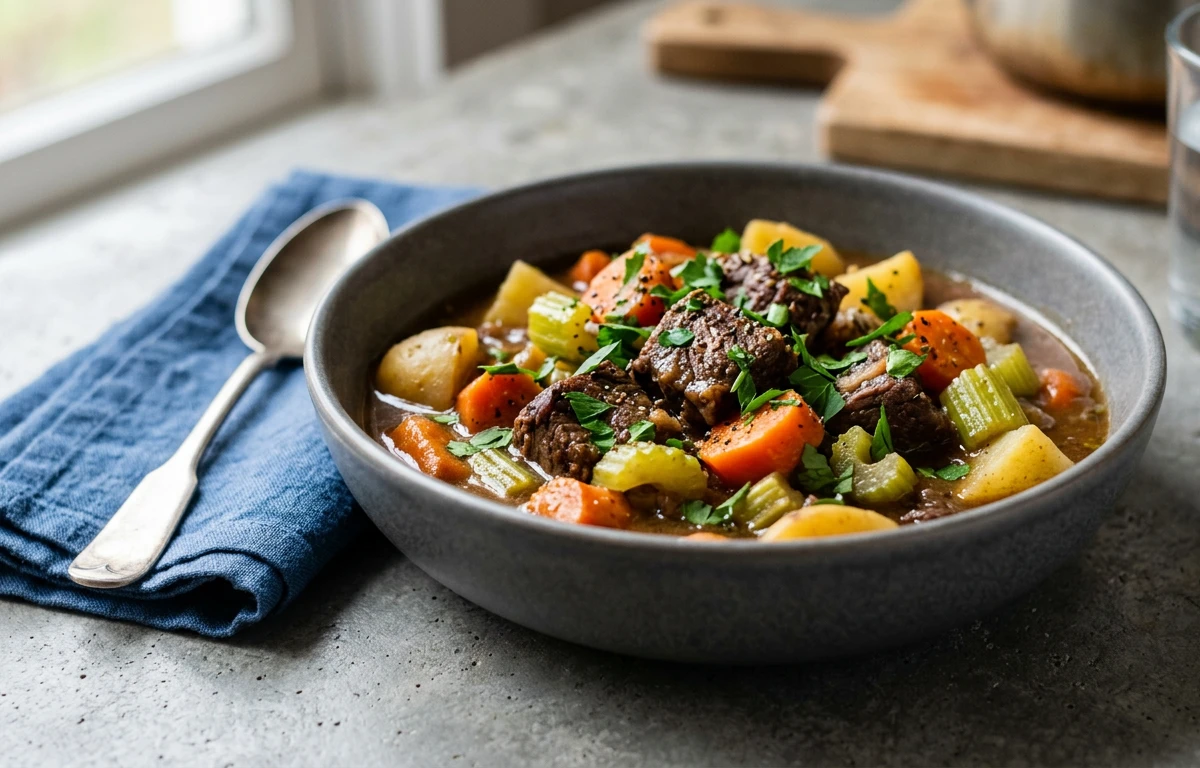
Slow-Cooker Beef & Vegetable Stew
A rich, hearty stew where tender chunks of beef and root vegetables slowly braise together in a deeply savory, herb-infused broth. The slow cooker does all the work, filling the kitchen with comforting aromas and delivering spoon-tender meat in a thick, luscious gravy.
For 4 servings
- prep · ~15 min
Season and sear the beef.
1.Pat beef cubes dry with paper towels and season with half the salt and a pinch of black pepper.2.Heat oil in a large skillet over medium-high heat until shimmering.3.Working in batches, sear beef on all sides until deeply browned (3-4 min per batch). Transfer seared beef to the slow cooker.TIPDon't crowd the pan — the beef needs space to brown properly. Overcrowding steams it instead. - saute · ~7 min
Sauté the aromatics.
1.Reduce heat to medium. Add chopped onion to the same skillet and cook until softened (4-5 min).2.Add minced garlic and cook until fragrant (30 sec).3.Stir in tomato paste and cook, stirring constantly, for 1 minute to deepen its flavor.TIPCooking the tomato paste briefly removes its raw tinny taste and unlocks rich umami notes. - mix · ~3 min
Build the stew base.
1.Sprinkle flour over the onion mixture and stir for 1 minute to cook out the raw flour taste.2.Pour in half the water while whisking to create a smooth, thick base.3.Transfer this mixture to the slow cooker with the beef. - assemble · ~480 min
Add vegetables and set to cook.
1.Add carrots, potatoes, celery, bay leaves, dried thyme, and remaining water to the slow cooker. Stir to combine.2.Cover and cook on LOW for 8 hours (or HIGH for 5 hours) until beef is fork-tender.TIPKeep the lid closed! Every peek releases heat and adds 15-20 minutes to the cooking time. - mix · ~15 min
Finish with peas.
1.During the last 15 minutes of cooking, stir in the frozen peas.2.Season with remaining salt. Remove bay leaves before serving. - garnish · ~1 min
Ladle into bowls and garnish with fresh parsley.
What to keep in mind.
6 tips from the recipe — small details that make a real difference to the final dish.
- 1Pat the beef cubes thoroughly dry before searing to ensure a deep brown crust, not a gray steam.
- 2Use a heavy-bottomed skillet for even browning and to build fond (brown bits) that enriches the stew.
- 3Cut carrots, potatoes, and celery into uniform 1-inch chunks so they cook evenly alongside the beef.
- 4Add frozen peas only in the last 15 minutes to keep them bright green and slightly sweet, not mushy.
- 5For a thicker gravy, mash a few potato chunks against the side of the slow cooker before serving and stir in.
- 6Let the stew cool completely, then refrigerate overnight — the flavors meld and any fat solidifies for easy removal.
Adapt it for your goals.
Low-oil
Skip the searing step and add raw seasoned beef directly to the slow cooker with 1 tablespoon of oil stirred into the vegetables; the stew will be lighter but still flavorful.
high proteinHigh-protein
Swap half the potatoes for extra carrots and celery, then add 1 can of drained chickpeas or lentils in the last 30 minutes for a protein boost without extra meat.
jainJain
Omit onion and garlic, use asafoetida (hing) for a savory base, and replace potato with sweet potato; the stew remains hearty and aromatic as per Jain dietary restrictions.
veganVegan
Replace beef with 2 cans of drained chickpeas and use vegetable broth instead of water; the slow-cooked vegetables and peas create a satisfying, protein-rich stew.
Why this is on our healthy list.
High in Protein
Beef chuck provides a substantial amount of complete protein for muscle repair and satiety.
Rich in Vitamin A
Carrots are an excellent source of beta-carotene, which supports eye health and immune function.
Good Source of Fiber
Potatoes and peas contribute dietary fiber that supports digestion and stable blood sugar levels.
Low in Added Sugar
This stew uses only natural sugars from vegetables, making it a wholesome choice for balanced eating.
Frequently asked questions
Yes, use brisket or bottom round for similar results, but avoid lean cuts like sirloin—they dry out in long cooking.