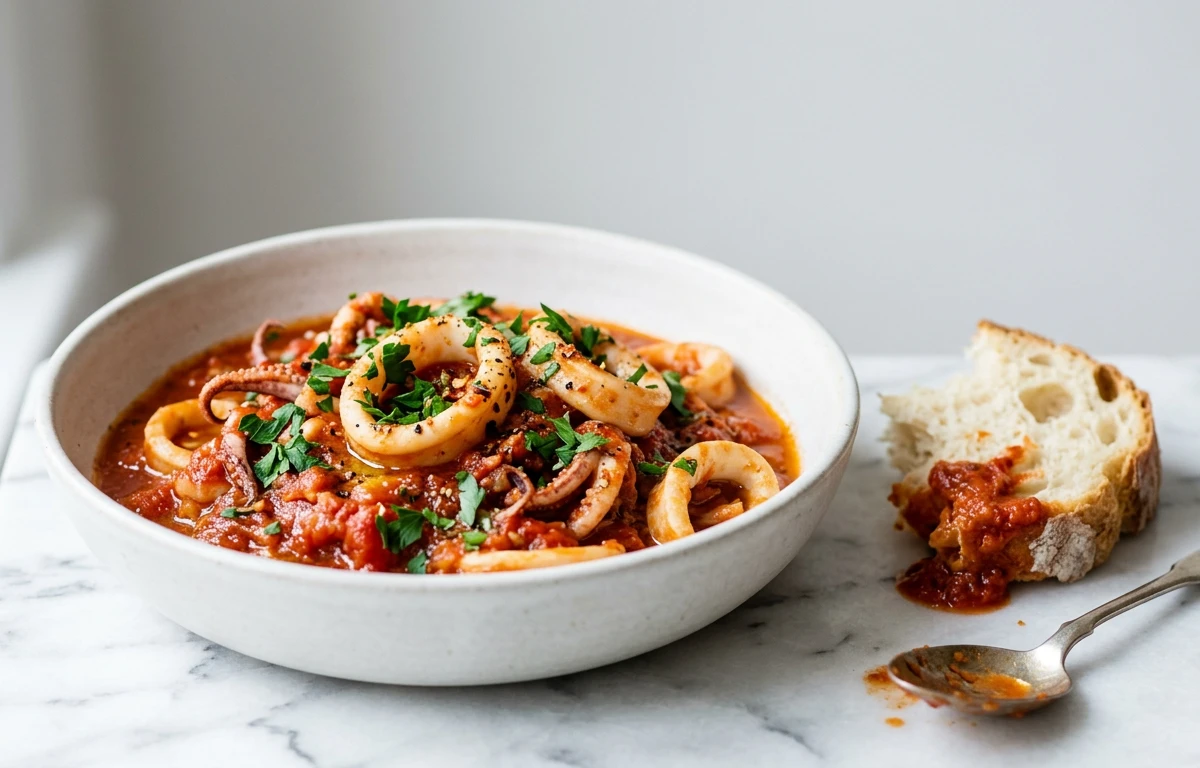
Slow-Simmered Squid in Tomato Sauce
Tender rings of squid gently simmered in a rich, garlicky tomato sauce until perfectly soft. A rustic Italian-style seafood dish that tastes like it cooked all day but comes together in under an hour, ideal with crusty bread or over pasta.
For 4 servings
- prep
Prepare the squid.
1.Rinse the cleaned squid tubes and tentacles under cold water and pat very dry with paper towels.2.Slice the tubes into rings about 1 cm thick and halve any large tentacles.3.Spread the pieces on a clean towel and pat dry again.TIPSquid must be bone-dry to sear properly. Any extra water will cause it to steam instead of brown. - saute · ~1 min
Sauté the garlic and chili.
1.Warm the olive oil in a heavy-bottomed pot over medium heat.2.Add the sliced garlic and red chili flakes and cook until the garlic turns pale gold and fragrant, about 1 minute.3.Keep the garlic moving so it doesn't burn.TIPWatch the garlic carefully — burned garlic turns bitter and will ruin the sauce. - saute · ~3 min
Sear the squid rings.
1.Add the squid pieces to the pot in a single layer, working in batches if needed.2.Cook over medium-high heat, stirring occasionally, until the rings turn opaque and the edges start to pick up a little golden color, about 2 to 3 minutes.3.Season with a pinch of the salt.TIPDon't crowd the pot or the squid will release too much water. A quick hot sear locks in flavor. - simmer · ~40 min
Add tomatoes and water, then simmer.
1.Pour the diced tomatoes and water into the pot.2.Stir in the remaining salt, then bring the liquid to a gentle bubble.3.Reduce the heat to low, cover with a lid, and simmer gently for 35 to 40 minutes.TIPThe low, slow simmer is what makes the squid meltingly tender. Resist the urge to turn up the heat. - simmer · ~5 min
Uncover and finish the sauce.
1.Remove the lid and taste the squid for tenderness — it should feel soft with almost no resistance.2.If the sauce looks too thin, increase the heat to medium and let it bubble uncovered for a few minutes until it thickens slightly.3.If it's too thick, add a splash of water.TIPThe ideal consistency is a loose, brothy sauce that pools nicely around the squid, not a dry stew. - mix
Season and finish with lemon and parsley.
1.Turn off the heat and stir in the lemon juice and the black pepper.2.Sprinkle the chopped parsley over the top and give everything a gentle fold.3.Let the dish rest for 2 minutes off the heat before serving.TIPStirring the lemon juice in off the heat keeps its brightness fresh — heat can mellow it out too much. - serve
Spoon into bowls and serve warm.
Ladle the squid and sauce into shallow bowls and finish with an extra drizzle of olive oil and more parsley if you like. Serve with crusty bread for dipping or over a bed of soft polenta.
What to keep in mind.
7 tips from the recipe — small details that make a real difference to the final dish.
- 1Pat squid completely dry before searing to avoid steaming in the pot.
- 2Do not crowd the pot when searing; work in batches for proper browning.
- 3Simmer low and covered for 35-40 minutes to break down squid fibers into tenderness.
- 4Taste a ring after simmering; it should offer almost no resistance when bitten.
- 5Adjust sauce consistency at the end: thin with water, or reduce uncovered for thickness.
- 6Stir in lemon juice off the heat to preserve its bright, fresh acidity.
- 7Make ahead and reheat gently; the sauce flavors deepen overnight in the fridge.
Adapt it for your goals.
Spicy Calabrian
Replace the single pinch of chili flakes with a heaped teaspoon of Calabrian chili paste for a deeper, fruitier heat typical of southern Italian cooking.
White WineWhite Wine
Deglaze the pot with 60ml dry white wine before adding tomatoes; the wine adds acidity that complements the seafood and gives the sauce more complexity.
Caper & OliveCaper & Olive
Stir in 1 tablespoon rinsed capers and 2 tablespoons pitted, halved black olives during the last 10 minutes of simmering for a briny, Sicilian-style twist.
Herb HeavyHerb-Heavy
Add a sprig of fresh basil and a sprig of oregano to the pot while simmering, then remove before serving for a more aromatic, herbaceous sauce.
Why this is on our healthy list.
Lean Seafood Protein
Squid is a low-fat, high-quality protein source, providing essential amino acids with minimal saturated fat.
Rich in Selenium
Squid is a natural source of selenium, a mineral that supports antioxidant function and thyroid health.
Vitamin C from Tomatoes
Fresh tomatoes contribute vitamin C, which supports immune function and enhances iron absorption from the squid.
Heart-Healthy Olive Oil
Extra-virgin olive oil provides monounsaturated fats and polyphenols that help maintain cardiovascular health.
Frequently asked questions
Squid becomes rubbery when cooked very briefly or at high heat after the initial sear. This recipe's 35-40 minute slow simmer breaks down its collagen properly for tenderness.