Smashed Fava Bean & Ricotta Crostini
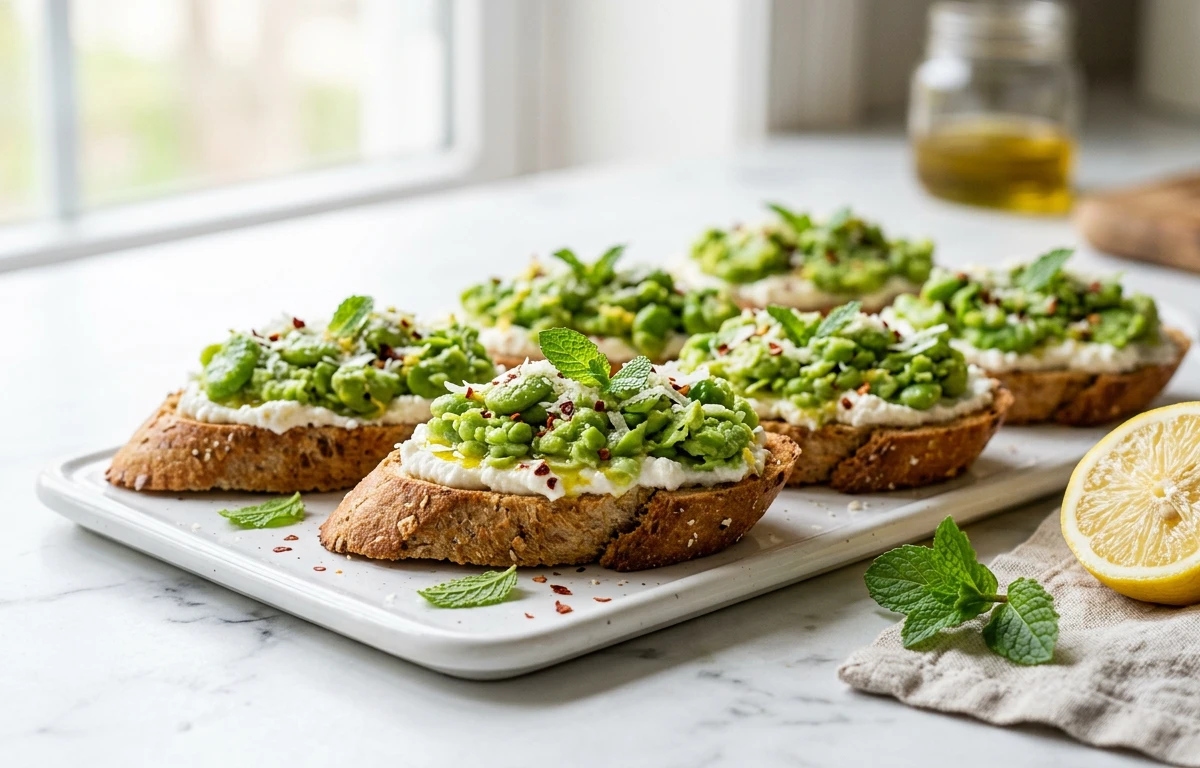
Crispy toasted bread topped with creamy ricotta and a rustic smash of tender fava beans kissed with lemon and mint. A perfect spring appetizer that comes together in minutes and feels effortlessly elegant.
For 4 servings
- boil · ~3 min
Blanch the fava beans.
Bring a saucepan of water to a boil. Add the shelled fava beans and cook until tender, about 2 to 3 minutes. Drain and immediately rinse under cold water to stop the cooking.
TIPIf using larger, mature beans, slip off the pale outer skin after blanching for a brighter green, more tender bite. - bake · ~8 min
Toast the baguette slices.
1.Preheat the oven to 400°F (200°C).2.Arrange baguette slices on a baking sheet, brush both sides lightly with 2 tablespoons of olive oil.3.Toast until golden and crisp, about 6 to 8 minutes, flipping halfway. - prep
Rub the crostini with garlic.
While the toasts are still warm, gently rub one side of each slice with the cut side of the halved garlic clove.
- mix
Smashed the fava bean mixture.
1.In a mixing bowl, combine the blanched fava beans, remaining 1 tablespoon olive oil, lemon juice, lemon zest, and minced garlic.2.Season with a pinch of salt and black pepper.3.Roughly smash with a fork until the beans are broken down but still chunky.TIPAim for a rustic, chunky texture — not a smooth puree. Some whole beans should remain. - assemble
Assemble the crostini.
1.Spread a generous spoonful of ricotta cheese onto each garlic-rubbed crostini.2.Top with a heap of the smashed fava bean mixture.3.Finish with a scatter of fresh chopped mint. - serve
Serve immediately while the bread is crisp.
Arrange crostini on a platter and serve right away to keep the bread from softening.
What to keep in mind.
6 tips from the recipe — small details that make a real difference to the final dish.
- 1If using fresh fava beans, always remove the tough outer skin after blanching for a silkier texture.
- 2Drain the ricotta in a fine-mesh sieve for 30 minutes if it looks watery to avoid soggy crostini.
- 3Rub the garlic onto the toast while it's still hot so the flavor infuses better.
- 4Don't over-mash the favas; leave some whole pieces for a rustic, chunky texture.
- 5Assemble crostini right before serving to keep the bread crisp and not softened by the toppings.
- 6For extra flavor, brush the baguette slices with a cut garlic clove before toasting instead of rubbing after.
Adapt it for your goals.
Vegan
Replace ricotta with a creamy cashew cheese (soaked cashews blended with lemon juice and nutritional yeast) and use a light drizzle of agave instead of honey, if needed.
high proteinHigh-protein
Substitute ricotta with whipped Greek yogurt or a thick labneh for a boost of protein while keeping a tangy, creamy base.
low oilLow-oil
Toast baguette slices on a dry baking sheet without oil (watch carefully to avoid burning) and reduce olive oil in the bean smash to 1 teaspoon.
Why this is on our healthy list.
Rich in Plant Protein
Fava beans are a great source of plant-based protein, making this appetizer more satisfying and muscle-friendly.
Good Source of Fiber
The combination of fava beans and whole-grain baguette provides dietary fiber that supports digestive health.
Packed with Vitamin K
Mint and fava beans both contribute vitamin K, which plays a key role in bone health and blood clotting.
Contains Calcium
Whole-milk ricotta adds a good dose of calcium, essential for strong bones and teeth.
Frequently asked questions
Yes, frozen fava beans work perfectly. Blanch them directly from frozen for 2–3 minutes, then drain and cool as directed.