
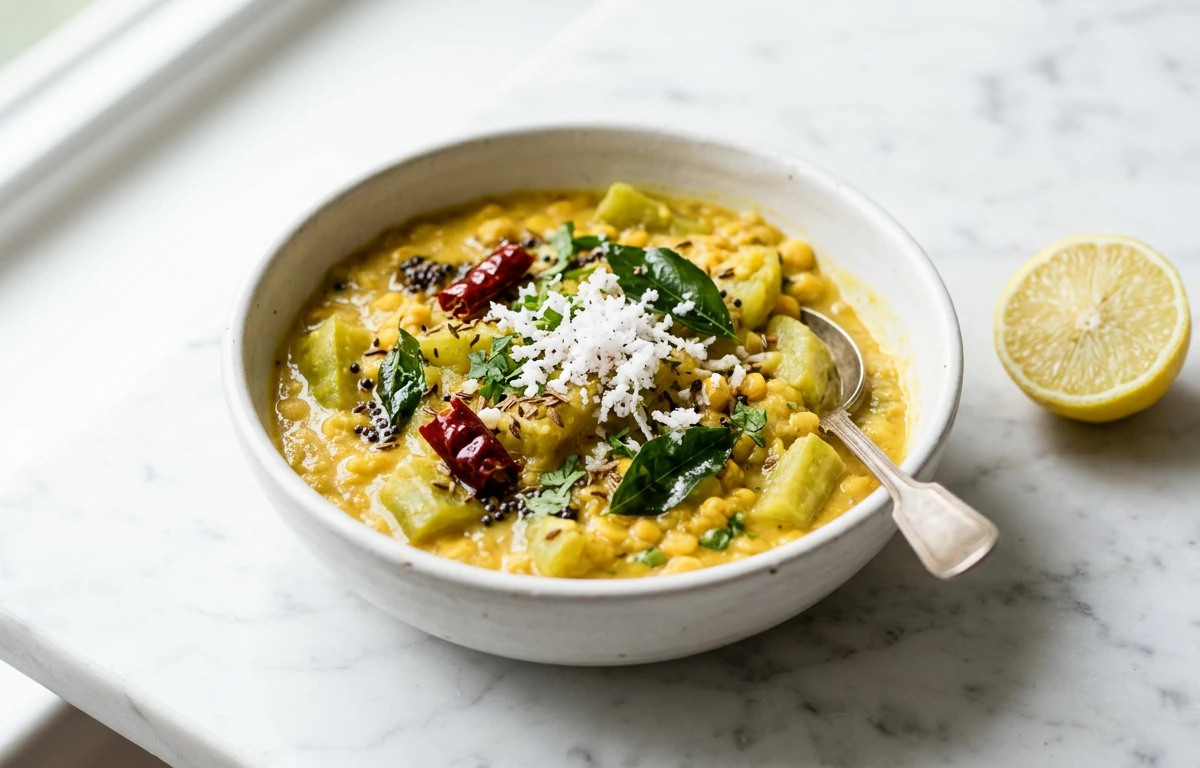
Snake Gourd & Lentil Kootu
A comforting South Indian stew where tender snake gourd and moong dal come together in a gently spiced coconut gravy. Light, nourishing, and finished with a crackling tempering of mustard seeds, curry leaves, and dried red chili, this kootu pairs beautifully with steamed rice and a drizzle of ghee.
For 4 servings
- prep
Prep the vegetables and lentils.
1.Wash the snake gourd thoroughly, trim the ends, and cut into small cubes.2.Rinse the moong dal in 2-3 changes of water until the water runs clear.TIPIf the snake gourd is mature and seeds are hard, scoop them out before chopping. - pressure cook · ~12 min
Pressure cook the dal and snake gourd.
1.Add the rinsed moong dal, cubed snake gourd, green chili, turmeric powder, and salt to the pressure cooker.2.Pour in 1 cup of water and close the lid.3.Cook on medium heat for 2 whistles, then reduce heat and cook for 3 more minutes.4.Allow the pressure to release naturally before opening the lid.TIPNatural pressure release helps the dal settle into a creamy consistency. - mix
Grind the coconut paste.
1.In a mixer grinder, combine the grated coconut, cumin seeds, and 3 tablespoons of water.2.Grind to a smooth, thick paste. - simmer · ~4 min
Combine and simmer the kootu.
1.Open the pressure cooker and gently mash the dal-snake gourd mixture with a ladle.2.Stir in the ground coconut paste and mix well.3.Place the cooker back on low heat and simmer for 3-4 minutes, adding a splash of water if it's too thick.TIPThe kootu thickens as it cools — keep it slightly loose while simmering. - temper · ~2 min
Make the tempering.
1.Heat coconut oil in a small pan over medium heat.2.Add mustard seeds and let them splutter.3.Add urad dal and sauté until golden.4.Toss in dried red chili, curry leaves, and asafoetida — fry until fragrant, about 15 seconds.TIPPour the tempering immediately into the hot kootu to hear that signature sizzle. - garnish
Garnish and serve.
Pour the tempering over the simmering kootu, stir gently, and top with fresh coriander leaves. Serve hot with steamed rice and a drizzle of ghee.
What to keep in mind.
6 tips from the recipe — small details that make a real difference to the final dish.
- 1If your snake gourd is mature with hard seeds, always deseed it to avoid a bitter taste in the kootu.
- 2Natural pressure release is key — it allows the moong dal to break down and become creamy without turning mushy.
- 3Keep the kootu slightly looser than desired while simmering, as it will thicken significantly as it cools.
- 4For a richer texture, use freshly grated coconut instead of dried or desiccated coconut in the paste.
- 5Pour the hot tempering directly over the cooked kootu so it sizzles — this releases the full aroma of curry leaves and mustard.
- 6This kootu tastes even better the next day as the flavours meld; store it in the fridge and reheat gently.
Adapt it for your goals.
Low-oil
Skip the tempering with coconut oil and instead stir in a pinch of asafoetida and roasted mustard seed powder directly into the kootu. Great for a lighter, oil-free version.
high proteinHigh-protein
Replace half the snake gourd with diced paneer or firm tofu cubes added after pressure cooking. Boosts protein without overpowering the delicate flavour.
jainJain
Omit green chili and asafoetida, and skip the onion-garlic family entirely. Use a pinch of hing (asafoetida) is allowed in Jain diet, but confirm — this version already suits Jain needs by default.
veganVegan
This recipe is naturally vegan. For a richer version, replace water with a splash of coconut milk when simmering. No changes needed for vegan compatibility.
Why this is on our healthy list.
Rich in Plant Protein
Moong dal provides a good source of easily digestible plant protein, supporting muscle repair and satiety.
High in Dietary Fibre
Snake gourd and lentils are both fibre-rich, aiding digestion and promoting gut health.
Low in Fat, High in Flavour
This kootu uses minimal oil and relies on coconut for healthy medium-chain triglycerides and natural richness.
Packed with Antioxidants
Turmeric and curry leaves contribute curcumin and polyphenols that help reduce oxidative stress.
Hydrating and Light
Snake gourd has high water content, making this dish easy to digest and ideal for warm weather meals.
Frequently asked questions
Fresh snake gourd is best for texture, but you can use frozen (thaw and drain first). Bottled varieties are not recommended as they absorb brine.


