
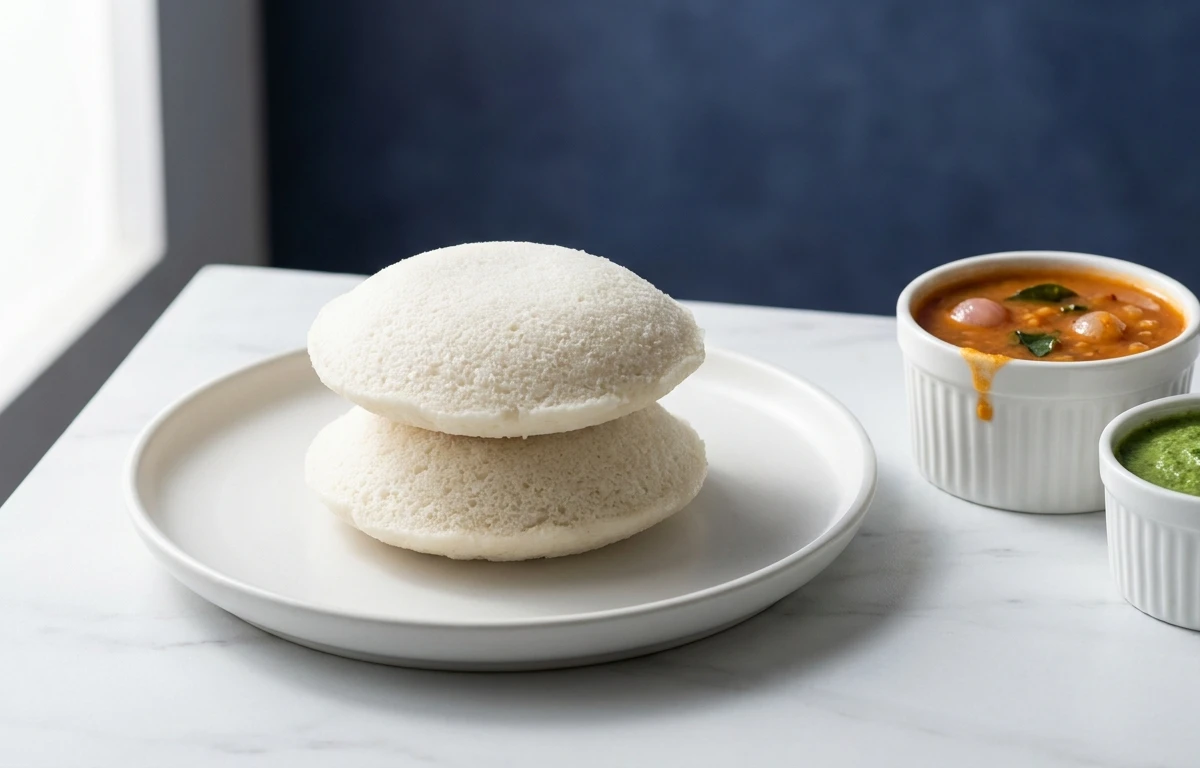
Idli
Soft, pillowy steamed rice cakes with a slightly tangy flavor from fermentation. This South Indian classic is perfect for meal prep and pairs beautifully with sambar and chutney.
For 12 servings
- prep
Soak the rice and dal
1.Rinse the idli rice thoroughly until the water runs clear. Soak it in 2 cups of water.2.In a separate bowl, rinse the urad dal and fenugreek seeds. Soak them together in 1 cup of water.3.Let both bowls soak for at least 6 hours or overnight.TIPSoaking for an adequate time is crucial for a smooth batter and soft idlis. - mix
Grind the batter
1.Just before grinding, soak the poha in a little water for 10 minutes.2.Drain the urad dal and fenugreek, reserving the soaking water. Grind them in a wet grinder or high-speed blender, adding small amounts of the reserved cold water, until you get a very smooth, light, and fluffy batter (about 15-20 minutes).3.Remove the dal batter into a large bowl.4.Drain the rice and add it with the soaked poha to the grinder. Grind to a slightly coarse, fine semolina-like texture, adding water as needed.5.Do not make the rice batter completely smooth; a little texture is key. - mix
Combine and ferment the batter
1.Add the ground rice batter to the bowl with the urad dal batter.2.Add salt and mix everything well with your clean hands. The warmth from your hands helps kickstart fermentation.3.The batter should be thick but have a flowing consistency. Adjust with a little water if it's too thick. - rest
Let the batter ferment
Cover the bowl with a lid (not airtight) and place it in a warm, dark place to ferment for 8 to 12 hours, or until it has doubled in volume and looks bubbly.
TIPIn colder climates, you can place the batter in a turned-off oven with the light on to provide a warm environment. - steam
Steam the idlis
1.Once fermented, gently stir the batter once or twice. Do not overmix and deflate the air.2.Grease the idli molds with a little oil.3.Pour the batter into each mold, filling them about 3/4 full.4.Place the idli stand in a steamer or pressure cooker (without the whistle) with 1-2 inches of simmering water at the bottom.5.Steam for 10-12 minutes on medium-high heat. - rest
Rest and demold
Turn off the heat and let the idli stand remain in the steamer for 5 minutes. This prevents them from becoming sticky.
- serve
Serve or store the idlis
Carefully remove the idli stand. Use a wet spoon to gently scoop out the idlis from the molds. Serve hot with sambar and chutney, or let them cool completely before storing for meal prep.
What to keep in mind.
5 tips from the recipe — small details that make a real difference to the final dish.
- 1Use non-iodized salt (like rock salt or sea salt) for fermentation, as iodized salt can sometimes hinder the process.
- 2The consistency of the batter is key. It should not be too thick or too runny. It should coat the back of a spoon.
- 3For meal prep, store the completely cooled idlis in an airtight container in the refrigerator for up to 3-4 days.
- 4To reheat, steam the idlis for 3-4 minutes until soft and hot. Alternatively, place them in a microwave-safe bowl, sprinkle a little water, cover, and microwave for 60-90 seconds.
- 5Don't overfill the molds, as the idlis will rise while steaming.
Frequently asked questions
Yes, idli is considered very healthy. It is steamed, making it low in fat and calories. The fermentation process makes it easy to digest and increases the bioavailability of nutrients like B vitamins.


