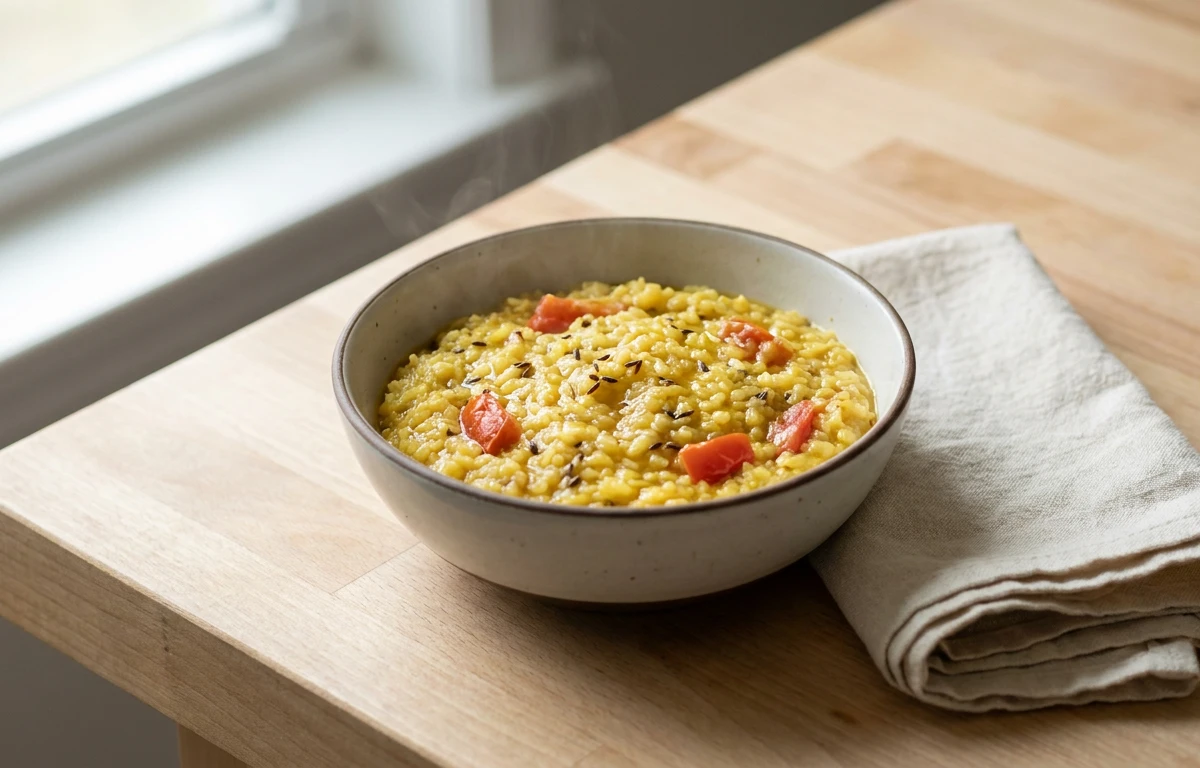
Soft Khichdi
A warm, comforting one-pot meal of rice and moong dal cooked until meltingly soft. Lightly spiced with cumin and turmeric, this gentle dish is easy on the stomach and ready in under 30 minutes. Perfect for a cozy lunch or a simple dinner.
For 4 servings
- prep · ~15 min
Rinse and soak the rice and dal.
Combine rice and moong dal in a bowl. Rinse with water 2-3 times until water runs clear. Soak in fresh water for 15 minutes, then drain.
- temper · ~2 min
Make the tempering.
1.Heat ghee in a pressure cooker over medium heat.2.Add cumin seeds and let them sizzle until fragrant (30 sec).3.Add grated ginger and a pinch of asafoetida. Sauté for 30 seconds until aromatic.TIPDon't let the cumin burn or it will turn bitter. Keep the heat at medium. - pressure cook · ~10 min
Pressure cook the khichdi.
1.Add drained rice and dal to the cooker along with turmeric powder and salt.2.Pour in 3 cups of water and stir well.3.Close the lid, put the weight on, and cook on medium-high heat.4.After 3 whistles, lower the heat to low and cook for 5 more minutes.5.Turn off heat and let pressure release naturally.TIPFor a softer texture, let it cook for 4 whistles. The natural release continues softening the grains. - mix · ~1 min
Mash and adjust consistency.
Once the pressure has released, open the lid. Mash the cooked khichdi gently with the back of a ladle until it reaches a creamy, porridge-like consistency. If it's too thick, stir in a splash of hot water.
- serve
Serve warm.
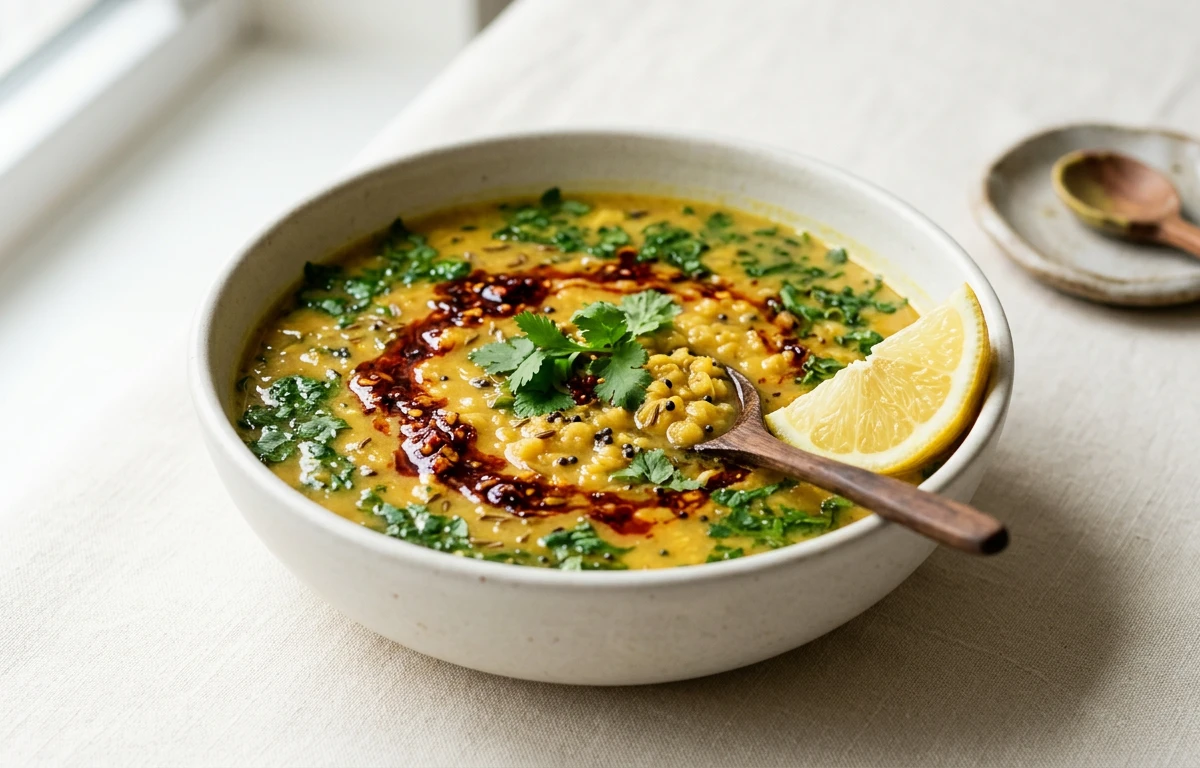
Ladle the soft khichdi into bowls. Top with a small drizzle of ghee if desired and serve hot.
What to keep in mind.
6 tips from the recipe — small details that make a real difference to the final dish.
- 1Soak the rice and dal for at least 15 minutes to ensure even cooking and a creamier texture.
- 2Use a heavy-bottomed pressure cooker to prevent the khichdi from sticking or burning at the bottom.
- 3For a looser, soup-like consistency, add 1/4 to 1/2 cup more water after mashing.
- 4Natural pressure release is key — don't force-release, as the residual steam continues to soften the grains.
- 5Make ahead: Khichdi thickens as it sits; thin it with hot water when reheating to restore the porridge-like texture.
- 6Garnish with fresh coriander and a squeeze of lemon for a final burst of brightness.
Adapt it for your goals.
Vegetable-loaded
Add 1/2 cup finely chopped carrots, peas, or spinach along with the rice and dal. This boosts nutrients and color while keeping the soft, comforting texture — perfect for picky eaters.
low oilLow-oil
Skip the ghee and dry-roast cumin seeds and ginger directly in the cooker before adding water. This version is lighter and suitable for those on a low-fat diet, though less rich.
jainJain
Omit asafoetida if it contains wheat-based binders (use pure hing), and replace ghee with peanut oil or any plant-based oil. This makes the dish compliant with Jain dietary restrictions.
high proteinHigh-protein
Replace half the moong dal with split masoor dal (red lentils) to increase protein content. The texture will be slightly less creamy but still soft and soothing.
Why this is on our healthy list.
Easy to Digest
The slow cooking and natural breakdown of starches in moong dal and rice make this khichdi very gentle on the stomach, ideal for convalescence or light meals.
Plant-Based Protein
Moong dal is a good source of plant-based protein, providing essential amino acids when paired with rice, making this a complete protein for vegetarians.
Anti-Inflammatory Spices
Turmeric contains curcumin, a compound known for its anti-inflammatory properties, while ginger aids digestion and reduces nausea — a classic combination in Ayurvedic cooking.
Low in Saturated Fat
With only 1 tablespoon of ghee for the whole recipe, this dish is low in saturated fat compared to many Indian gravies, making it heart-friendly.
Frequently asked questions
Yes, use a heavy pot with a tight lid, add 4 cups of water (instead of 3), and simmer on low heat for 30–40 minutes, stirring occasionally, until the dal is mushy and rice is tender.