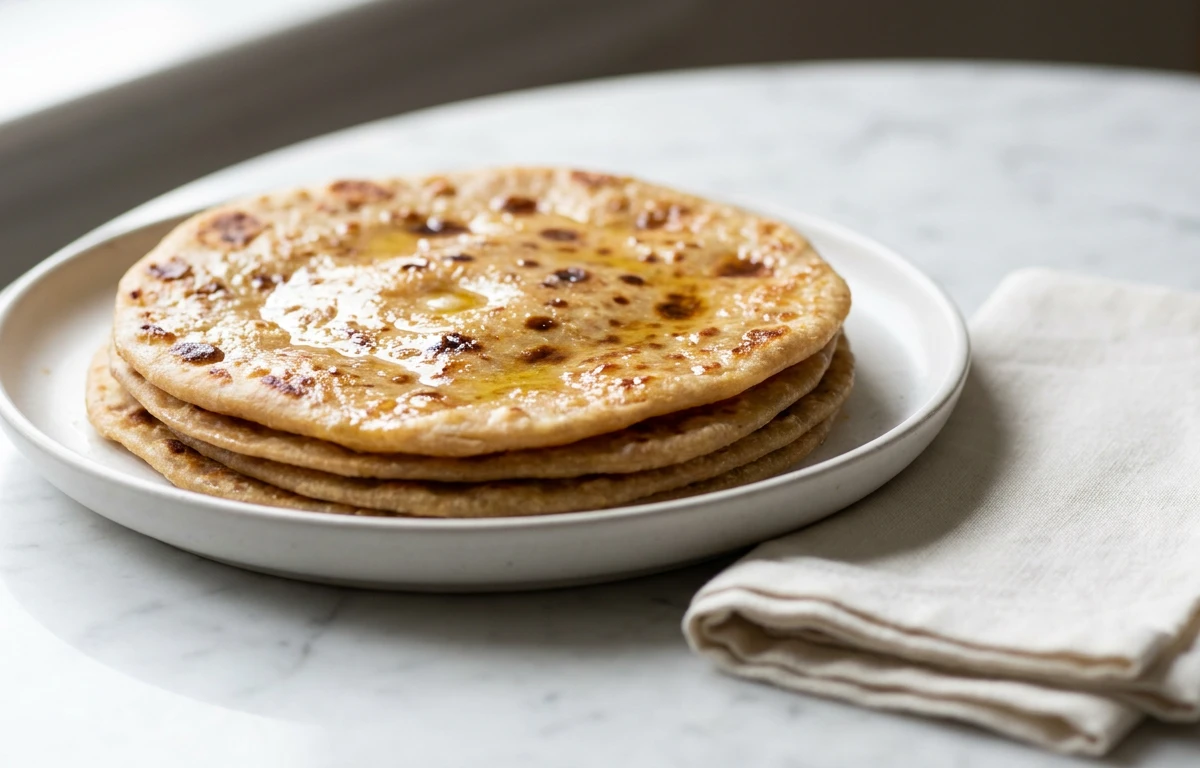
Soft Paratha
Soft, flaky, and lightly golden flatbreads made with whole wheat flour, layered with a touch of ghee, and cooked on a hot tawa until beautifully puffed. This everyday Indian staple is perfect for mopping up curries, dal, or simply enjoying with a pat of butter and pickle.
For 4 servings
- mix · ~10 min
Prepare the dough.
1.In a large mixing bowl, combine 2 cups atta and a pinch of salt.2.Add 2 tsp ghee and rub it into the flour until the mixture resembles breadcrumbs.3.Gradually add warm water, a little at a time, and knead for 5-7 minutes into a soft, smooth, and pliable dough.4.Cover the dough with a damp cloth and let it rest for 10 minutes.TIPA well-rested dough rolls out easily and yields softer parathas. Don't skip the resting time. - prep
Portion the dough.
1.After resting, give the dough a quick knead for a minute.2.Divide the dough into 8 equal lemon-sized balls.3.Keep the dough balls covered with a damp cloth to prevent them from drying out. - prep
Roll the first disc.
1.Dust a clean work surface and a dough ball lightly with dry atta.2.Roll the ball into a thin disc about 5-6 inches in diameter, like a roti.3.Spread about 1 tsp of ghee evenly over the surface of the rolled disc. - prep
Create layers by pleating.
1.Starting from the edge closest to you, fold the disc over and over into a long, thin pleated strip, like making a paper fan.2.Hold the strip by both ends and gently stretch it a bit while tapping it on the work surface.3.Roll the pleated strip tightly into a spiral coil, tucking the end underneath.4.Gently press the coil with your palm to flatten it slightly, then dust it lightly with dry flour.TIPPleating and coiling is the secret to getting those soft, flaky layers. Be gentle; don't tear the dough. - prep
Roll the paratha.
1.Place the coiled ball on the dusted surface and gently roll it out into a circle, about 6-7 inches in diameter.2.Use light, even pressure with the rolling pin, turning the paratha as you roll to maintain a round shape.3.Repeat the rolling, layering, pleating, and coiling process for the remaining 7 dough balls. - fry · ~2 min
Cook the paratha on a hot tawa.
1.Heat a tawa or flat griddle over medium-high heat. The tawa should be hot but not smoking.2.Place a rolled paratha on the hot tawa. Cook for 30-45 seconds, or until small bubbles appear on the surface.3.Flip the paratha. The cooked side should have light golden spots. Drizzle 1/4 to 1/2 tsp of ghee over the paratha.4.Flip again, drizzle a bit more ghee on the other side, and gently press the edges with a flat spatula, rotating it. Cook until both sides are golden brown and crisp spots appear.5.Repeat with the remaining parathas, stacking them in a kitchen towel to keep them soft.TIPMedium-high heat is key. Too hot and the paratha burns without cooking inside; too low and it turns hard. - serve
Serve the soft parathas hot.
Crush the parathas lightly between your hands just before serving to open up the flaky layers. Serve immediately while hot.
TIPFor extra softness, apply a thin smear of ghee on each paratha as it comes off the tawa.
What to keep in mind.
6 tips from the recipe — small details that make a real difference to the final dish.
- 1Let the dough rest for 10 minutes to make it more pliable and easier to roll.
- 2Pleat and coil the rolled disc for distinct soft, flaky layers in the final paratha.
- 3Use medium-high heat: too high burns the outside, too low makes the paratha hard.
- 4Lightly press the edges with a spatula while cooking to help the paratha puff up.
- 5Stack cooked parathas in a clean kitchen towel to trap steam and keep them soft.
- 6Crush the paratha between your hands just before serving to open up the layers.
Adapt it for your goals.
Stuffed paratha
Before rolling the final disc, place a spoonful of spiced mashed potato (aloo paratha) or grated paneer in the center and seal the edges, then roll gently. This turns the bread into a hearty, all-in-one meal.
whole wheat & spinachWhole wheat & spinach
Blanch and purée a handful of spinach, then use it to replace part of the water in the dough. The parathas turn a lovely green and gain a mild earthy flavor—perfect with plain yogurt.
vegan parathaVegan paratha
Replace the ghee in the dough and for layering with any neutral vegetable oil or coconut oil. The texture remains soft and flaky, making the recipe completely plant-based.
multi grain parathaMulti-grain paratha
Substitute 1/4 cup of the atta with chickpea flour (besan) or fine millet flour. This adds a nutty taste and boosts the fiber content, ideal for healthier everyday meals.
Why this is on our healthy list.
Rich in Whole Grains
Made entirely with atta (whole wheat flour), providing dietary fiber that supports healthy digestion and sustained energy release.
Good Source of Healthy Fats
Ghee used in cooking supplies fat-soluble vitamins A, D, E, and K, and adds a rich flavor without hydrogenated oils.
Low in Added Sugar
This savory flatbread contains no sugar, making it a suitable base for balanced meals focused on complex carbohydrates.
Frequently asked questions
Add warm water gradually—just enough to form a soft, non-sticky dough. If it becomes sticky, dust with a little extra atta; if dry, wet your hands and knead briefly.