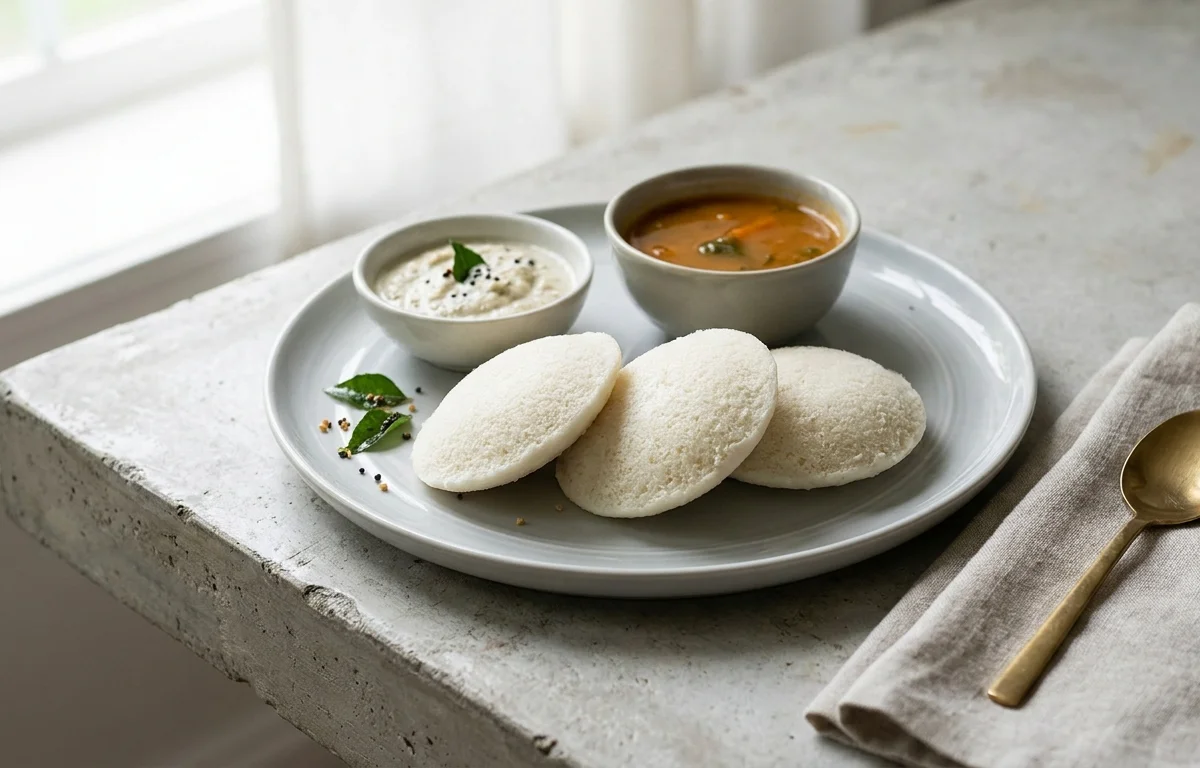
Soft Steamed Idli
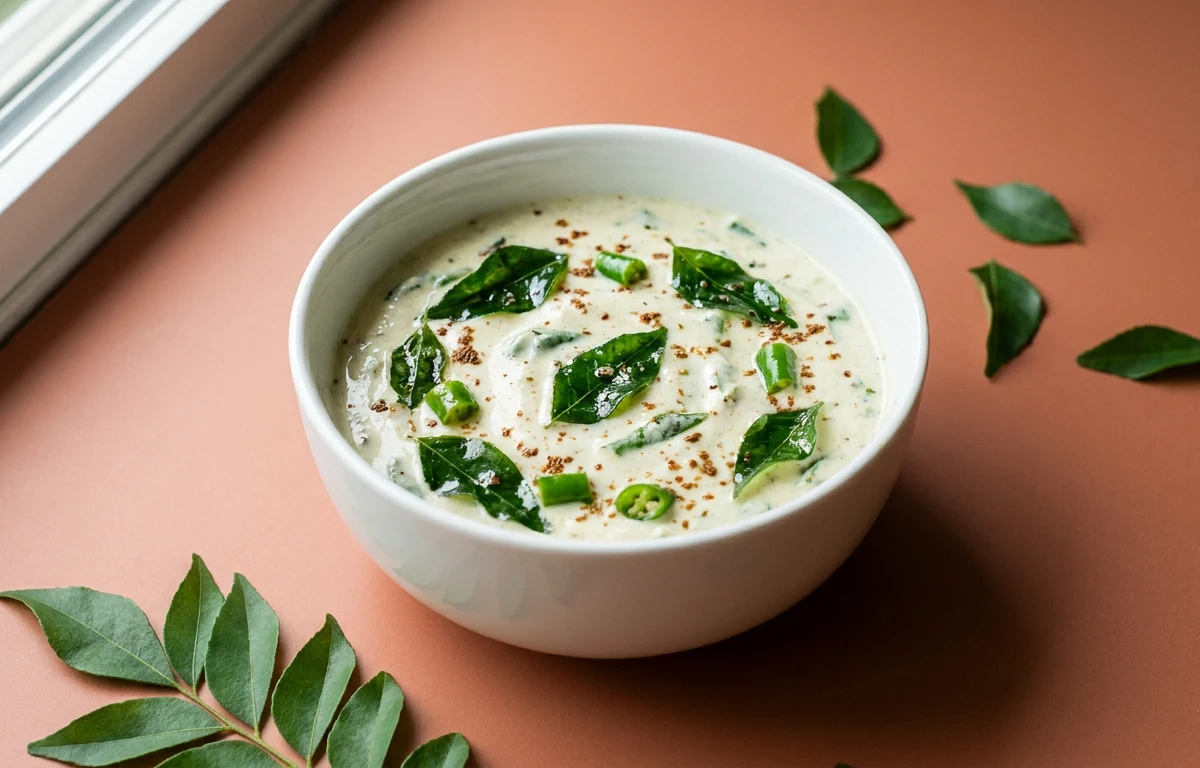
Soft, pillowy steamed rice cakes with a slightly tangy flavor from natural fermentation. A beloved South Indian breakfast staple that pairs beautifully with coconut chutney and piping hot sambar.
For 4 servings
- prep
Soak the rice and dal separately.
1.Wash idli rice in 2-3 changes of water until water runs clear.2.Wash urad dal and fenugreek seeds together until water runs clear.3.Soak rice in enough water to cover by 2 inches for 4 hours.4.Soak urad dal with fenugreek seeds in separate bowl, also for 4 hours.TIPSoaking softens the grains and gives a fluffier batter. Don't skimp on soaking time. - prep · ~15 min
Grind the urad dal into a smooth batter.
1.Drain the soaked urad dal and fenugreek seeds, reserving the soaking water.2.Add dal to wet grinder or blender with about 0.5 cup reserved water.3.Grind to a smooth, fluffy, airy batter, adding water a splash at a time as needed. This takes 10-15 minutes.4.The batter should be thick yet spreadable and light — drop a small ball in water; it should float.TIPA wet grinder gives the best texture. If using a blender, grind in short bursts to avoid overheating. The floating test is the best indicator of a well-aerated dal batter. - prep · ~10 min
Grind the rice into a slightly coarse batter.
1.Drain soaked rice, reserving the water.2.Add rice to the grinder or blender with about 0.75 cup reserved water.3.Grind to a slightly coarse paste — it should feel like fine semolina or cream of wheat, not perfectly smooth like the dal batter.4.Pour this rice batter into the dal batter bowl.TIPSlightly coarse rice batter gives idlis their signature soft bite. Don't over-grind into a paste. - mix · ~480 min
Combine batters and ferment overnight.
1.Add the pinch of salt to the combined batter.2.Mix well with your clean hand for 2-3 minutes — the warmth from your hand helps start fermentation.3.Cover the bowl loosely with a lid or cloth. Do not seal airtight.4.Place in a warm, draft-free spot (inside an oven with just the light on is ideal).5.Let ferment for 8-10 hours or overnight until the batter has doubled in volume and smells pleasantly tangy.TIPFermentation is temperature-dependent. In cold weather, place the bowl in a larger container of warm water or near a pilot light. A well-fermented batter is light, bubbly, and airy — that's the secret to soft idlis. - prep
Prepare the idli steamer.
1.Pour about 2 cups of water into the base of the idli steamer and set on high heat to boil.2.Lightly grease the idli moulds with a few drops of oil — just enough to coat.3.Gently stir the fermented batter. Do not beat or deflate; just fold to even out any separation.4.Spoon batter into greased moulds, filling each about 3/4 full to allow room to rise.TIPDon't overmix the fermented batter — you'll lose all those precious air bubbles. Gentle folding keeps them light. - steam · ~12 min
Steam the idlis until fluffy and cooked through.
1.Place the idli stand carefully into the steamer once water is at a full rolling boil.2.Cover with the lid and steam on medium-high heat for 10-12 minutes.3.Do not open the lid during steaming.4.After 10 minutes, turn off heat and let them rest for 30 seconds, then uncover.TIPHigh steam is crucial. The idlis should be on a rolling boil's steam, not a gentle simmer. Pierce the center with a toothpick — it should come out clean. - rest · ~2 min
Cool slightly and unmould.
1.Remove the idli stand from the steamer and let it rest for 1-2 minutes.2.Dip a spoon in cold water and gently slide it along the edges to unmould each idli.3.Transfer to a warm casserole or serving plate lined with a damp cloth to keep them from drying out.TIPA brief rest helps the idlis firm up and unmould cleanly. Damp cloth prevents the skin from drying out. - serve
Serve the soft idlis warm with accompaniments.
Arrange 3 idlis per serving. Serve immediately with fresh coconut chutney and a bowl of hot sambar. Idlis are best eaten within 30 minutes of steaming; they lose their softness as they cool.
What to keep in mind.
6 tips from the recipe — small details that make a real difference to the final dish.
- 1Always use a wet grinder for the dal batter; it aerates better than a blender.
- 2Test batter readiness by dropping a small ball in water; if it floats, it's perfectly ground.
- 3Ferment in a warm oven with just the light on; cold weather slows the process significantly.
- 4Do not open the steamer lid during the first 10 minutes of steaming to prevent idlis from collapsing.
- 5Let steamed idlis rest for 30 seconds off heat before uncovering to avoid sticky tops.
- 6Leftover batter keeps in the fridge for 2-3 days; bring to room temperature before steaming again.
Adapt it for your goals.
Ragi Idli
Replace 1 cup of idli rice with 1 cup of ragi (finger millet) flour for a gluten-free, iron-rich twist with a nuttier flavor.
Oats IdliOats Idli
Substitute 1 cup of rice with 1 cup of quick oats (ground to powder) for a higher-fiber, quicker-cooking variation that's perfect for busy mornings.
Vegetable IdliVegetable Idli
Fold 1/2 cup of finely grated carrots, chopped cilantro, and a pinch of grated ginger into the fermented batter for added color and subtle sweetness.
Why this is on our healthy list.
Naturally Fermented
The overnight fermentation process boosts gut-friendly probiotics, making idlis easier to digest than unfermented rice cakes.
Low in Fat
Steaming requires only a trace of oil for greasing the moulds, making idlis a virtually fat-free breakfast option.
Good Source of Plant Protein
Urad dal provides a solid dose of plant-based protein, complementing the carbohydrates from rice for a balanced meal.
Frequently asked questions
Dense idlis usually result from under-fermented batter or over-mixing after fermentation, which deflates the air bubbles. Ensure the batter doubles in volume and feels bubbly.