.webp)
Soothing Ridge Gourd & Lentil Dal (Turai Dal)
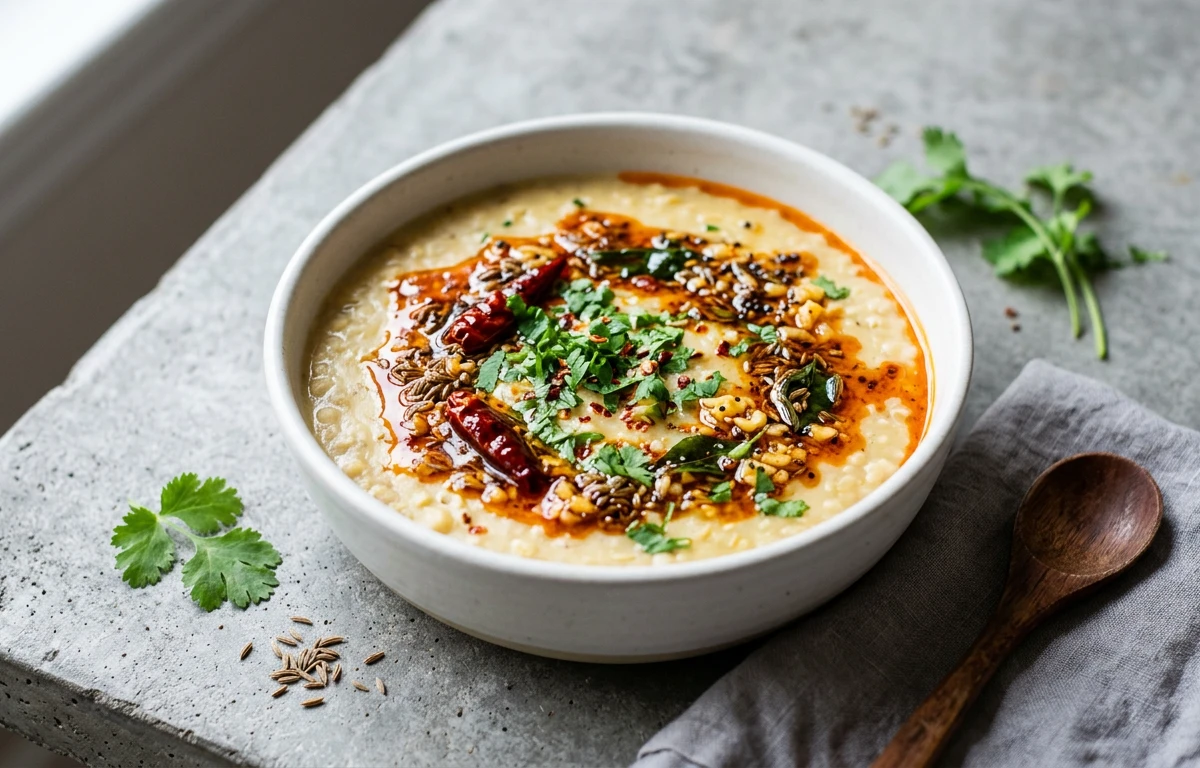
A light, comforting dal where tender ridge gourd melts into creamy cooked lentils. The gourd soaks up the gentle tempering of cumin, garlic, and dried red chili, making each spoonful soothing and mildly spiced. Perfect with steamed rice and a wedge of lime for a simple, homely weeknight meal.
For 4 servings
- prep · ~30 min
Rinse and soak the dal.
Wash the toor dal in 2-3 changes of water until the water runs clear. Drain and soak in fresh water for 30 minutes. Once soaked, drain well.
- pressure cook · ~20 min
Pressure cook the dal.
1.Add the soaked, drained dal to the pressure cooker along with 2 cups water and turmeric powder.2.Close the lid and pressure cook on medium heat for 2-3 whistles.3.Let the pressure release naturally. Open the lid and mash the cooked dal lightly with a spoon.4.Set aside.TIPNatural pressure release lets the dal settle and become creamier without sputtering. - simmer · ~13 min
Cook the ridge gourd with dal.
1.Place the pressure cooker with mashed dal back on low heat.2.Add the ridge gourd cubes, chopped tomato, slit green chili, and red chili powder.3.If the dal seems too thick, add half a cup of hot water to reach a pourable consistency.4.Simmer gently for 10-12 minutes, stirring occasionally, until the ridge gourd turns soft and translucent.5.Add salt and stir well. Simmer for another minute, then turn off the heat.TIPRidge gourd releases its own water as it cooks, so add extra water only if needed to prevent sticking. - temper · ~2 min
Make the tempering.
1.Heat ghee in a small pan over low heat until it shimmers.2.Add cumin seeds and let them crackle and turn golden for about 30 seconds.3.Drop in the chopped garlic. Sauté until fragrant and just beginning to color (20-30 seconds).4.Add the dried red chilies and asafoetida. Stir for 10 seconds, then immediately pour the entire tempering over the simmered dal.TIPKeep the heat low while tempering — garlic burns fast and turns bitter if the ghee is too hot. - mix · ~5 min
Combine and finish.
Stir the tempering into the dal. Cover the pot and let it rest for 5 minutes — this lets the smoky ghee aroma infuse into the lentils. Stir once more before dishing out.
- garnish
Garnish with fresh coriander and serve hot.
Ladle into bowls, sprinkle generously with chopped coriander leaves, and serve immediately with steamed rice or roti.
What to keep in mind.
6 tips from the recipe — small details that make a real difference to the final dish.
- 1Choose ridge gourds that are firm and bright green without soft spots for the best texture.
- 2Don't skip the 30-minute dal soak — it reduces cooking time and helps the lentils break down evenly.
- 3Let the pressure release naturally for creamier dal; a quick release can make the lentils grainy.
- 4Add salt only after the ridge gourd is cooked, as salting early can make it release water too fast and turn mushy.
- 5For the tempering, keep the heat low to avoid burning the garlic, which turns bitter quickly.
- 6Let the dal rest covered for 5 minutes after tempering so the smoky ghee aroma fully infuses the lentils.
Adapt it for your goals.
Vegan
Replace ghee with coconut oil or any neutral vegetable oil in the tempering. This keeps the dish entirely plant-based while still delivering a rich, aromatic finish.
low spiceLow-spice
Skip the dried red chilies and red chili powder for a mild version suitable for kids or sensitive palates. The cumin and garlic will still give plenty of warmth.
high proteinHigh-protein
Add a handful of boiled chana dal or a tablespoon of roasted, crushed peanuts along with the ridge gourd. This boosts protein without overpowering the delicate flavor of the gourd.
gluten freeGluten-free
This recipe is naturally gluten-free as written. For an extra measure, ensure your asafoetida is labeled gluten-free (some blends contain wheat flour).
Why this is on our healthy list.
Rich in Plant Protein
Toor dal provides a solid source of plant-based protein, essential for muscle repair and sustained energy, especially in a vegetarian diet.
High in Dietary Fiber
Ridge gourd and lentils both contribute fiber, aiding digestion and promoting a feeling of fullness.
Low in Fat
With only a small amount of ghee used for tempering, this dal is a light, low-fat dish suitable for everyday meals.
Good Source of Vitamins
Tomatoes and green chilies add vitamin C, while ridge gourd provides a range of water-soluble vitamins including B-complex.
Supports Hydration
Ridge gourd has high water content, helping keep the dish moist and contributing to daily fluid intake.
Frequently asked questions
Yes, you can substitute moong dal (split yellow gram) for a lighter, faster-cooking dal, or masoor dal (red lentils) for a slightly earthy flavor.



.webp)