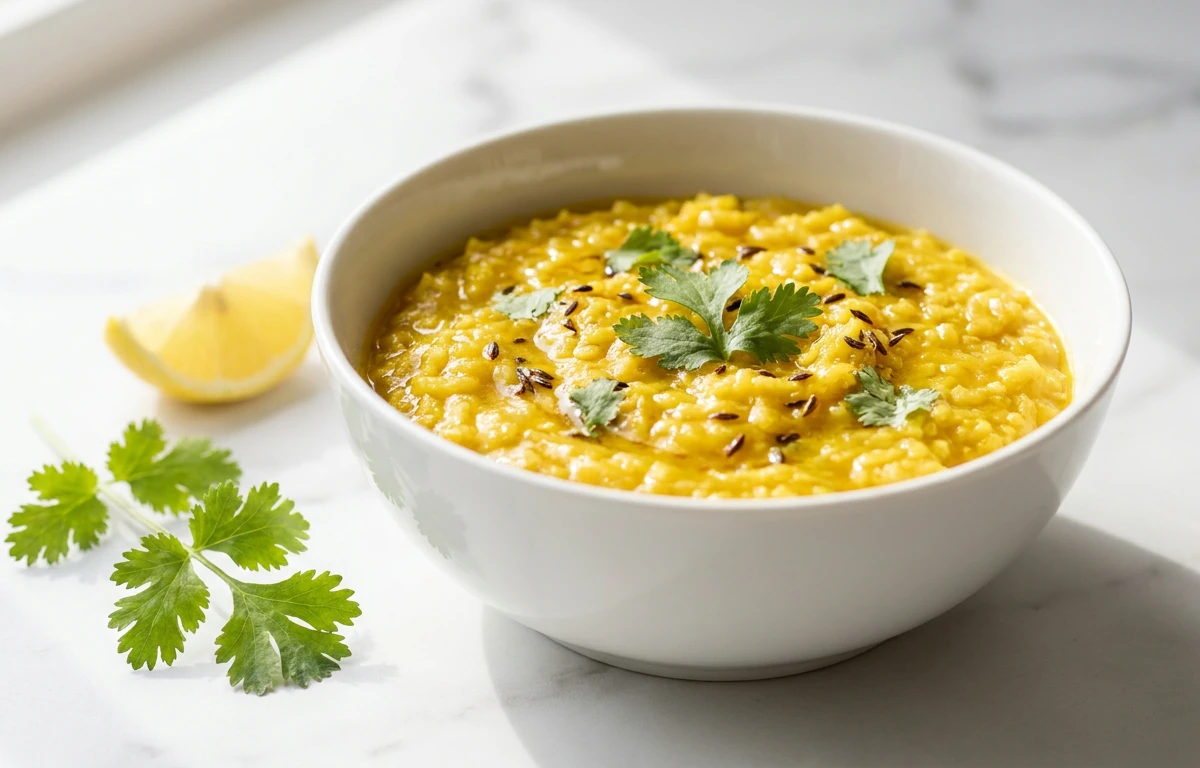
Soothing Turmeric & Ginger Khichdi
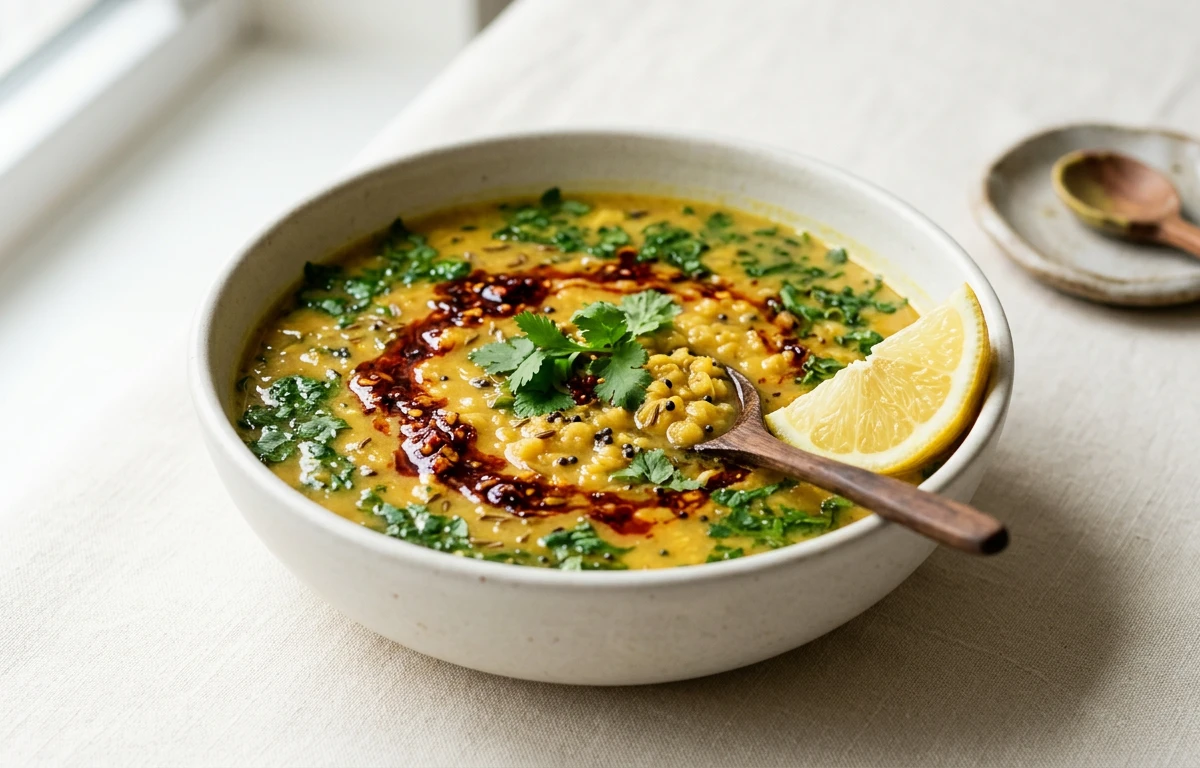
A gentle, one-pot rice and lentil porridge infused with fresh ginger and golden turmeric. Soft, creamy, and easy to digest, this classic Indian comfort food is both nourishing and incredibly soothing — perfect for rainy days or when you need a warm hug in a bowl.
For 4 servings
- prep · ~15 min
Wash and soak the rice and dal.
Rinse the basmati rice and moong dal together in several changes of water until it runs clear. Soak in fresh water for 15 minutes, then drain completely.
TIPSoaking softens the grains and reduces cooking time. - temper · ~2 min
Make the tempering in the pressure cooker.
1.Heat ghee in the pressure cooker over medium-low heat.2.Add cumin seeds and let them sizzle and turn golden (30 seconds).3.Add grated ginger and slit green chili, sauté until the raw aroma fades (30-40 seconds).4.Stir in turmeric powder and asafoetida, cook for 10 seconds.TIPDon't burn the turmeric — it turns bitter on high heat. - boil · ~2 min
Add the drained rice and dal and lightly roast.
Add the drained rice-dal mixture to the cooker. Stir gently and sauté for 1-2 minutes until the grains are well coated with ghee and look glossy.
- pressure cook · ~15 min
Cook the khichdi under pressure.
Pour in 3.5 cups of water and add salt. Stir once, close the lid, and pressure cook on medium heat for 4-5 whistles. Let the pressure release naturally.
TIPA natural release helps the grains absorb more water, making the khichdi softer. - mix · ~1 min
Mash and adjust the consistency.
Open the cooker. Mash the khichdi lightly with the back of a ladle to achieve a creamy, porridge-like texture. If it's too thick, stir in a splash of hot water to loosen it.
- serve
Garnish and serve piping hot.
Spoon into serving bowls, top with chopped fresh coriander leaves and a small drizzle of ghee if desired. Serve hot with plain yogurt or papad on the side.
TIPKhichdi thickens as it cools; serve immediately or keep it on a very low simmer.
What to keep in mind.
6 tips from the recipe — small details that make a real difference to the final dish.
- 1Soaking rice and dal for exactly 15 minutes ensures even cooking and a creamy texture.
- 2Use freshly grated ginger for a vibrant, pungent kick that dried ginger can't match.
- 3Let the pressure release naturally for at least 10 minutes to allow grains to absorb residual moisture.
- 4If khichdi thickens too much upon cooling, stir in a splash of boiling water to restore the porridge consistency.
- 5For extra depth, finish with a dollop of ghee and a pinch of black pepper just before serving.
- 6Make ahead: khichdi keeps well in the fridge for 2 days; reheat slowly with a little water.
Adapt it for your goals.
Vegan
Replace ghee with coconut oil or any neutral vegetable oil. The cumin-ginger tempering works perfectly with oil, making the dish entirely plant-based while retaining the comforting flavour.
protein boostProtein-boost
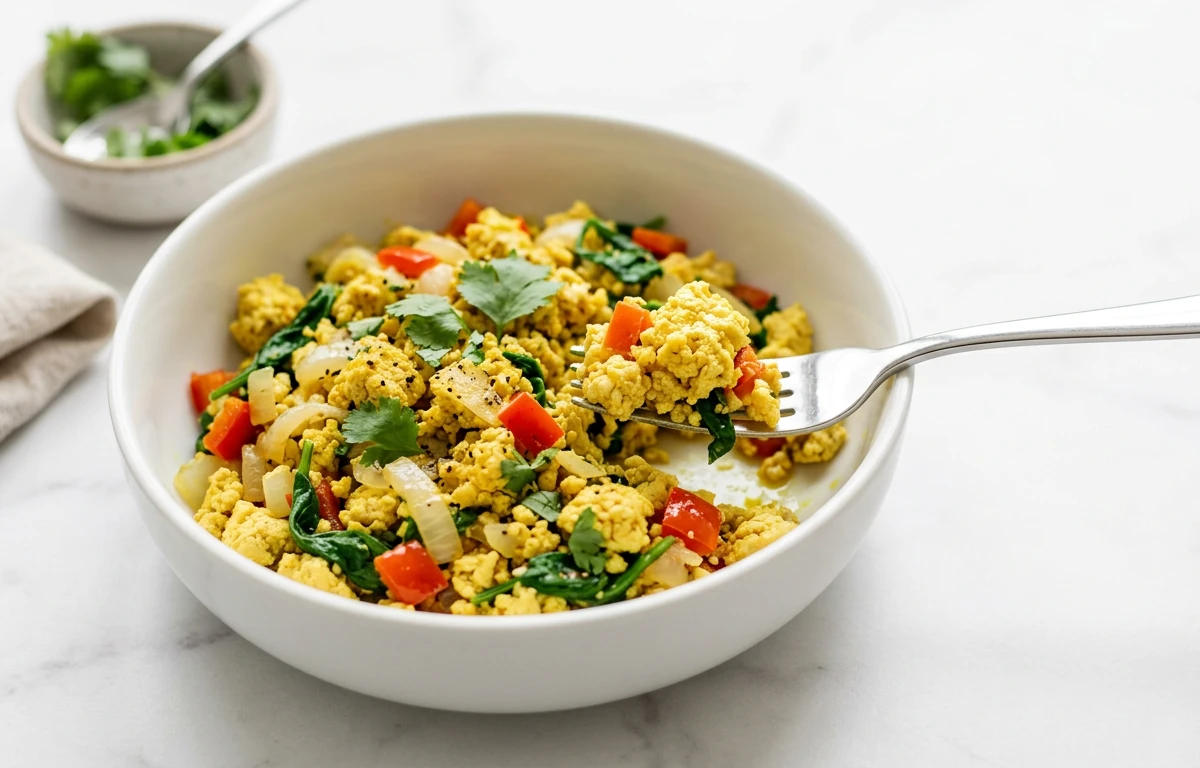
Add ¼ cup of grated paneer or tofu in the last two minutes of cooking. This increases the protein content and adds a mild, creamy contrast to the spiced porridge.
low spiceLow-spice
Omit the green chili entirely and reduce asafoetida to a mere pinch. This version is ideal for children, those with sensitive stomachs, or anyone seeking a very gentle, mild meal.
vegetable loadedVegetable-loaded
Stir in ½ cup of finely chopped carrots, peas, and cauliflower florets with the rice-dal mixture before pressure cooking. This adds colour, fibre, and extra nutrients, turning the khichdi into a more complete one-pot meal.
Why this is on our healthy list.
Supports Digestion
Moong dal (split mung beans) is one of the easiest legumes to digest, while ginger and turmeric both have natural anti-inflammatory properties that can soothe the digestive tract.
High in Plant-Based Protein
The combination of rice and moong dal provides a complete protein profile, making this dish a satisfying meal that supports muscle repair and keeps you full longer.
Anti-Inflammatory Spices
Turmeric contains curcumin, a compound known for its anti-inflammatory and antioxidant effects, especially when paired with black pepper (add a pinch for better absorption).
Gentle on the Stomach
Asafoetida (hing) is traditionally used in Indian cooking to reduce bloating and gas, making this khichdi an excellent choice for people with sensitive stomachs or during illness.
Frequently asked questions
Yes, but increase the water to 4½ cups and pressure cook for 6-7 whistles, since brown rice needs more time and liquid to become soft.