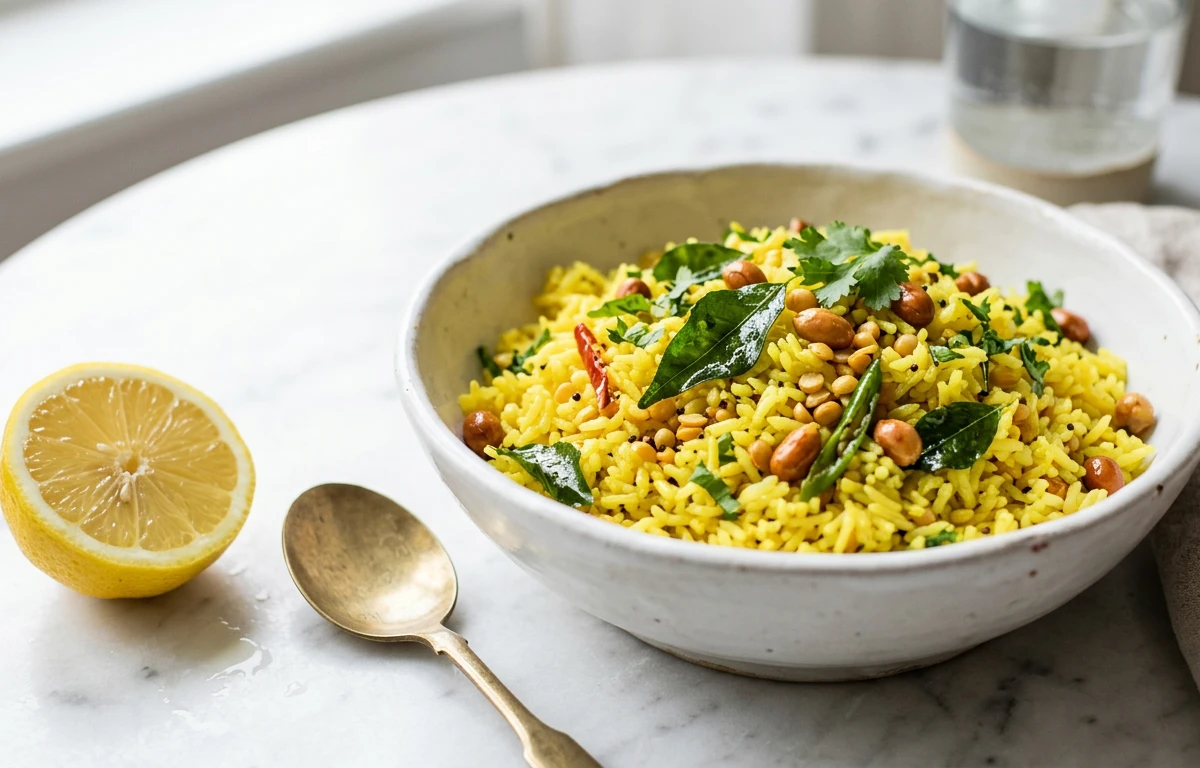
South Indian Lemon Rice
Bright, tangy, and wonderfully fragrant rice tossed with a crackling tempering of mustard seeds, chana dal, urad dal, peanuts, and fresh curry leaves. This South Indian comfort classic gets its sunny yellow hue from turmeric and its zesty lift from fresh lemon juice. Perfect as a light lunch or travel-friendly meal, it comes together in minutes with leftover rice.
For 4 servings
- prep
Cook the rice and let it cool.
1.Wash 1.5 cups rice thoroughly until water runs clear.2.Add 3 cups water and cook until soft but separate grains form (pressure cook for 3 whistles or simmer until tender).3.Spread the hot rice on a wide plate, drizzle 1 tbsp oil, and let it cool completely so grains stay separate.TIPDay-old refrigerated rice works best for lemon rice — the grains stay firm and separate. - prep
Juice the lemons and prep the aromatics.
Squeeze the juice from 2 medium lemons, yielding about 4 to 5 tablespoons. Finely chop the ginger, slit the green chilies, and keep all tempering ingredients ready by the stove.
- temper · ~5 min
Make the tempering.
1.Heat 1 tbsp oil in a large skillet over medium heat.2.Add mustard seeds and let them splutter (30 seconds).3.Add chana dal, urad dal, and peanuts — fry until golden brown and fragrant (2-3 minutes).4.Add slit green chilies, chopped ginger, and curry leaves — stir for 1 minute until aromatic.5.Sprinkle turmeric powder and asafoetida, stir for 10 seconds, then remove from heat.TIPWatch the dals carefully — they can burn quickly. They should be a deep golden, not dark brown. - mix · ~3 min
Combine rice with the tempering.
1.Add the cooled rice to the skillet with the tempering.2.Add salt and lemon juice.3.Gently fold everything together using a light hand so the rice grains don't break.4.Mix until the rice is evenly yellow and every grain is coated with lemon and spices.TIPTaste and adjust — the lemon should be bright and tangy, but not so sharp it overpowers the other flavors. - rest · ~5 min
Rest the rice for 5 minutes to let flavors meld.
Cover the skillet and let the lemon rice sit undisturbed for 5 minutes. This short rest lets the lemon juice absorb into each grain and the tempering flavors to deepen.
- garnish
Garnish with fresh coriander and serve.
Fluff the rice gently with a fork, scatter chopped coriander leaves on top, and serve warm or at room temperature.
TIPLemon rice tastes even better after resting for an hour — it's an ideal picnic or tiffin box dish.
What to keep in mind.
6 tips from the recipe — small details that make a real difference to the final dish.
- 1Use day-old refrigerated rice for firmer grains that resist breaking during mixing.
- 2Roast the chana dal, urad dal, and peanuts until deep golden for maximum nutty crunch.
- 3Add lemon juice only after the tempering has cooled slightly to preserve its fresh tang.
- 4Gently fold the rice with a spatula, not a spoon, to keep grains intact.
- 5Let the finished rice rest 5 minutes before serving so flavors fully meld.
- 6Store leftovers in an airtight container in the fridge for up to 2 days; reheat with a splash of water.
Adapt it for your goals.
Vegan
This recipe is already vegan. For a richer version, stir in a tablespoon of coconut milk before adding lemon juice.
low oilLow-oil
Reduce oil to 1 tablespoon for the tempering and use non-stick pan. The flavors will still shine though less crisp.
high proteinHigh-protein
Add 1/2 cup cooked chickpeas or paneer cubes along with the rice for a more filling meal.
jainJain
Omit ginger and green chilies; use a pinch of black pepper and asafoetida for heat. Replace peanuts with roasted chana dal.
spicySpicy
Add 2 dried red chilies broken into pieces during tempering for extra heat and smoky flavor.
Why this is on our healthy list.
Rich in Plant Protein
Chana dal, urad dal, and peanuts add a boost of plant-based protein, making this rice more satisfying.
Anti-Inflammatory Turmeric
Turmeric provides curcumin, a compound known for its anti-inflammatory properties.
Good Source of Vitamin C
Fresh lemon juice contributes vitamin C, which supports the immune system and aids iron absorption.
Digestive Support
Asafoetida and ginger are traditionally used in Indian cooking to aid digestion and reduce bloating.
Frequently asked questions
Yes, but use slightly less water and cook until just tender so the grains stay separate and don't clump.