
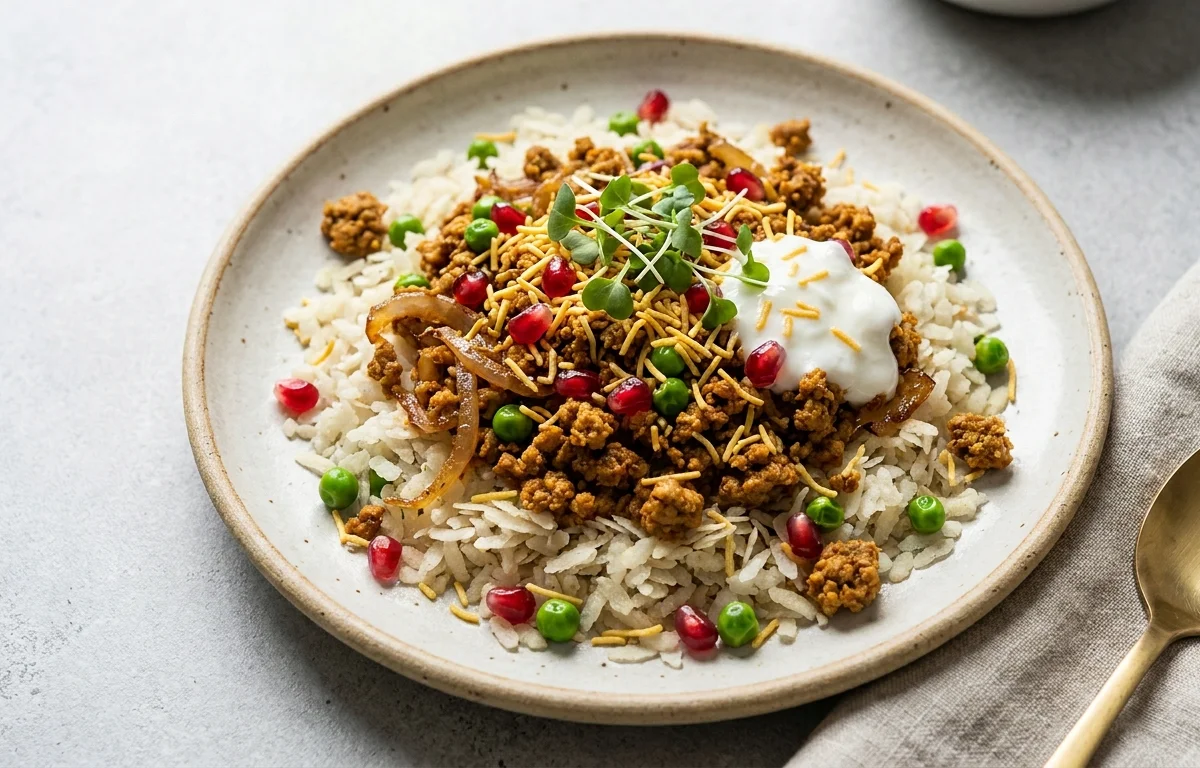
Soya Keema Poha
Fluffy flattened rice tossed with spiced soya granules that mimic a rich, flavorful keema. This protein-packed twist on classic poha brings the warmth of peas, roasted peanuts, and a squeeze of lemon together in a quick, satisfying one-pan meal.
For 4 servings
- prep · ~10 min
Soak the soya granules.
1.Bring 2 cups water to a rolling boil in a saucepan.2.Add soya granules and boil for 5 minutes until soft and expanded.3.Drain immediately and rinse under cold water.4.Squeeze out all excess water firmly with your hands. Set aside.TIPSqueeze the soya granules until they are as dry as possible — any excess water makes the poha mushy. - prep · ~5 min
Wash and drain the poha.
1.Place poha in a colander or large sieve.2.Rinse under running water for 20 seconds, gently tossing with your fingers.3.Let it sit in the colander for 5 minutes to soften and drain completely.4.Fluff lightly with a fork and sprinkle with salt and turmeric.TIPUse thick poha only. Thin poha turns into a sticky paste. Don't oversoak — just a quick rinse and rest. - temper · ~2 min
Make the tempering.
1.Heat oil in a wide kadhai or non-stick pan over medium heat.2.Add mustard seeds and let them pop vigorously (30 seconds).3.Add cumin seeds and let them sizzle until fragrant (20 seconds).4.Toss in curry leaves and slit green chilies. Stir for 15 seconds until leaves crackle.TIPKeep the heat medium — mustard seeds should pop but not burn. Move to the next step as soon as they pop. - saute · ~9 min
Cook the onion and soya keema.
1.Add chopped onions and grated ginger to the tempering.2.Sauté until onions turn translucent and lightly golden (4-5 minutes).3.Add squeezed soya granules, turmeric, and red chili powder.4.Sauté for 3-4 minutes, stirring frequently, until the soya looks like dry keema with slightly crisp edges.TIPDon't rush the soya — letting it fry and crisp a little gives that real keema texture. - mix · ~4 min
Combine poha with the keema mixture.
1.Add green peas and roasted peanuts to the pan. Stir for 1 minute.2.Gently fold in the softened poha with a light hand.3.Sprinkle garam masala and mix slowly to avoid breaking the poha flakes.4.Cover the pan with a lid and let it steam on lowest heat for 3 minutes.TIPUse a folding motion, not stirring — this keeps the poha grains separate and fluffy. - garnish · ~1 min
Finish with lemon and fresh coriander.
Turn off the heat. Drizzle lemon juice evenly over the poha and sprinkle generously with chopped coriander leaves. Toss gently one last time and serve immediately while hot.
TIPDon't skip the lemon — it cuts through the soya's heaviness and brightens the whole dish.
What to keep in mind.
6 tips from the recipe — small details that make a real difference to the final dish.
- 1Use thick poha only; thin poha will turn mushy and sticky when rinsed.
- 2Squeeze boiled soya granules as dry as possible to prevent a soggy poha.
- 3Let the soya granules fry until lightly crisp for a texture that mimics real keema.
- 4Rinse poha for just 20 seconds, then rest; oversoaking makes it clump.
- 5Fold the poha gently with a light hand to keep flakes separate and fluffy.
- 6Always add lemon juice after turning off the heat for maximum fresh brightness.
Adapt it for your goals.
Vegan
Guaranteed vegan as written — no ghee or dairy used. Perfect for plant-based eaters looking for a high-protein breakfast or snack.
Oil Free / Low OilOil-Free / Low-Oil
Replace oil with water or vegetable broth for tempering, and dry-roast the soya granules in a non-stick pan. This cuts fat significantly while keeping the keema-like texture intact.
High ProteinHigh-Protein
Stir in 1/4 cup of crumbled paneer or extra-firm tofu along with the soya granules to boost the protein content further for a post-workout meal.
Gluten FreeGluten-Free
Confirm that the soya granules are certified gluten-free (most are naturally so). Serve as-is — poha, peanuts, and spices are naturally gluten-free.
JainJain
Omit onion and garlic, add a pinch of asafoetida (hing) to the tempering, and use green peas for subtle sweetness. This version respects Jain dietary restrictions while keeping the dish flavorful.
Why this is on our healthy list.
High in Plant Protein
Soya granules (TVP) are a complete plant protein containing all nine essential amino acids, making this dish an excellent meatless protein source.
Iron-Rich
Poha (flattened rice) is a good source of iron, and the addition of soya and peanuts further supports healthy blood oxygen transport.
Good Source of Fiber
Green peas and peanuts add dietary fiber, aiding digestion and promoting a feeling of fullness.
Low in Saturated Fat
The recipe uses just 2 tablespoons of oil, with no saturated-fat-heavy dairy, keeping the dish heart-friendly.
Contains Antioxidants
Turmeric, curry leaves, and green chilies provide curcumin and other antioxidants that help fight inflammation.
Frequently asked questions
No, thin poha will turn into a sticky paste when rinsed. Always use thick (or 'fried') poha for this dish.


