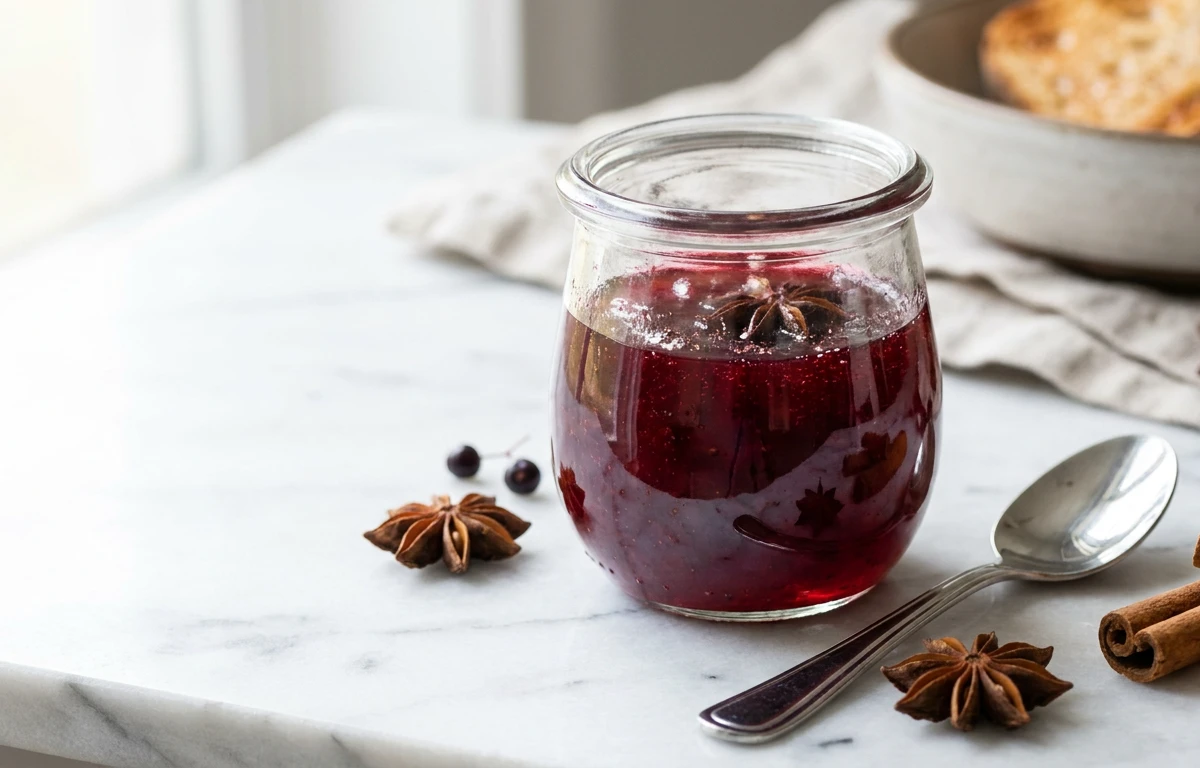
Spiced Elderberry Jam
A deeply flavorful, homemade jam that captures the rich, tart essence of elderberries with a warm blend of cinnamon, cloves, and star anise. Perfect on toast, swirled into yogurt, or paired with cheese for a rustic treat.
For 16 servings
- prep
Prepare the elderberries.
1.Rinse the elderberries under cold water and drain well.2.Pick over the berries, removing any remaining stems or unripe green berries. - mix · ~5 min
Combine the ingredients in the saucepan.
Place the cleaned elderberries, sugar, and lemon juice in the heavy-bottomed saucepan. Add the cinnamon stick, star anise, cloves, and a pinch of salt. Stir to combine and let it sit for 5 minutes until the berries start releasing their juices.
- boil · ~5 min
Cook the jam to a gentle boil.
Place the saucepan over medium heat and bring the mixture to a gentle boil, stirring frequently to dissolve the sugar and prevent sticking.
- simmer · ~35 min
Simmer until thickened.
1.Reduce the heat to low and let the jam simmer gently for 30-35 minutes.2.Stir occasionally with a wooden spoon, scraping the bottom of the pan to prevent scorching.3.Cook until the jam thickens and coats the back of the spoon. It will further thicken as it cools.TIPTo test if it's ready, place a small spoonful on a chilled plate. If it wrinkles when pushed with a finger, it's done. - prep
Remove the whole spices.
Turn off the heat. Carefully fish out the cinnamon stick, star anise, and cloves with a spoon and discard them.
- mix
Blend for a smoother consistency.
For a smoother jam, use an immersion blender directly in the saucepan to pulse the mixture a few times. Leave some chunks for a rustic texture if you prefer.
- assemble
Jar the jam and cool completely.
Carefully ladle the hot jam into the sterilized glass jar. Wipe the rim clean, seal tightly with the lid, and let it cool to room temperature on the counter. Refrigerate once completely cool.
TIPThe jam will continue to set as it cools. Don't worry if it looks slightly runny in the jar immediately.
What to keep in mind.
5 tips from the recipe — small details that make a real difference to the final dish.
- 1Use a heavy-bottomed saucepan to prevent the jam from scorching during the long simmer.
- 2For a stronger spice flavor, toast the cinnamon stick and star anise in a dry pan for 30 seconds before adding.
- 3Chill your test plate in the freezer before doing the wrinkle test for accurate doneness.
- 4Store the jam in the refrigerator and consume within 3 weeks for best flavor and texture.
- 5If your elderberries are frozen, do not thaw them first; cook directly from frozen to preserve shape and color.
Adapt it for your goals.
Seedless
After simmering, press the jam through a fine-mesh sieve to remove the tiny elderberry seeds. Ideal for a silky, spreadable texture on delicate pastries.
Low SugarLow-Sugar
Reduce sugar to 100 g and add 1 tsp of powdered pectin (mixed with a little sugar before boiling). Best for those watching sugar intake while still wanting a set jam.
Spiced Apple ElderberrySpiced Apple-Elderberry
Replace 100 g of elderberries with 100 g of finely diced apple. The apple adds natural pectin and a mild sweetness, balancing the tartness for a softer jam.
Vanilla OrangeVanilla-Orange
Add the zest of 1 orange and 1 split vanilla bean along with the spices. Offers a citrusy lift and floral sweetness that complements the elderberries.
Why this is on our healthy list.
Rich in Antioxidants
Elderberries are known for their high levels of anthocyanins and flavonoids, which help combat oxidative stress in the body.
Vitamin C Boost
Fresh lemon juice adds a dose of vitamin C, which supports immune health and helps the body absorb iron from other foods.
Low in Added Sugar
With a 1:2 sugar-to-fruit ratio, this jam uses far less sugar than many store-bought preserves, highlighting the natural fruit flavor.
Contains Anti-Inflammatory Spices
Cinnamon, cloves, and star anise are traditionally used for their anti-inflammatory properties, adding both flavor and potential health benefits.
Frequently asked questions
Yes, but rehydrate 100 g of dried berries in 200 ml of hot water for 30 minutes first, then drain and proceed. You may need to simmer an extra 5-10 minutes.