
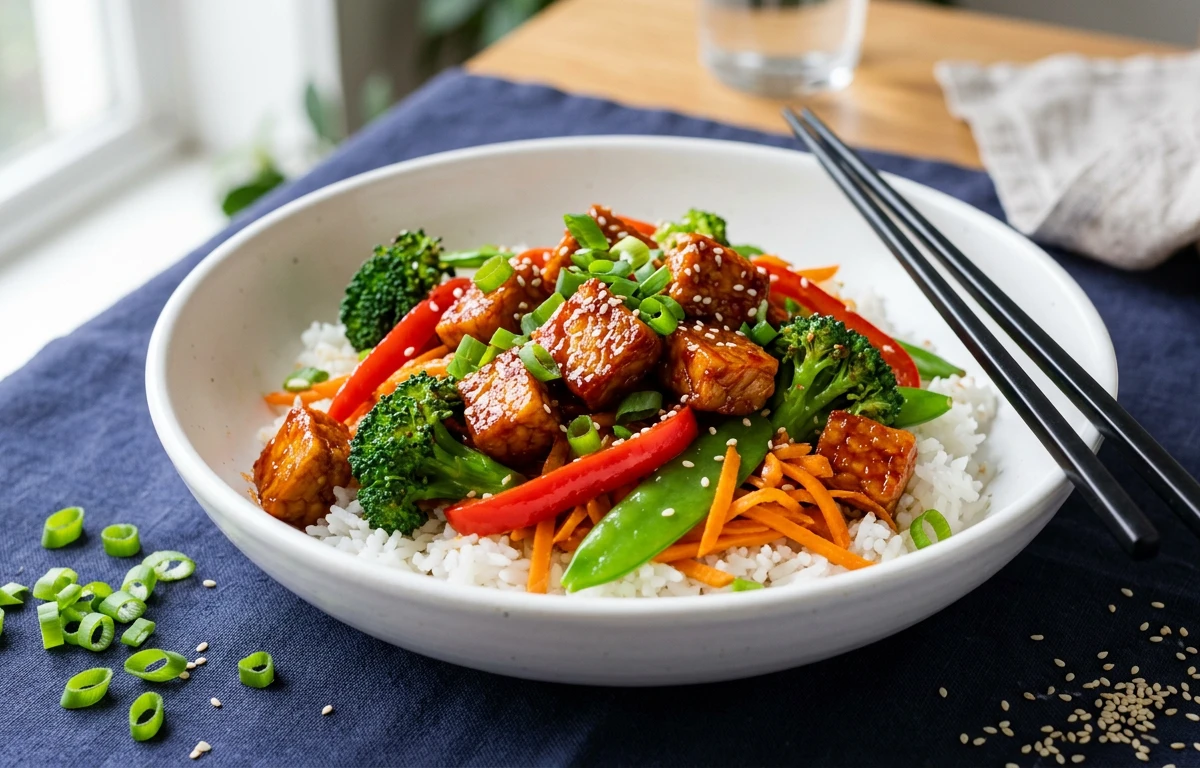
Spicy Gochujang Tempeh Stir-fry
Crispy, golden tempeh strips tossed in a fiery, sweet Korean gochujang sauce with crunchy bell pepper and broccoli. A bold, plant-based stir-fry that comes together fast for a satisfying weeknight dinner.
For 4 servings
- mix · ~2 min
Make the gochujang stir-fry sauce.
1.In a small bowl, whisk together the gochujang paste, soy sauce, rice vinegar, maple syrup, and water until smooth.2.Set the sauce aside near the stove. - prep · ~1 min
Prep and press the tempeh.
Pat the tempeh strips dry with a paper towel to help them crisp up in the pan.
- fry · ~5 min
Pan-fry the tempeh until golden.
1.Heat 1 tablespoon of vegetable oil in a wok or large frying pan over medium-high heat.2.Add the tempeh strips in a single layer and cook, turning, until golden-brown on all sides (about 4-5 minutes).3.Transfer the fried tempeh to a plate and set aside.TIPDon't overcrowd the pan; fry in two batches if needed for the best crisp. - saute · ~7 min
Stir-fry the aromatics and vegetables.
1.Pour the remaining 1 tablespoon of vegetable oil into the same pan.2.Add the sliced onion and sauté for 2 minutes until softening.3.Add the minced garlic and grated ginger, stirring for 30 seconds until fragrant.4.Toss in the broccoli florets and bell pepper strips. Stir-fry for 3-4 minutes until crisp-tender and bright.TIPKeep the vegetables moving in the pan to cook them evenly without burning the garlic. - mix · ~2 min
Return tempeh and coat with the sauce.
1.Return the crispy tempeh to the pan with the vegetables.2.Pour the gochujang sauce over everything.3.Stir-fry for 1-2 minutes until the sauce thickens slightly and evenly coats the tempeh and vegetables.4.Add the pinch of salt and stir to combine. - garnish · ~1 min
Finish and serve.
1.Remove the pan from heat and drizzle with the sesame oil.2.Toss gently and transfer to a serving dish.3.Garnish with toasted sesame seeds and serve immediately over steamed rice.
What to keep in mind.
5 tips from the recipe — small details that make a real difference to the final dish.
- 1Press tempeh strips dry with paper towels before frying to ensure maximum crispness.
- 2Fry tempeh in a single layer; overcrowding will steam it instead of browning.
- 3Have all veggies prepped and sauce whisked before you start cooking — stir-frying goes fast.
- 4Toast sesame seeds in a dry pan over medium heat for 1 minute to deepen their nutty flavor.
- 5Add a splash of water if the sauce gets too thick before coating the tempeh and veggies.
Adapt it for your goals.
High-protein
Swap half the broccoli for edamame or add cubed extra-firm tofu alongside the tempeh for an even bigger plant-protein punch.
low oilLow-oil
Use a non-stick pan and reduce oil to 1 tablespoon total; steam-sauté the veggies with a splash of water instead of the second tablespoon.
veganVegan
This recipe is already vegan — but try using coconut aminos instead of soy sauce for a soy-free version that still delivers umami.
Why this is on our healthy list.
Rich in Plant Protein
Tempeh provides a substantial amount of complete plant protein, supporting muscle maintenance and satiety.
Fermented for Gut Health
Tempeh is a fermented soybean product, offering probiotics that can aid digestion and nutrient absorption.
Low in Saturated Fat
Using vegetable oil and tempeh keeps this stir-fry naturally low in saturated fat compared to meat-based versions.
Packed with Fiber & Vitamins
Broccoli and bell pepper deliver dietary fiber, vitamin C, and antioxidants to support immune function.
Frequently asked questions
Yes — extra-firm tofu or seitan work well. Pan-fry them the same way until golden before tossing with the sauce.


