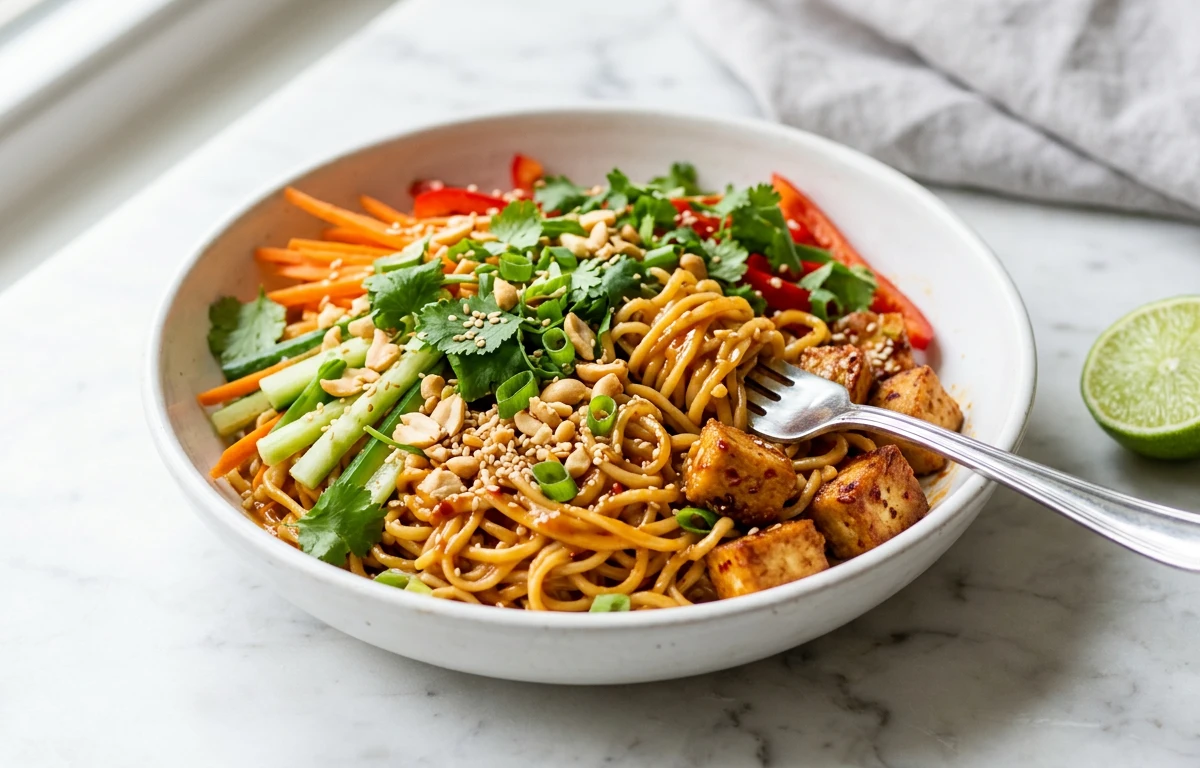
Spicy Peanut Noodles with Tofu
Chewy noodles and crispy pan-fried tofu tossed in a rich, nutty peanut sauce with a fiery kick. The sauce comes together in minutes using simple pantry staples, coating every strand with creamy, spicy goodness. A quick weeknight dinner that tastes like takeout but is made entirely from scratch.
For 4 servings
- prep · ~10 min
Press and cube the tofu.
Wrap the tofu block in a clean kitchen towel or paper towels. Place a heavy object like a skillet on top and let it press for 10 minutes to remove excess moisture. Cut into 1-inch cubes.
TIPRemoving moisture helps the tofu crisp up instead of steaming in the pan. - boil · ~8 min
Cook the noodles.
Bring a large pot of water to a rolling boil. Add the dried noodles and cook according to package directions until al dente. Drain in a colander and rinse briefly with cold water to stop cooking. Set aside.
- mix · ~2 min
Whisk together the peanut sauce.
1.In a small bowl, combine peanut butter, soy sauce, rice vinegar, honey, sesame oil, and red chili paste.2.Add 3 tablespoons of warm water and whisk until smooth and pourable.3.Taste and adjust chili paste for heat. Set aside.TIPWarm water helps the peanut butter loosen into a smooth, silky sauce. - fry · ~8 min
Fry the tofu until golden and crisp.
1.Heat oil in a large skillet or wok over medium-high heat until shimmering.2.Add tofu cubes in a single layer and season with salt. Do not overcrowd the pan.3.Cook undisturbed for 3-4 minutes until golden on the bottom, then flip and cook another 3-4 minutes.4.Remove tofu from the pan and set aside on a plate.TIPDon't move the tofu too early. Let it sear untouched for the best crust. - saute · ~1 min
Sauté the aromatics.
1.In the same skillet, sauté minced garlic and grated ginger over medium heat for 30 seconds until fragrant.2.Add white parts of the spring onion and stir for another 30 seconds.TIPIf the pan is dry, add a tiny splash of water to prevent burning the garlic. - mix · ~2 min
Toss noodles with sauce and tofu.
1.Add the cooked noodles to the skillet with the aromatics.2.Pour the peanut sauce over the noodles and add the crispy tofu back in.3.Toss everything gently with tongs until every noodle is evenly coated and heated through.TIPUse tongs for the best grip—they help lift and coat every strand without breaking the noodles. - assemble · ~1 min
Garnish and serve.
Divide noodles among bowls. Top with julienned carrot, cucumber, green parts of spring onion, chopped peanuts, and fresh coriander leaves. Serve immediately.
What to keep in mind.
7 tips from the recipe — small details that make a real difference to the final dish.
- 1Press the tofu for at least 10 minutes to remove moisture, ensuring a crispy golden crust rather than a soggy texture.
- 2Don't overcrowd the pan when frying tofu; cook in a single layer for even browning and maximum crunch.
- 3Resist moving the tofu during the first 3-4 minutes of searing — letting it form a crust before flipping gives the best texture.
- 4Use warm water when whisking the peanut sauce to help the peanut butter emulsify into a smooth, silky consistency.
- 5For the best noodle bite, cook udon or lo mein until just al dente and rinse with cold water to halt cooking.
- 6If the pan seems dry when sautéing garlic and ginger, add a splash of water to prevent burning and bitterness.
- 7Use tongs to toss the noodles with sauce — they lift and coat every strand without breaking the noodles.
Adapt it for your goals.
Gluten-free
Replace wheat noodles with rice noodles or soba (check buckwheat purity) and use tamari instead of soy sauce. The peanut sauce binds equally well to gluten-free strands, keeping the dish accessible for celiac diets.
high proteinHigh-protein
Add 150g of shredded cooked chicken or extra-firm tofu, and toss in a handful of edamame with the noodles. This boosts the protein content without changing the bold peanut-chili flavor.
low oilLow-oil
Bake the tofu cubes at 200°C (400°F) for 20 minutes instead of pan-frying, and reduce the oil in the sauce to 1 teaspoon. You'll still get a satisfying chew with less fat.
veganVegan
Substitute honey with maple syrup or agave nectar. The sauce remains just as glossy and sweet, and all other ingredients are already plant-based — perfect for vegan diners.
spicy misoSpicy-miso
Replace 1 tablespoon of peanut butter with 1 tablespoon of white miso paste. Miso adds a deeper, fermented umami note that complements the chili and sesame, giving the dish a more complex savory profile.
Why this is on our healthy list.
Rich in Plant Protein
Tofu provides a complete source of plant-based protein, supporting muscle repair and keeping you full longer.
Healthy Fats from Peanuts
Peanut butter and chopped peanuts contribute monounsaturated and polyunsaturated fats, which are heart-friendly when eaten in moderation.
Ginger Supports Digestion
Fresh ginger in the sauce adds a gentle warming compound that can aid digestion and reduce nausea.
Antioxidants from Fresh Veggies
Carrot, cucumber, and spring onion provide vitamins A and C, plus fiber, making the dish more colorful and nutrient-dense.
Frequently asked questions
Yes, you can substitute with chow mein, soba, or even whole wheat spaghetti — just cook them al dente and rinse to prevent sticking.