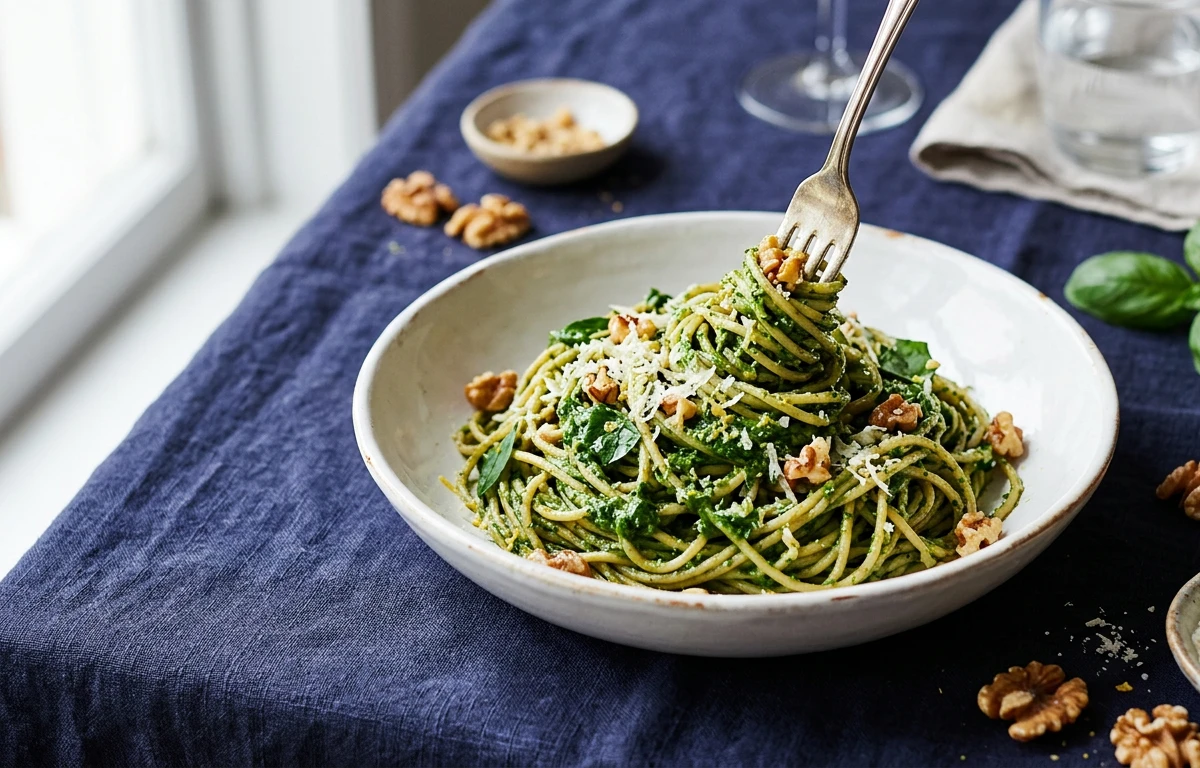
Spinach & Walnut Pesto Pasta
A vibrant, nutty twist on classic pesto that swaps basil for fresh spinach and pine nuts for toasted walnuts. The pesto comes together in minutes in a food processor, coating every strand of al dente pasta with a creamy, garlicky, cheesy sauce. Perfect for a quick weeknight dinner that feels a little bit special.
For 4 servings
- boil · ~10 min
Cook the pasta.
1.Bring a large pot of water to a rolling boil.2.Add 1 tbsp salt, then add the pasta and cook according to package directions until al dente.3.Just before draining, reserve ¼ cup of the starchy pasta water. Drain the pasta but do not rinse.TIPSaving the starchy pasta water is the secret to a silky, restaurant-quality sauce that clings to every piece of pasta. - mix · ~8 min
Make the spinach walnut pesto.
1.In a dry pan over medium heat, toast the walnuts for 3-4 minutes until fragrant. Let cool slightly.2.In a food processor, combine the toasted walnuts, spinach, parmesan, garlic, lemon juice, black pepper, and a pinch of salt.3.Pulse until coarsely chopped, then, with the motor running, slowly drizzle in the olive oil until the pesto is smooth.4.Scrape down the sides and pulse again. If the pesto is too thick, blend in a tablespoon of the reserved pasta water at a time until creamy.TIPToasting the walnuts deepens their flavor and removes any bitterness. Watch them closely — they burn in seconds. - assemble · ~2 min
Combine the pasta and pesto.
1.Return the drained pasta to the warm pot (off the heat).2.Add the spinach walnut pesto and toss vigorously, adding splashes of reserved pasta water as needed.3.Toss until every piece is evenly coated and the sauce is glossy and creamy. - serve · ~1 min
Plate and serve immediately.
1.Divide the pasta among bowls.2.Top with an extra grating of parmesan and a drizzle of olive oil if desired.TIPAlways serve pesto pasta hot. The sauce thickens as it cools, so toss and plate right away for the best texture.
What to keep in mind.
6 tips from the recipe — small details that make a real difference to the final dish.
- 1Toast the walnuts in a dry pan until fragrant and slightly golden for the deepest flavor.
- 2Reserve extra pasta water (about 1/2 cup) since the pesto may need thinning after combining.
- 3Do not rinse the pasta after draining — the surface starch helps the pesto cling perfectly.
- 4For a creamier pesto, pulse the spinach in batches so it doesn't turn into a puree too quickly.
- 5Make the pesto up to 3 days ahead; store in an airtight jar with a thin layer of olive oil on top.
- 6Warm the pesto gently in the microwave or stovetop before tossing with hot pasta for better emulsion.
Adapt it for your goals.
Vegan
Replace Parmesan with 3 tablespoons of nutritional yeast and use a dairy-free pasta — the yeast adds a cheesy, umami depth without any animal products.
high proteinHigh-protein
Swap half the pasta for cooked chickpea or lentil pasta, and add a handful of steamed edamame when tossing — boosts protein and fiber while keeping the pesto coating intact.
nut freeNut-free
Substitute walnuts with toasted sunflower seeds or pumpkin seeds — they provide a similar crunch and nuttiness without allergens.
low oilLow-oil
Reduce olive oil to 3 tablespoons and replace the rest with additional reserved pasta water; the starch will still create a silky sauce with far less fat.
Why this is on our healthy list.
Rich in Iron & Folate
Fresh spinach delivers a hefty dose of iron and folate, supporting healthy blood cells and energy levels.
Heart-Healthy Fats
Walnuts and extra-virgin olive oil provide omega-3 fatty acids and monounsaturated fats that help maintain good cholesterol.
Good Source of Calcium
Parmesan cheese adds calcium for strong bones and teeth, along with a concentrated savory punch.
Antioxidant Boost
Spinach and walnuts are packed with antioxidants like vitamin E and lutein that protect cells from oxidative stress.
Frequently asked questions
Fresh spinach is strongly recommended — frozen releases too much water and makes the pesto watery and dull in color. If you must, thaw and squeeze it completely dry.