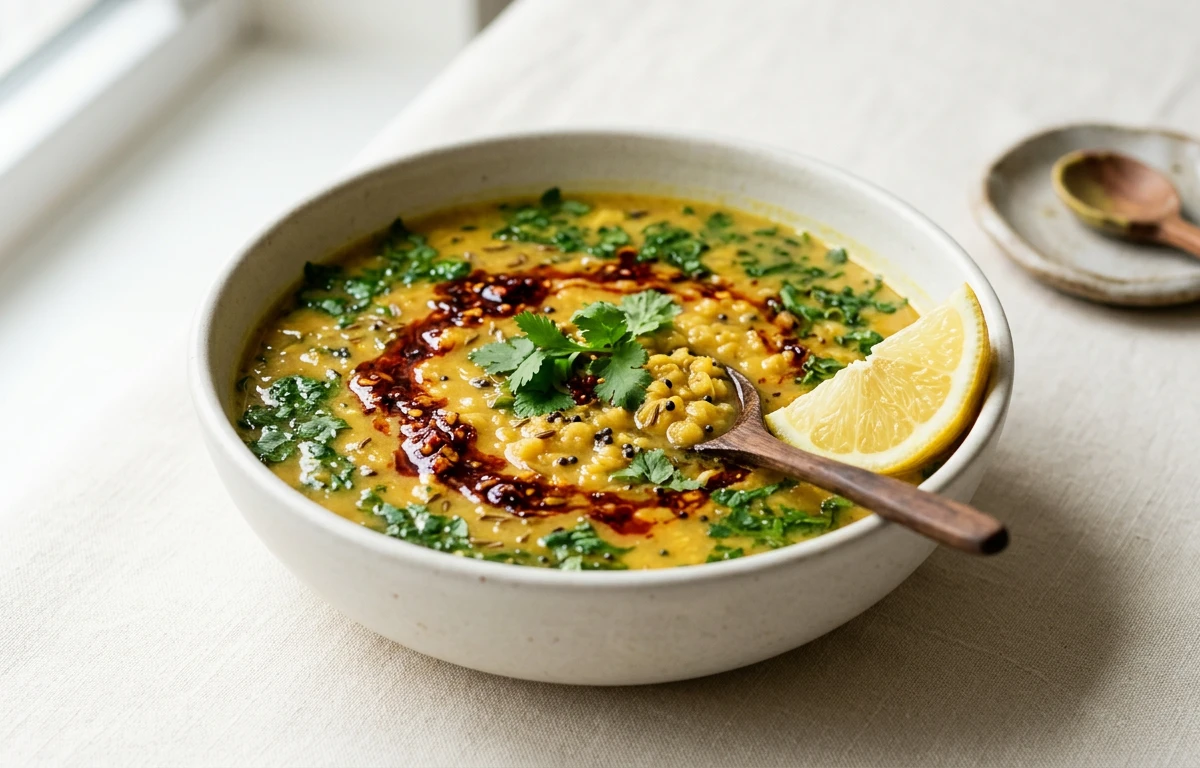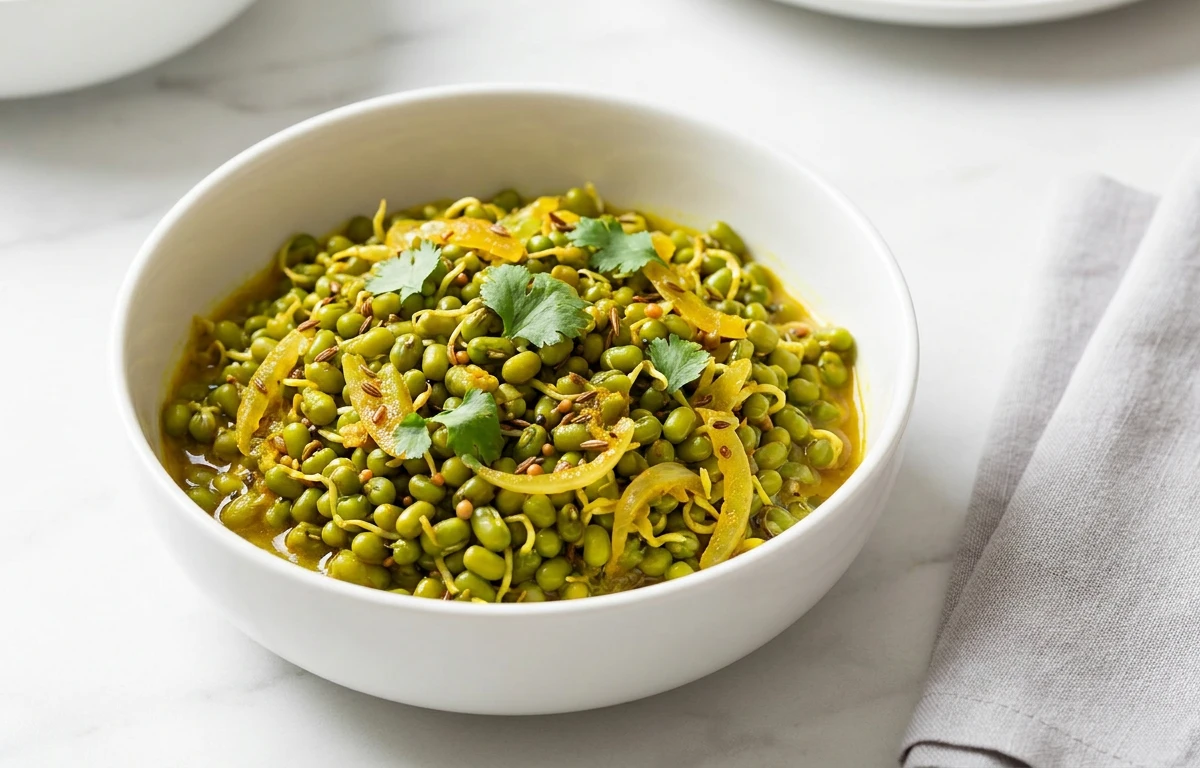
Sprouted Moong Sabzi
A light and nutritious dry curry made with sprouted whole moong beans, gently spiced with turmeric, cumin and fresh coriander. This everyday Indian sabzi comes together quickly and pairs perfectly with roti or rice.
For 4 servings
- boil · ~7 min
Boil the sprouted moong beans.
Place the sprouted moong beans in a pot with 0.5 cup water and a pinch of salt. Bring to a boil, then reduce heat and simmer covered until just tender (5-7 minutes). Drain any excess water and set aside.
TIPDon't overcook the sprouts — they should be tender but still have a slight crunch for the best texture. - temper · ~2 min
Make the tempering.
1.Heat oil in a kadai over medium heat until shimmering.2.Add mustard seeds and let them splutter (30 seconds).3.Add cumin seeds and let them crackle (20 seconds). - saute · ~9 min
Build the aromatic base.
1.Add chopped ginger and slit green chili, sauté for 30 seconds until fragrant.2.Add chopped onion and cook until lightly golden (5-6 minutes).3.Add chopped tomato and cook until soft and pulpy (3-4 minutes).TIPCook the onions patiently until golden — this brings sweetness and depth to the sabzi. - saute · ~1 min
Spice the masala.
1.Add turmeric powder, red chili powder and coriander powder.2.Stir well and cook for 30-40 seconds until the spices bloom and smell aromatic. - mix · ~5 min
Add the boiled sprouts and finish cooking.
Add the boiled moong sprouts and salt to the pan. Mix everything well so the sprouts are coated with the masala. Cook uncovered on low-medium heat for 4-5 minutes, stirring occasionally, until the sabzi is dry and the flavors have melded.
- mix · ~1 min
Finish with garam masala and lemon juice.
Turn off the heat. Sprinkle garam masala and squeeze lemon juice over the sabzi. Mix gently to combine.
TIPAdding garam masala off the heat preserves its aromatic punch. - garnish
Garnish with fresh coriander leaves and serve hot.
Transfer to a serving bowl, scatter chopped coriander leaves on top, and serve immediately with roti or rice.
What to keep in mind.
6 tips from the recipe — small details that make a real difference to the final dish.
- 1Sprout the moong until tails are just ¼–½ inch long for the best texture and digestibility.
- 2Don't skip rinsing the sprouts thoroughly after draining — it removes any earthy bitterness.
- 3Boil the sprouts only until just tender; they should still have a slight bite to hold up in the sabzi.
- 4Cook the onions slowly until deep golden — this caramelized base is the secret to a rich, sweet flavor.
- 5Add garam masala only after turning off the heat to keep its volatile aromatics intact.
- 6If the sabzi looks too dry after adding sprouts, sprinkle a tablespoon of water and cook a minute longer.
Adapt it for your goals.
Vegan (already vegan)
This recipe is naturally vegan — no modifications needed. Serve with coconut rice or quinoa for a plant-based protein-packed meal.
Low OilLow-Oil
Reduce oil to 1 teaspoon and dry-roast the cumin and mustard seeds in a hot pan before adding a splash of water to sauté the onions. Ideal for those watching fat intake.
High Protein BoostHigh-Protein Boost
Add 100 g of crumbled paneer or pan-fried tofu cubes along with the boiled sprouts for an extra protein punch — great for post-workout meals.
Jain FriendlyJain-Friendly
Skip the onion and garlic (already omitted here); replace onion with raw mango or grated bottle gourd for a subtle sweet-sour note. Use asafoetida (hing) in the tempering for depth.
Coconut TwistCoconut Twist
Add 2 tablespoons of fresh or desiccated coconut after the onions soften — it adds a mild sweetness and creamy texture that pairs beautifully with the earthy moong.
Why this is on our healthy list.
High in Plant Protein
Sprouted moong is a rich source of complete plant protein (containing all essential amino acids), making this sabzi an excellent meat-free protein option for vegetarians and vegans.
Packed with Digestive Enzymes
The sprouting process increases the availability of enzymes that aid digestion, reducing gas and bloating commonly associated with legumes.
Good Source of Folate
Moong beans are naturally high in folate (vitamin B9), which is essential for cell growth and red blood cell formation.
Low in Calories and Fat
This dry sabzi uses minimal oil (only 2 tsp) and is low in calories, yet it is very filling due to the fiber and protein content.
Rich in Antioxidants
Turmeric, cumin, coriander, and ginger all contribute antioxidant and anti-inflammatory compounds that support overall health.
Frequently asked questions
You can absolutely use store-bought sprouted moong beans — just rinse them well before using. Homemade sprouts often have a fresher crunch, but quality store-bought ones work perfectly.