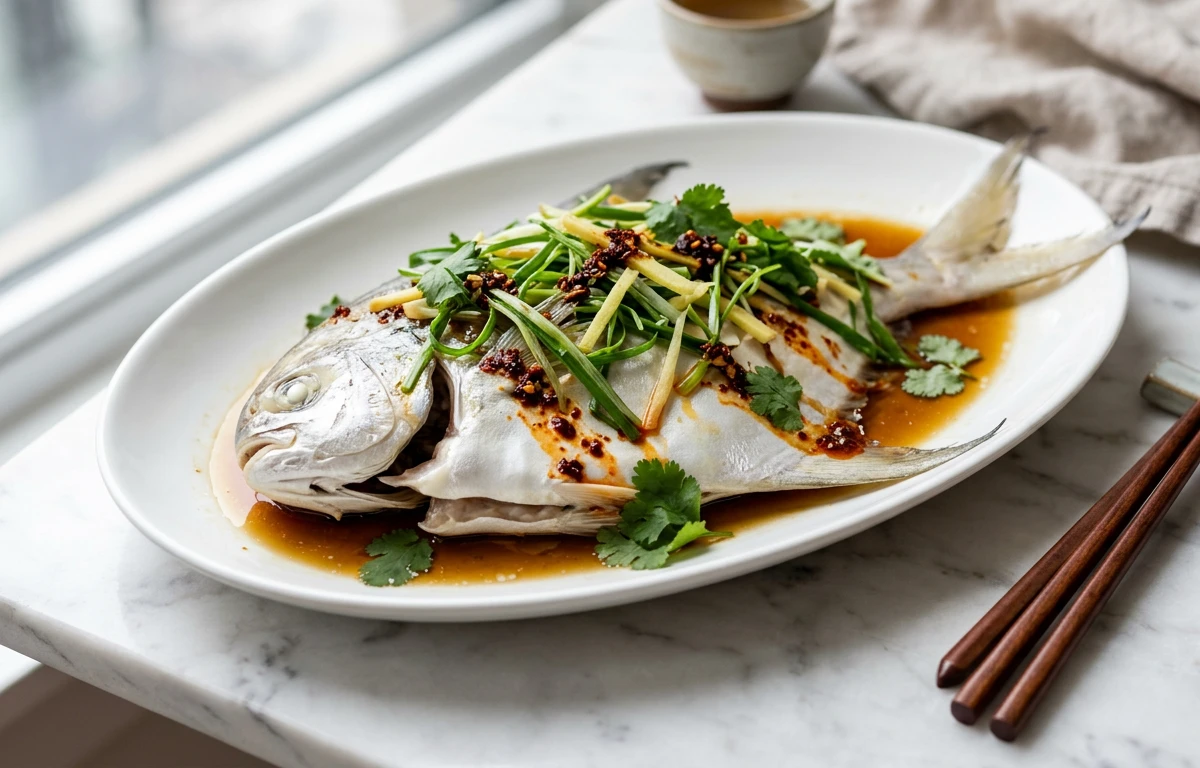
Steamed Pomfret with Ginger & Scallion
Delicate, silky steamed pomfret infused with the bright, aromatic heat of fresh ginger and scallions. A classic Cantonese-style preparation where the fish is gently steamed to perfection, then kissed with sizzling hot oil to release a fragrant cloud of flavor. Light, elegant, and ready in under 30 minutes.
For 4 servings
- prep
Prepare the fish and aromatics.
1.Pat the pomfret completely dry with paper towels.2.Make 3 diagonal slashes on each side of the fish, cutting down to the bone.3.Julienne the ginger into thin matchsticks and separate scallion whites from greens.TIPDry fish skin ensures better absorption of flavors during steaming. - steam · ~12 min
Steam the fish.
1.Fill a steamer or wok with water and bring to a rolling boil.2.Place fish on a heatproof plate. Scatter half the ginger and scallion whites over and inside the fish.3.Steam over high heat for 10-12 minutes, until the flesh is opaque and flakes easily.TIPUse high heat for the entire steaming time to keep the fish tender. - prep
Drain excess liquid and garnish.
1.Carefully remove the plate from the steamer.2.Discard the accumulated cloudy fish liquid from the plate.3.Top the fish with the remaining ginger, scallion greens, and cilantro. - mix
Season the fish.
1.In a small bowl, combine light soy sauce, sesame oil, sugar, white pepper, and salt.2.Drizzle the soy sauce mixture evenly over the entire fish. - fry · ~1 min
Sizzle the aromatics with hot oil.
1.Heat peanut oil in a small saucepan until it is shimmering and just beginning to smoke.2.Immediately pour the sizzling hot oil over the fish directly onto the ginger and scallion garnish.3.Listen for the sizzle as the oil releases the fragrance of the aromatics.TIPThe oil must be smoking hot to properly release the aroma of the ginger and scallion. - serve
Serve immediately.
Carry the fragrant fish to the table right away. Serve with steamed jasmine rice.
What to keep in mind.
6 tips from the recipe — small details that make a real difference to the final dish.
- 1For the silkiest texture, steam the pomfret over high heat only; never reduce the heat.
- 2After steaming, discard all the cloudy fish liquid to prevent a bitter, fishy taste.
- 3Make sure the peanut oil is smoking hot before pouring to fully bloom the ginger and scallion fragrance.
- 4Cut three shallow slashes on each side of the fish to ensure even and quick cooking.
- 5Serve the fish immediately after adding the hot oil for the best aroma and texture.
- 6If you don't have a steamer, use a wok with a rack and a tight-fitting lid.
Adapt it for your goals.
Extra spicy
Add 2-3 thinly sliced red bird's-eye chilies on top of the fish before the hot oil pour for a clean, bright heat.
black beanBlack bean
Mix 1 tablespoon of fermented black beans (rinsed and smashed) into the soy sauce mixture for a savory, umami depth.
low oilLow-oil
Skip the final sizzling oil step; instead, drizzle a teaspoon of hot toasted sesame oil over the aromatics to keep the dish lighter.
lemon gingerLemon ginger
Add a few thin slices of lemon on the fish during steaming and a squeeze of fresh lemon juice to the soy sauce for a citrusy note.
Why this is on our healthy list.
Lean Protein Source
Pomfret is a lean white fish packed with high-quality protein, essential for muscle repair and satiety, with minimal saturated fat.
Rich in Omega-3s
Like many fatty fish, pomfret provides omega-3 fatty acids that support heart and brain health.
Low-Calorie Steaming
Steaming requires no added oil for cooking the fish, keeping the dish naturally low in calories and fat.
Anti-Inflammatory Ginger
Fresh ginger contains gingerol, a compound with anti-inflammatory properties that can aid digestion and reduce nausea.
Frequently asked questions
Yes, but thaw it completely in the refrigerator, pat very dry, and reduce the steaming time by 1-2 minutes as frozen fish tends to cook faster.