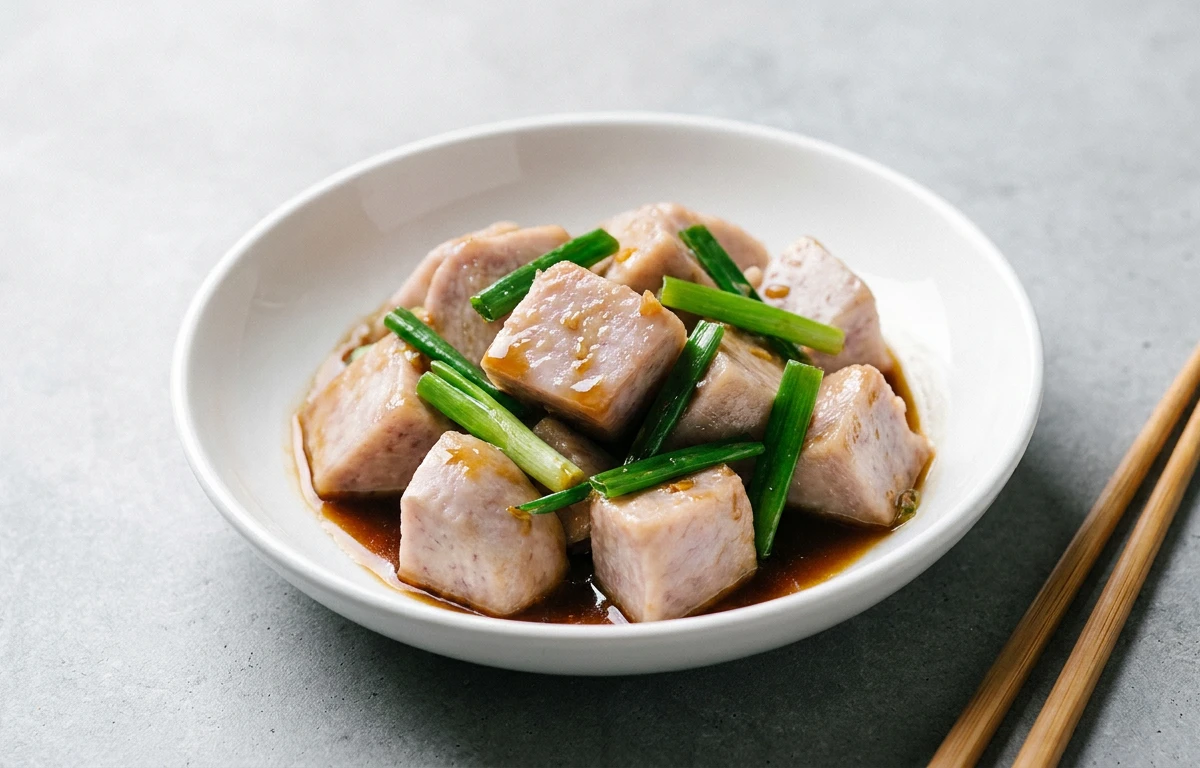
Steamed Taro with Scallions
Soft, tender steamed taro cubes tossed with fragrant scallions and a light soy-based sauce. A humble yet deeply satisfying Chinese home-style side dish that lets the natural earthy sweetness of taro shine through. Ready in under 30 minutes with minimal effort.
For 4 servings
- prep
Prepare the taro.
1.Peel the taro root under running water to avoid skin irritation.2.Cut taro into 1-inch cubes and rinse well.3.Spread taro cubes evenly on a heatproof plate. - steam · ~15 min
Steam the taro until fork-tender.
Place the plate in a steamer basket set over boiling water. Cover and steam for 12-15 minutes until a fork slides through easily with no resistance.
TIPCheck water level halfway through — top up with hot water if needed. - mix
Dress the steamed taro.
1.Transfer hot taro cubes to a serving bowl.2.Drizzle soy sauce and sesame oil over the hot taro.3.Gently toss to coat without breaking the cubes. - saute · ~1 min
Sizzle the scallions.
Heat oil in a small pan over medium heat until shimmering. Add the white parts of scallions and sizzle for 30 seconds until fragrant and just starting to turn golden.
- assemble
Top the taro with scallion oil.
Pour the hot scallion oil directly over the dressed taro cubes. Sprinkle the reserved green scallion tops and a pinch of salt over everything.
TIPPouring hot oil over the taro releases the scallion aroma and gives the dish a glossy finish. - serve
Toss gently and serve warm.
What to keep in mind.
7 tips from the recipe — small details that make a real difference to the final dish.
- 1When peeling taro, wear disposable gloves or rub your hands with oil to prevent the calcium oxalate crystals from irritating your skin.
- 2Cut taro into uniform 1-inch cubes so they steam evenly and finish at the same time.
- 3Use a perforated steamer basket or line the plate with parchment to prevent taro cubes from sticking and sitting in condensation.
- 4Do not overcook the taro — it should be fork-tender but still hold its shape, not mushy.
- 5Sizzle the scallion whites just until fragrant and lightly golden; burnt scallions become bitter.
- 6For best flavor, pour the hot scallion oil over the taro immediately after dressing it so the heat helps the soy and sesame oil meld.
- 7Leftover steamed taro can be stored in an airtight container in the fridge for up to 3 days; reheat gently in a steamer or microwave.
Adapt it for your goals.
Spicy-sichuan
Add 1 teaspoon of chili oil or Sichuan chili crisp along with the soy sauce for a spicy, numbing kick that contrasts the taro's sweetness.
umami richUmami-rich
Swap half the soy sauce for dark soy sauce and add a splash of mushroom dark soy for deeper color and a richer, almost meaty savory note.
garlic scallionGarlic-scallion
Sizzle 2 minced garlic cloves together with the scallion whites to add a pungent, roasted garlic layer that pairs beautifully with taro.
vegan upgradeVegan-upgrade
Use coconut aminos instead of soy sauce to keep it gluten-free and soy-free while adding a subtle sweetness that complements the taro.
herb freshHerb-fresh
Top with a handful of chopped cilantro or Thai basil along with the green scallions for a fresh herbaceous contrast to the rich oil.
Why this is on our healthy list.
Rich in Dietary Fiber
Taro root is an excellent source of fiber, which supports healthy digestion and helps maintain stable blood sugar levels after meals.
Good Source of Potassium
Taro provides a significant amount of potassium, an essential mineral that helps regulate blood pressure and muscle function.
Low in Fat
With only a small amount of oil used for the scallion sizzle, this dish is naturally low in fat while still delivering satisfying flavor.
Contains Antioxidants
Scallions are rich in sulfur compounds and quercetin, antioxidants that support immune health and reduce inflammation in the body.
Gluten-Free Base
This dish is naturally gluten-free when made with tamari or certified gluten-free soy sauce, making it suitable for gluten-sensitive diets.
Frequently asked questions
Raw taro contains calcium oxalate crystals that can cause itchiness and irritation. Wear gloves, oil your hands before peeling, or rinse peeled taro under running water to remove the irritant.