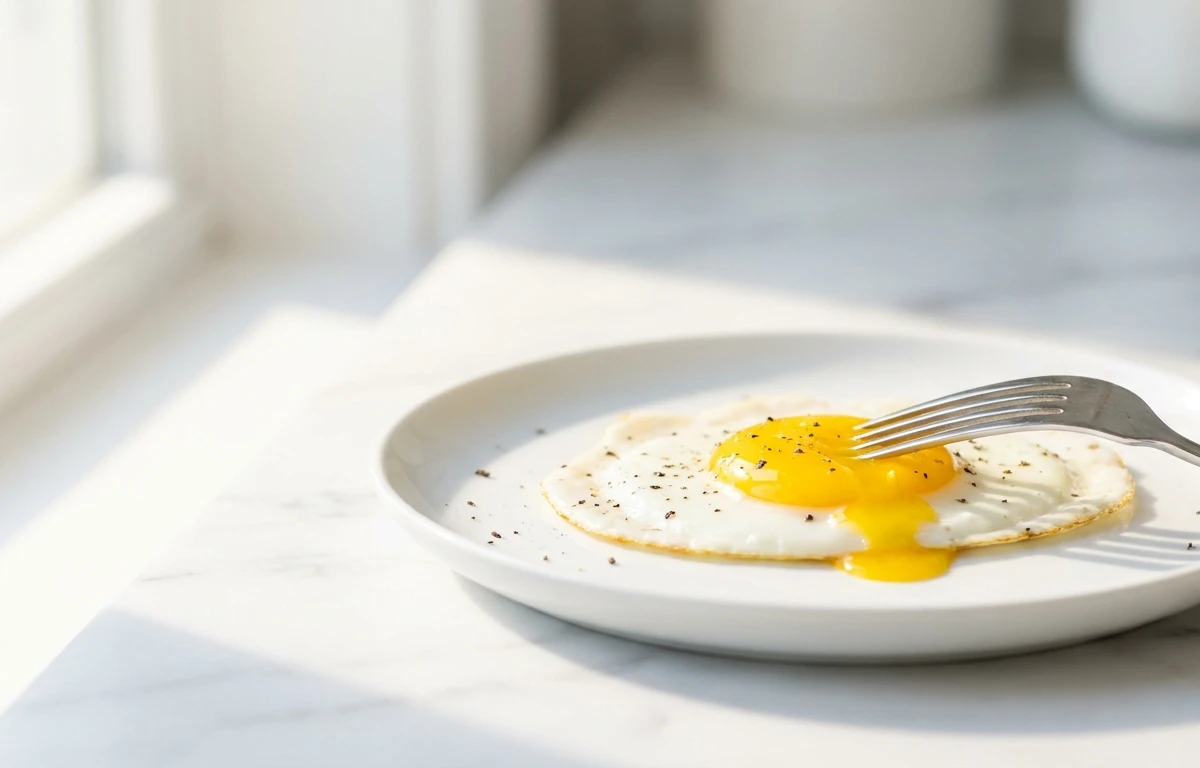
Sunny-Side-Up Fried Egg
A beautifully simple fried egg with a runny yolk and fully set whites, cooked gently in a buttered skillet until the edges turn lacy and golden. Ready in under 5 minutes, it's the classic breakfast staple that's all about technique.
For 1 serving
- prep · ~1 min
Heat the butter in a non-stick skillet.
1.Place a small non-stick skillet over medium-low heat for 1 minute.2.Add the butter and swirl the pan as it melts to coat the surface evenly.TIPMedium-low heat is crucial — too high and the whites will burn before setting. - fry · ~3 min
Crack the eggs into the skillet.
1.Crack one egg into a small bowl, then gently slide it into the skillet.2.Repeat with the second egg, spacing them apart in the pan.3.Cook undisturbed for 2 to 3 minutes until the whites are completely set but the yolks are still runny.TIPCracking eggs into a bowl first prevents broken yolks and shell fragments in the pan. - simmer · ~1 min
Baste the whites for an even set.
1.Tilt the pan slightly to pool the melted butter.2.Use a spoon to baste the hot butter over any unset egg whites until they turn opaque.3.Cook this way for another 30 to 45 seconds.TIPBasting cooks the thin layer of white covering the yolk without flipping the egg. No uncooked whites, still a runny yolk. - serve
Season and serve immediately.
1.Slide a thin spatula under the eggs and transfer them carefully to a warm plate.2.Season with salt and freshly ground black pepper right before serving.
What to keep in mind.
7 tips from the recipe — small details that make a real difference to the final dish.
- 1Bring eggs to room temperature for more even cooking and less shock when hitting the pan.
- 2Use a non-stick skillet and medium-low heat to prevent the whites from burning before setting.
- 3Crack each egg into a small bowl first to avoid shell fragments and preserve the yolk.
- 4Baste the whites with hot butter to set the thin layer over the yolk without flipping the egg.
- 5Slide the finished eggs onto a warm plate to keep them hot and maintain the runny yolk.
- 6Season with salt and pepper just before serving to avoid drawing moisture out of the yolk.
- 7For lacy, crispy edges, let the butter foam slightly before adding the eggs.
Adapt it for your goals.
Crispy-edged
Increase heat to medium and let the butter brown slightly before adding the eggs; the edges will turn lacy and golden for extra texture.
herb infusedHerb-infused
Add a sprig of fresh thyme or a bay leaf to the melting butter for a subtle herbal aroma that infuses the eggs as they cook.
cheese crustedCheese-crusted
Sprinkle grated Parmesan or cheddar over the whites during the last minute of cooking; the cheese melts and creates a savory crust.
spicySpicy
Add a pinch of red pepper flakes or a drop of hot sauce to the butter before cracking in the eggs for a gentle heat.
Why this is on our healthy list.
High-Quality Protein
Each egg provides about 6 grams of complete protein, containing all nine essential amino acids for muscle repair and satiety.
Rich in Choline
Egg yolks are one of the best dietary sources of choline, a nutrient that supports brain health and memory function.
Source of Vitamin D
Eggs are one of the few natural food sources of vitamin D, important for bone health and immune function.
Contains Lutein and Zeaxanthin
The yolk provides these antioxidants that help protect eye health and reduce the risk of age-related macular degeneration.
Frequently asked questions
The pan may not be hot enough when you add the butter, or the skillet isn't non-stick. Heat the pan for a full minute on medium-low before adding butter, and use a well-seasoned non-stick surface.