
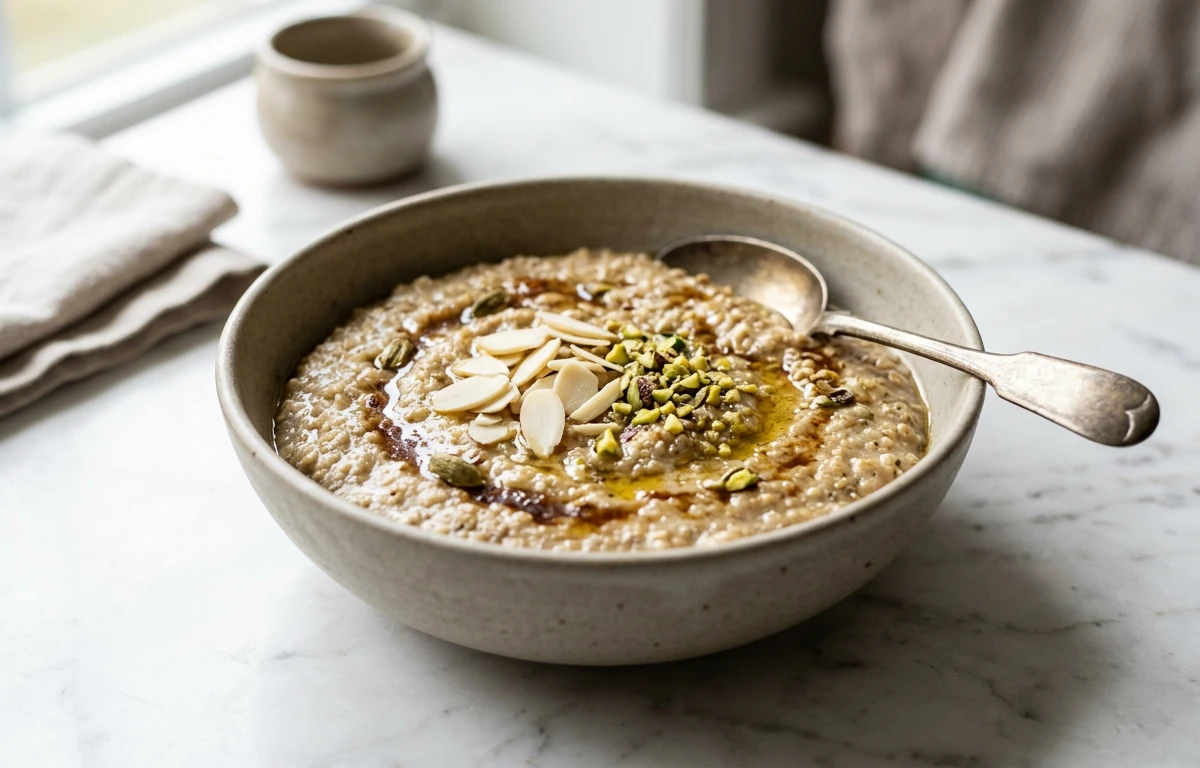
Sweet Bajra Porridge
A warm, comforting bowl of creamy pearl millet porridge sweetened with jaggery and fragrant with cardamom. This wholesome winter breakfast from rural India comes together in one pot and keeps you full for hours with its nutty, earthy flavor.
For 4 servings
- prep
Soak the bajra.
Wash the bajra thoroughly and soak in enough water for 30 minutes. Drain well before cooking.
TIPSoaking softens the millet and cuts down cooking time significantly. - saute · ~3 min
Roast the drained bajra in ghee.
1.Heat ghee in a heavy-bottomed pan over medium heat.2.Add the drained bajra and roast for 2-3 minutes, stirring constantly, until it smells nutty.TIPRoasting brings out the earthy, nutty aroma of pearl millet — don't skip this step. - boil · ~18 min
Cook the bajra in water until tender.
1.Pour in 3 cups of water and add a pinch of salt.2.Bring to a rolling boil, then lower the heat to a gentle simmer.3.Cover partially and cook for 15-18 minutes, stirring occasionally, until the grains are soft and split open.TIPStir every few minutes to prevent the millet from sticking to the bottom. - simmer · ~7 min
Add milk and simmer to creamy thickness.
1.Pour in the milk and add crushed cardamom.2.Simmer on low heat for 5-7 minutes, stirring often, until the porridge thickens to a creamy consistency.TIPKeep the heat low once milk is added — it can scorch easily. - mix
Sweeten with jaggery.
Turn off the heat and stir in the grated jaggery until it dissolves completely into the hot porridge.
TIPAlways add jaggery off the heat — boiling it with milk can cause curdling. - garnish
Garnish with slivered almonds and serve warm.
Ladle into bowls, scatter slivered almonds on top, and serve immediately while warm and creamy.
What to keep in mind.
6 tips from the recipe — small details that make a real difference to the final dish.
- 1Soak the bajra for at least 30 minutes to soften the grains and reduce cooking time.
- 2Roast the drained bajra in ghee until it smells nutty — this deepens the earthy flavor of the porridge.
- 3Stir occasionally while the bajra cooks in water to prevent sticking and ensure even softening.
- 4Once milk is added, keep the heat low and stir often to avoid scorching the bottom of the pan.
- 5Always add jaggery off the heat; boiling jaggery with milk can cause it to curdle.
- 6For a thicker porridge, let it rest for 2 minutes after adding jaggery — it will continue to thicken.
Adapt it for your goals.
Dairy-free
Replace milk with full-fat coconut milk or almond milk for a lactose-free version; the coconut version pairs beautifully with cardamom and jaggery.
nut freeNut-free
Skip the almonds and garnish with toasted pumpkin seeds or coconut flakes to keep the crunch without nuts.
savorySavory
Omit jaggery and cardamom; add cumin seeds, black pepper, and sautéed vegetables to turn the porridge into a savory millet khichdi.
low sugarLow-sugar
Reduce jaggery to 1½ tablespoons or substitute with stevia or monk fruit; the porridge remains creamy and satisfying with far less sweetness.
spiced upSpiced-up
Add a pinch of saffron soaked in warm milk or a dash of rose water along with the cardamom for a fragrant Kashmiri-style variation.
Why this is on our healthy list.
Rich in Millet Fiber
Pearl millet (bajra) provides a good amount of dietary fiber, which supports healthy digestion and keeps you feeling full longer.
Natural Iron from Jaggery
Jaggery is a traditional unrefined sweetener that retains trace minerals including iron, which may help support healthy blood levels.
Calcium from Milk
Full-cream milk adds bone-supporting calcium and protein, making this porridge a well-rounded breakfast option.
Heart-Healthy Ghee Fats
A small amount of ghee provides butyrate and fat-soluble vitamins, and the roasting technique uses minimal fat for maximum flavor.
Gluten-Free Grains
Pearl millet is naturally gluten-free, making this porridge a safe and nutritious choice for those with celiac disease or gluten sensitivity.
Frequently asked questions
Soaking is strongly recommended as it softens the hard millet grains and halves the cooking time; skipping it can lead to a sticky, undercooked porridge.


