
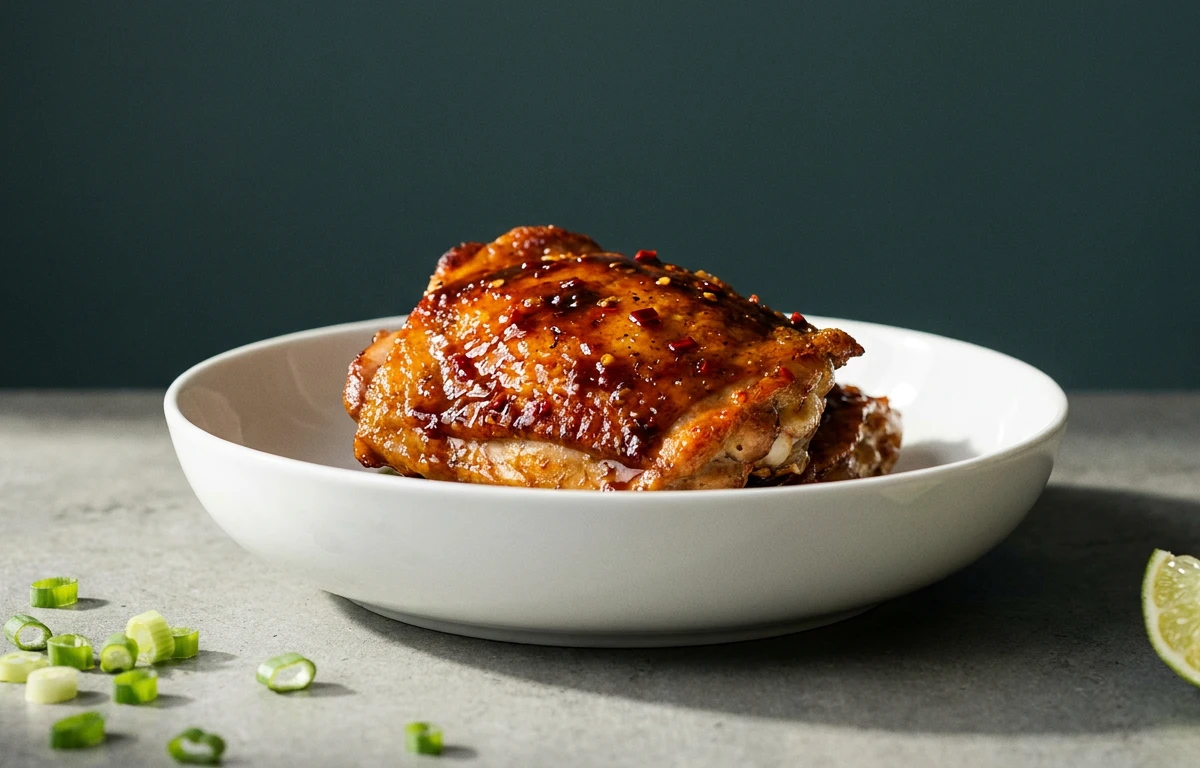
Tamarind Glaze for Fish or Chicken
A glossy, tangy-sweet glaze that brings life to grilled or pan-seared fish and chicken. Made by simmering tamarind pulp with jaggery, ginger, and a whisper of warm spices until it turns thick and syrupy. Brush it on during the last few minutes of cooking and watch it caramelize into a beautifully lacquered finish.
For 4 servings
- prep · ~15 min
Soak and extract the tamarind pulp.
Break the tamarind block into the warm water in a small bowl. Let it soak for 15 minutes, then massage it with your fingers until the pulp dissolves. Pass the mixture through a fine-mesh strainer into a bowl, pressing hard on the solids to extract every bit of tangy liquid. Discard the fibrous leftovers.
- simmer · ~12 min
Simmer the tamarind base into a glaze.
Pour the strained tamarind liquid into a small heavy-bottomed saucepan. Add the grated jaggery, ginger, cumin powder, red chili powder, and salt. Stir and bring to a gentle simmer over medium heat. Cook for 10–12 minutes, stirring occasionally, until the mixture thickens enough to coat the back of a spoon and turns glossy.
TIPWatch closely near the end — the high sugar content can catch and burn quickly. - temper · ~2 min
Make the tempering and finish the glaze.
1.In a small pan, heat the oil over medium heat until shimmering.2.Add the mustard seeds and let them pop (20-30 seconds).3.Add the curry leaves and let them crackle for 10 seconds.4.Pour the tempering into the simmered tamarind glaze and stir through. - rest
Cool the glaze before using.
Remove the saucepan from the heat and let the glaze cool completely. It will thicken further as it cools. Transfer to a clean jar. Brush onto fish or chicken during the last 2–3 minutes of grilling, baking, or pan-searing to get a beautifully caramelized, sticky finish.
TIPStore any leftover glaze in the fridge for up to a week — reheat gently to loosen.
What to keep in mind.
6 tips from the recipe — small details that make a real difference to the final dish.
- 1Soak the tamarind block in warm water for the full 15 minutes to ensure maximum flavor extraction.
- 2Press the tamarind solids firmly through the strainer — the extra pulp gives the glaze a richer body.
- 3Grate the jaggery finely so it dissolves quickly and evenly into the tamarind liquid.
- 4Watch the glaze closely in the final 3–4 minutes; its high sugar content can burn rapidly.
- 5Let the glaze cool completely before jarring — it will thicken to the perfect brushing consistency.
- 6Brush the glaze only during the last 2–3 minutes of cooking to prevent scorching the sugars.
Adapt it for your goals.
Lower-sugar
Reduce the jaggery to 2 tbsp for a tangier, less sweet glaze — ideal if you prefer a sharper tamarind punch or are pairing with already-sweet proteins like honey-glazed salmon.
spicy hotSpicy-hot
Increase the red chili powder to ½ tsp and add a minced green bird's eye chili during the simmer for a fiery kick that cuts through rich meats.
garlic infusedGarlic-infused
Add 2 grated garlic cloves with the ginger for extra depth — works beautifully as a marinade base for chicken tikka or paneer.
herbaceousHerbaceous
Stir in 1 tbsp finely chopped fresh cilantro or mint after the tempering for a bright, herbaceous finish that pairs well with grilled fish.
Why this is on our healthy list.
Rich in Digestive Acids
Tamarind contains natural tartaric acid and malic acid, which can aid digestion and help stimulate bile production.
Source of Iron from Jaggery
Jaggery, an unrefined sugar, retains trace minerals like iron and magnesium, offering a modest mineral boost over refined sugar.
Anti-Inflammatory Properties
Ginger and cumin in the glaze both contain compounds known for their anti-inflammatory effects, supporting joint and gut health.
Low in Fat
This glaze uses only 1 teaspoon of oil, making it a lean way to add bold flavor without excess fat or oils.
Frequently asked questions
Yes, use 2 tablespoons of concentrate mixed with ¾ cup water, but the flavor will be less nuanced and the texture thinner.


