
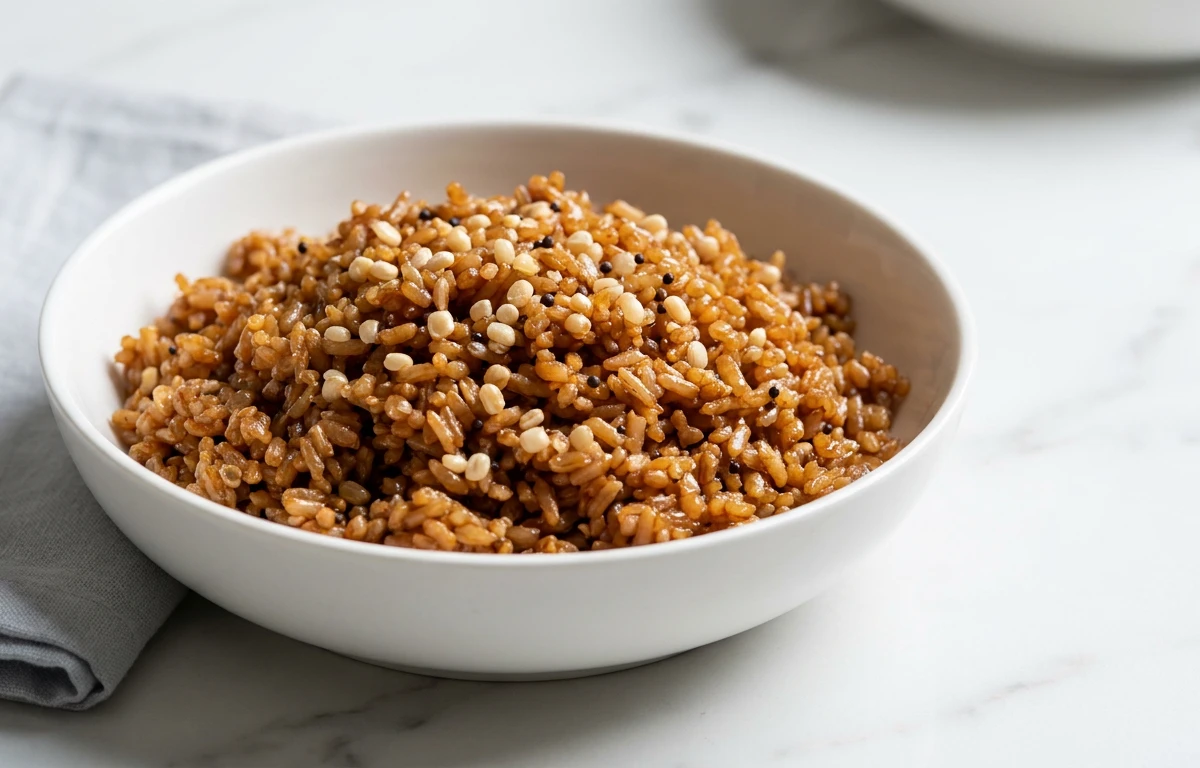
Tamarind Rice
A tangy, nutty South Indian rice dish where cooked rice is tossed with a spiced tamarind paste and crunchy peanuts. This temple-style favorite is quick to come together and travels beautifully, making it perfect for lunch boxes and festive meals.
For 4 servings
- prep
Soak the tamarind.
Soak tamarind in 1 cup warm water for 30 minutes. Squeeze and extract thick pulp. Discard fibers. Set aside.
- boil
Cook the rice.
Wash rice thoroughly and drain. Add 3 cups water and salt. Cook until grains are soft but separate. Spread on a wide plate to cool completely, drizzling a few drops of oil to prevent sticking.
TIPSpread rice while warm so it doesn't clump. Use a fork to gently fluff and separate the grains. - simmer · ~4 min
Simmer the tamarind paste.
In a small pan, bring the extracted tamarind pulp to a gentle simmer. Add turmeric powder, red chili powder, and jaggery. Cook for 3 to 4 minutes until it thickens slightly and the raw smell goes away. Remove from heat and keep aside.
TIPSimmer on low heat — tamarind burns quickly. It should coat the back of a spoon when ready. - temper · ~4 min
Make the tempering.
1.Heat oil in a deep pan over medium heat until shimmering.2.Add mustard seeds and let splutter (30 sec).3.Add cumin seeds, chana dal, urad dal, and peanuts. Sauté until dals turn golden and peanuts are crisp (2 min).4.Add dried red chilies, curry leaves, and asafoetida. Sauté until fragrant (20 sec). - simmer · ~2 min
Cook the tamarind mixture with the tempering.
Pour the prepared tamarind paste into the tempering pan. Stir well and let it bubble gently for 2 minutes until oil starts to separate at the edges. The mixture will darken and turn glossy.
TIPBe careful — the paste sputters. Use a splatter guard or keep the pan partially covered. - mix
Combine rice with the tamarind mix.
Turn off the heat. Add the cooled, fluffy rice to the pan. Using a gentle folding motion, mix until every grain is evenly coated with the tamarind mixture. Avoid mashing the rice.
TIPUse a wide spatula and cut-and-fold technique. The rice must be completely cool to avoid turning mushy. - rest · ~15 min
Rest the rice for flavors to meld.
Cover the pan with a lid and let the tamarind rice rest for 10 to 15 minutes. The rice absorbs the tangy-spicy notes better as it sits.
TIPTamarind rice tastes even better after 2 to 3 hours. Ideal for make-ahead lunch boxes. - garnish
Garnish with fresh cilantro and serve.
What to keep in mind.
6 tips from the recipe — small details that make a real difference to the final dish.
- 1Use day-old or fully cooled rice to prevent the grains from breaking while mixing.
- 2Toast the peanuts and dals until just golden to get a deep nutty flavor without bitterness.
- 3Simmer the tamarind paste until the raw smell disappears and it coats a spoon thickly.
- 4Fold the tamarind paste gently into the rice using a cut-and-fold motion to keep grains intact.
- 5Let the rice rest for at least 15 minutes after mixing so the flavors meld and deepen.
- 6Tamarind rice stays fresh in the fridge for up to 2 days and tastes even better the next day.
Adapt it for your goals.
Low-oil
Reduce oil to 1.5 tsp and dry-roast the peanuts and dals before adding. Ideal for those watching their fat intake without losing crunch.
high proteinHigh-protein
Add 1/2 cup of cooked, crumbled tofu or boiled moong beans along with the rice. This boosts the protein content while blending with the tangy tamarind flavor.
jainJain
Skip the garlic and onion entirely (they are already absent) and replace peanuts with roasted chana dal if peanuts are avoided during fasting seasons. Perfect for Jain dietary restrictions.
veganVegan
This recipe is naturally vegan. Use coconut oil instead of sesame oil for a slightly different fragrance that pairs beautifully with tamarind.
Why this is on our healthy list.
Rich in Antioxidants
Tamarind provides polyphenols that help fight oxidative stress, while turmeric and curry leaves add their own anti-inflammatory compounds.
Good Source of Plant Protein
Peanuts and the tempering dals (chana dal and urad dal) contribute plant-based protein, making this rice more satiating than plain rice.
Digestive Aid
Asafoetida and cumin seeds in the tempering are traditional digestive aids, reducing bloating and helping the body process the carbohydrates in rice.
Low in Saturated Fat
Made with only one tablespoon of oil and no animal products, this dish is naturally low in saturated fat when prepared as written.
Frequently asked questions
Yes, use 3 tablespoons of concentrated tamarind paste mixed with 1/2 cup water. But fresh soaked tamarind gives a brighter, more layered tang.


