.webp)
Tangy Amla Dal (Lentil Soup)
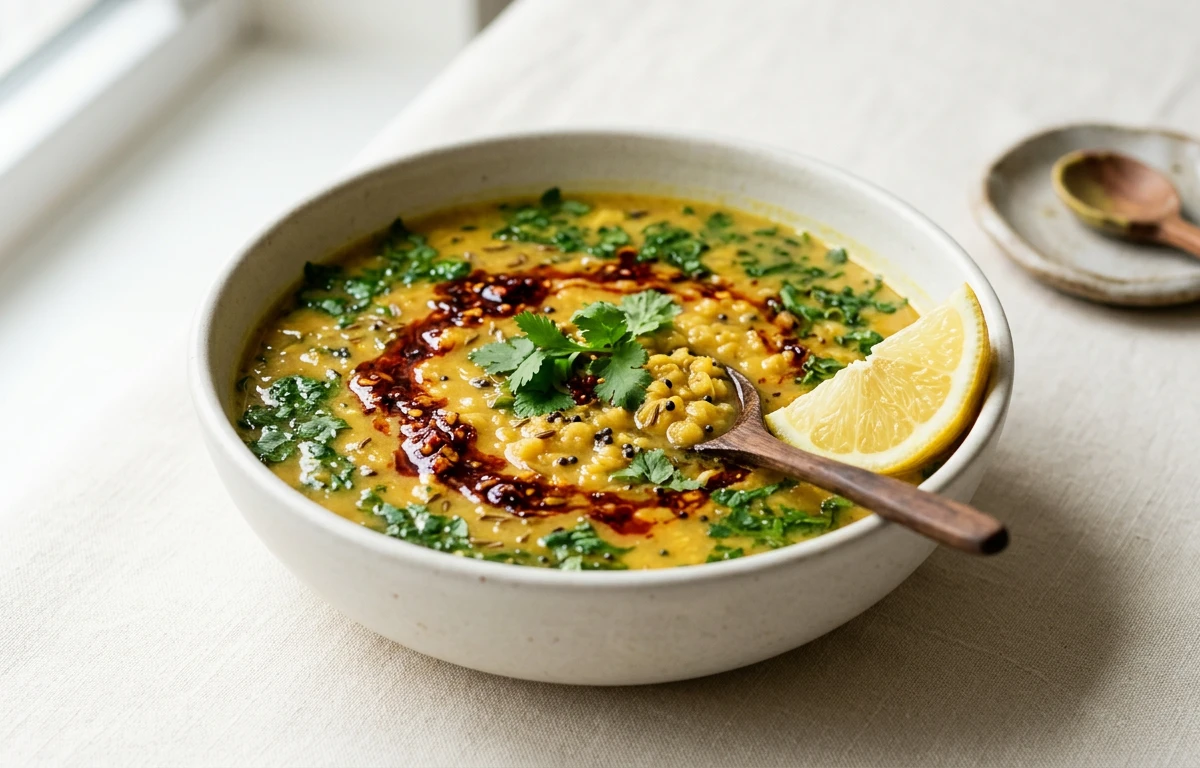
A comforting, protein-rich toor dal infused with the bright, tangy flavor of fresh Indian gooseberries. The amla is pressure-cooked right along with the lentils, then tempered with mustard seeds, cumin, and dried red chilies in ghee. Every spoonful is earthy, slightly sour, and deeply nourishing.
For 4 servings
- prep · ~2 min
Prepare the amla.
Wash the amla thoroughly. Halve each one and remove the seeds. Set aside.
- pressure cook · ~15 min
Pressure cook the dal and amla.
1.Combine washed toor dal, amla halves, turmeric powder, and 2.5 cups water in the pressure cooker.2.Close the lid and cook on medium heat for 3-4 whistles.3.Let the pressure release naturally. Open the lid and stir the dal well; the amla will be tender.TIPIf you don't have a pressure cooker, boil in a covered pot for 30-35 minutes until the dal is completely soft. - mix · ~1 min
Add salt and adjust consistency.
Add salt to the cooked dal. Stir in a little extra warm water if the dal is too thick — it should have a smooth, pouring consistency. Keep on low heat.
TIPDon't add salt before pressure cooking; it can toughen the dal skins. - temper · ~7 min
Make the tempering.
1.Heat ghee in a small tempering pan over medium heat until it shimmers.2.Add mustard seeds and let them splutter.3.Add cumin seeds, dried red chilies, asafoetida, and curry leaves. Fry for 10 seconds.4.Add crushed garlic, slit green chili, and chopped onion. Sauté until onion turns golden, about 4 minutes.5.Add chopped tomato and cook until soft and the ghee separates slightly.TIPLet the garlic turn just golden, not brown, for the best aroma. - mix · ~2 min
Pour the tempering into the dal.
Pour the hot tempering over the simmering dal. Stir well to combine everything. Let it bubble for 2 minutes so the flavors meld together.
- garnish
Garnish with coriander leaves and serve.
Turn off the heat. Sprinkle chopped coriander leaves generously on top. Serve hot with steamed rice or roti.
What to keep in mind.
7 tips from the recipe — small details that make a real difference to the final dish.
- 1Remove the central seed from each amla halve before cooking to avoid bitterness.
- 2Let the pressure release naturally so the dal and amla become perfectly tender.
- 3Do not add salt before pressure cooking; it can make the dal grains tough.
- 4Allow the garlic to turn just golden, not brown, for the best aroma in the tempering.
- 5Simmer the dal for 2 minutes after adding the tempering so the flavors meld fully.
- 6This dal thickens as it cools; stir in a splash of warm water when reheating.
- 7Store leftover amla dal in the fridge for up to 3 days; the tanginess deepens overnight.
Adapt it for your goals.
Vegan
Replace ghee with coconut oil or any neutral vegetable oil for a fully plant-based version. The tempering will still be aromatic, and the dal remains rich and tangy.
low oilLow-oil
Skip the tempering entirely and simply stir in a raw tadka of mustard powder, cumin powder, and asafoetida dissolved in a tablespoon of water. This slashes the fat while keeping the essential flavour notes.
high proteinHigh-protein
Swap half the toor dal with masoor dal (red lentils) for a different texture and a slightly higher protein content. Cook time remains similar.
jainJain
Omit the garlic and onion from the tempering. Use a pinch of asafoetida and a few curry leaves with the mustard and cumin for a Jain-friendly version that is still deeply flavorful.
Why this is on our healthy list.
Rich in Vitamin C
Fresh amla (Indian gooseberry) is one of the richest natural sources of vitamin C, which supports immune function and collagen production.
High in Plant Protein
Toor dal provides a substantial amount of plant-based protein, making this dish a satisfying, muscle-friendly meal for vegetarians.
Supports Digestion
Asafoetida and cumin in the tempering are traditionally used to aid digestion, while amla's natural acidity can stimulate digestive enzymes.
Heart-Healthy Fats
Ghee contains butyrate and healthy fats that may support gut health and provide a stable energy source when used in moderation.
Frequently asked questions
Dried amla is much more concentrated in flavor and will not soften the same way. Use 2-3 dried pieces, soak them for 30 minutes, and add them to the dal halfway through cooking to avoid excessive sourness.