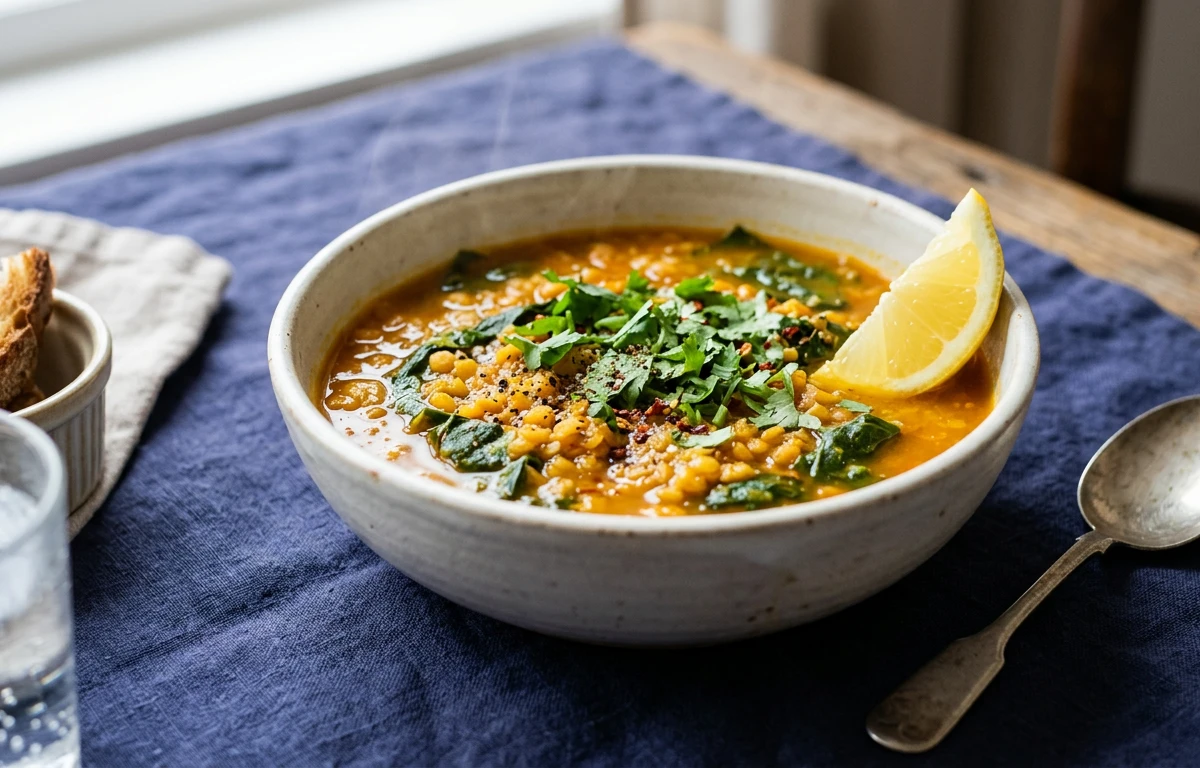
Taro Leaf and Red Lentil Soup
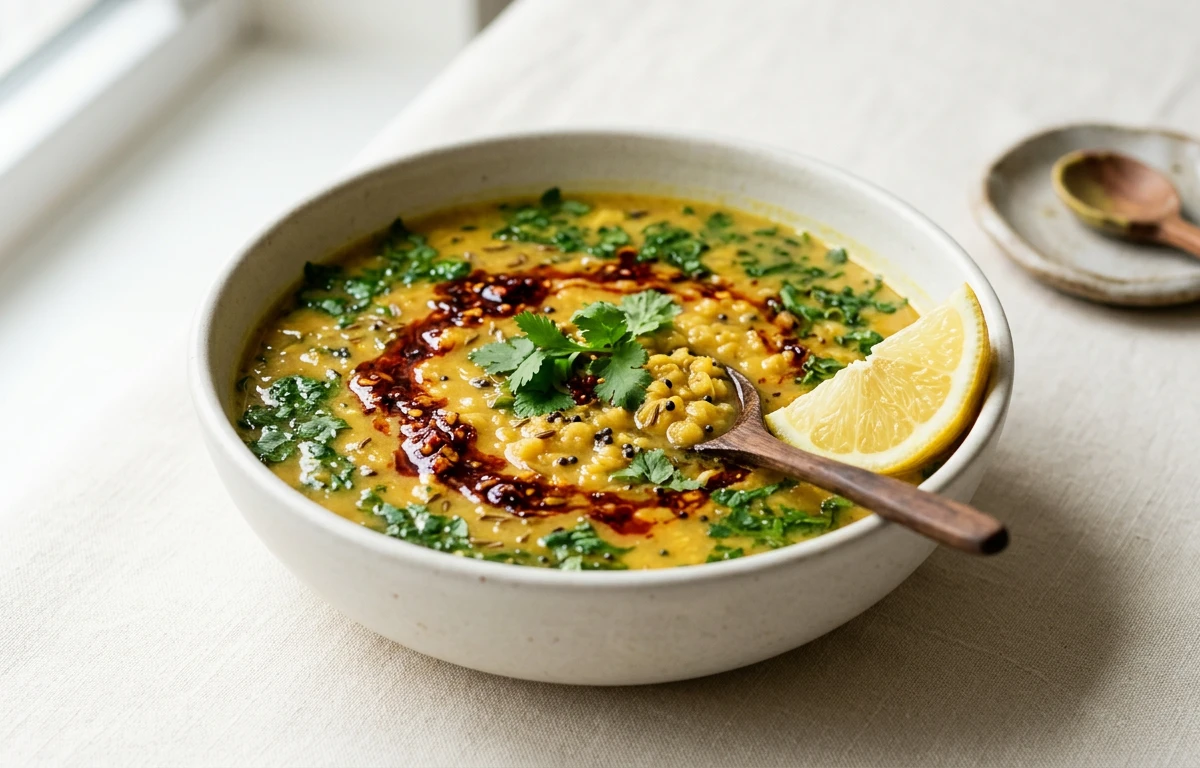
A comforting, earthy soup that pairs creamy red lentils with tender taro leaves. Gentle spices and a bright hit of lemon make this rustic bowl both nourishing and deeply satisfying on a cool evening.
For 4 servings
- prep
Prepare the taro leaves.
1.Wash the taro leaves thoroughly under running water.2.Remove the thick central stems and any fibrous veins.3.Stack a few leaves, roll them tightly, and slice into thin ribbons.4.Set the chopped leaves aside.TIPHandle taro leaves carefully — the raw leaves can cause mild itching. Washing well and cooking thoroughly neutralizes it. - pressure cook · ~15 min
Pressure cook the lentils and leaves.
1.Place the rinsed masoor dal, chopped taro leaves, salt, and turmeric powder in the pressure cooker.2.Add 3 cups of water and stir once.3.Close the lid and cook on medium heat for 3 whistles.4.Let the pressure release naturally, then open the lid and whisk the dal lightly. - temper · ~5 min
Make the tempering.
1.Heat oil in a small pan over medium heat until shimmering.2.Add mustard seeds and let them splutter (30 seconds).3.Add cumin seeds and dried red chilies, stir until fragrant (10 seconds).4.Add chopped onion and minced garlic, sauté until soft and translucent (3 to 4 minutes).TIPKeep the heat medium — garlic burns quickly and turns bitter. - saute · ~5 min
Build the tomato base.
1.Add the chopped tomato and red chili powder to the pan.2.Cook until the tomato softens and the oil starts to separate at the edges (4 to 5 minutes).3.Stir frequently to prevent sticking. - simmer · ~5 min
Combine and simmer the soup.
1.Pour the tempering mixture into the pressure-cooked dal and taro leaves.2.Stir well to combine and bring to a gentle simmer over low heat.3.Simmer uncovered for 5 minutes so the flavors meld. Adjust consistency with a splash of hot water if needed.TIPIf the soup feels too thick after resting, thin it with a little hot water until it coats the back of a spoon. - garnish
Finish with lemon and coriander.
1.Turn off the heat and stir in the lemon juice.2.Ladle into bowls and scatter chopped coriander leaves on top.3.Serve hot.TIPAdd lemon off the heat — cooking dulls its brightness.
What to keep in mind.
7 tips from the recipe — small details that make a real difference to the final dish.
- 1Always wash taro leaves thoroughly to remove any residual itch-causing compounds before cooking.
- 2Do not skip the natural pressure release — it lets the lentils and leaves finish cooking gently.
- 3For a creamier soup, mash a portion of the cooked lentils with the back of a spoon before adding the tempering.
- 4If taro leaves are unavailable, substitute with spinach or Swiss chard but reduce cooking time slightly.
- 5Make ahead: the soup keeps well in the fridge for 3 days, and the flavor deepens overnight.
- 6Stir the tempering into the dal off the heat to prevent splattering and preserve the aroma of the spices.
- 7Adjust the consistency with hot water after resting — the dal thickens as it cools.
Adapt it for your goals.
Coconut-rich
Add 1/4 cup of coconut milk at the simmering stage for a silky, mildly sweet version that balances the earthiness of taro leaves.
spicy kickSpicy kick
Add 1/2 teaspoon of garam masala and a slit green chili during the tempering for a warmer, more aromatic heat.
high proteinHigh-protein
Stir in a cup of cooked chickpeas or shredded chicken after combining the tempering for extra protein and heartiness.
Why this is on our healthy list.
Iron-Rich Greens
Taro leaves are a good source of iron, which supports healthy blood and energy levels, especially when paired with the vitamin C from lemon juice.
Plant-Based Protein
Red lentils provide a lean, digestible source of plant protein and fiber, helping to keep you full and support digestive health.
Anti-Inflammatory Spices
Turmeric and cumin offer natural anti-inflammatory properties, making this soup a comforting choice for immune support.
Frequently asked questions
Yes, whole red lentils work but will take slightly longer to cook — increase pressure cooking to 4 whistles and mash well after opening.