
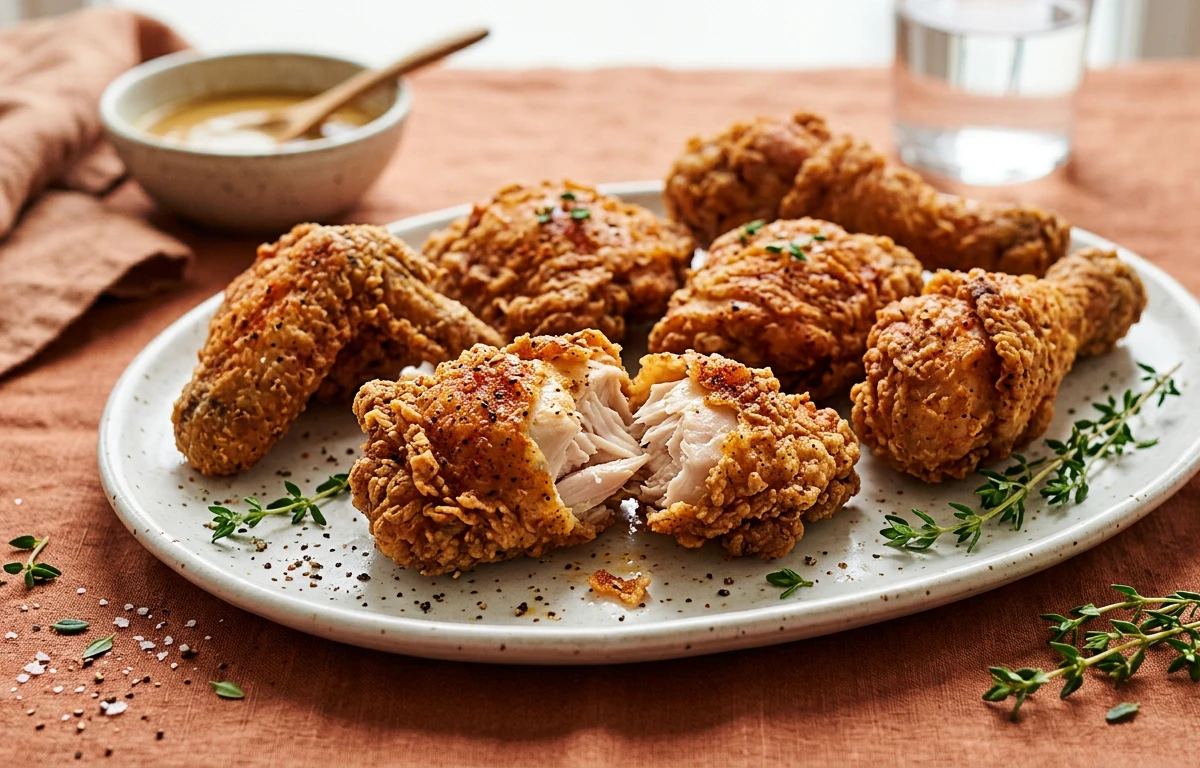
Tenderizing Buttermilk Marinade
A tangy, savory buttermilk marinade that works wonders on chicken and pork. The lactic acid gently breaks down proteins while infusing the meat with herbs and a whisper of heat. Use it for fried chicken, grilled tenders, or baked pork chops — the meat comes out juicy and deeply flavorful every time.
For 4 servings
- prep · ~2 min
Mince the garlic cloves.
Peel 4 garlic cloves and mince them finely. The smaller the pieces, the more flavor they release into the buttermilk.
- mix · ~1 min
Whisk the marinade together.
1.Pour 1 cup buttermilk into a medium mixing bowl.2.Add the minced garlic, 0.5 tsp salt, 1 pinch black pepper, 1 pinch smoked paprika, 1 tsp hot sauce, and 1 pinch onion powder.3.Whisk until everything is evenly combined and the spices are suspended in the liquid, about 30 seconds.TIPTaste the marinade and adjust salt if needed — it should be pleasantly salty but not briny. - prep · ~2 min
Transfer marinade to a bag with the meat.
1.Place up to 2 lb of chicken pieces, pork chops, or turkey cutlets into a gallon resealable bag.2.Pour the buttermilk marinade over the meat.3.Seal the bag, pressing out as much air as possible.4.Gently massage the bag to coat every piece of meat evenly.TIPFor the most tender results, let chicken marinate at least 4 hours but no more than 12 — over-marinating can make the texture mushy. - rest
Refrigerate and let the marinade work.
Place the sealed bag on a plate or shallow dish (to catch any leaks) and refrigerate. For chicken tenders or boneless breasts, 2–4 hours is enough. For bone-in pieces or pork chops, go for 6–8 hours.
TIPFlip the bag halfway through marinating so both sides get equal time in the liquid. - prep · ~1 min
Remove meat from marinade and discard excess.
Take the meat out of the bag and let the excess buttermilk drip off. Do not rinse — the thin coating left on the surface helps browning and holds seasoning. Discard the used marinade; never reuse it as a sauce.
TIPPat the meat lightly with paper towels if frying — too much surface moisture prevents a good sear.
What to keep in mind.
6 tips from the recipe — small details that make a real difference to the final dish.
- 1Always shake or stir the buttermilk before measuring, as it can separate in the carton.
- 2For the most tender results, let chicken marinate at least 4 hours but no more than 12 — over-marinating can make the texture mushy.
- 3Flip the bag halfway through marinating so both sides get equal time in the liquid.
- 4Pat the meat lightly with paper towels if frying — too much surface moisture prevents a good sear.
- 5Discard the used marinade; never reuse it as a sauce or basting liquid to avoid foodborne illness.
- 6Add a teaspoon of Dijon mustard for extra tang and emulsifying power if you like a bolder flavor.
Adapt it for your goals.
Spicy Cajun
Add 1/2 teaspoon cayenne, 1/2 teaspoon dried thyme, and 1/2 teaspoon dried oregano for a bold Louisiana-style marinade perfect for fried chicken.
Herb & LemonHerb & Lemon
Swap the hot sauce for 1 tablespoon fresh lemon juice and stir in 1 tablespoon chopped fresh rosemary or thyme for a bright, Mediterranean twist ideal for grilled chicken or pork.
Smoky ChipotleSmoky Chipotle
Replace the hot sauce with 1 teaspoon minced chipotle pepper in adobo for a smoky, moderately spicy variation that pairs beautifully with grilled pork chops.
Dairy FreeDairy-Free
Substitute buttermilk with 1 cup unsweetened almond or oat milk mixed with 1 tablespoon lemon juice or vinegar — let sit 5 minutes to thicken before adding spices.
Why this is on our healthy list.
Low in Added Sugar
Buttermilk is naturally low in sugar, and the recipe uses no added sweeteners, keeping the marinade suitable for low-sugar or ketogenic diets.
Source of Calcium
One cup of buttermilk provides about 280 mg of calcium (roughly 22% of the daily value), supporting bone health without heavy cream.
Contains Probiotics
Traditional cultured buttermilk contains live lactic acid bacteria, which can support gut health when used sparingly (though cooking mostly deactivates them).
Reduces Added Fat
Using buttermilk as a marinade allows you to cook chicken or pork with less oil than frying or pan-searing in heavy fat, while still achieving juicy results.
Frequently asked questions
Yes, but for beef steaks limit marinating to 2 hours maximum; for delicate fish (like salmon or cod) marinate only 15–30 minutes to avoid the acid making it mushy.


