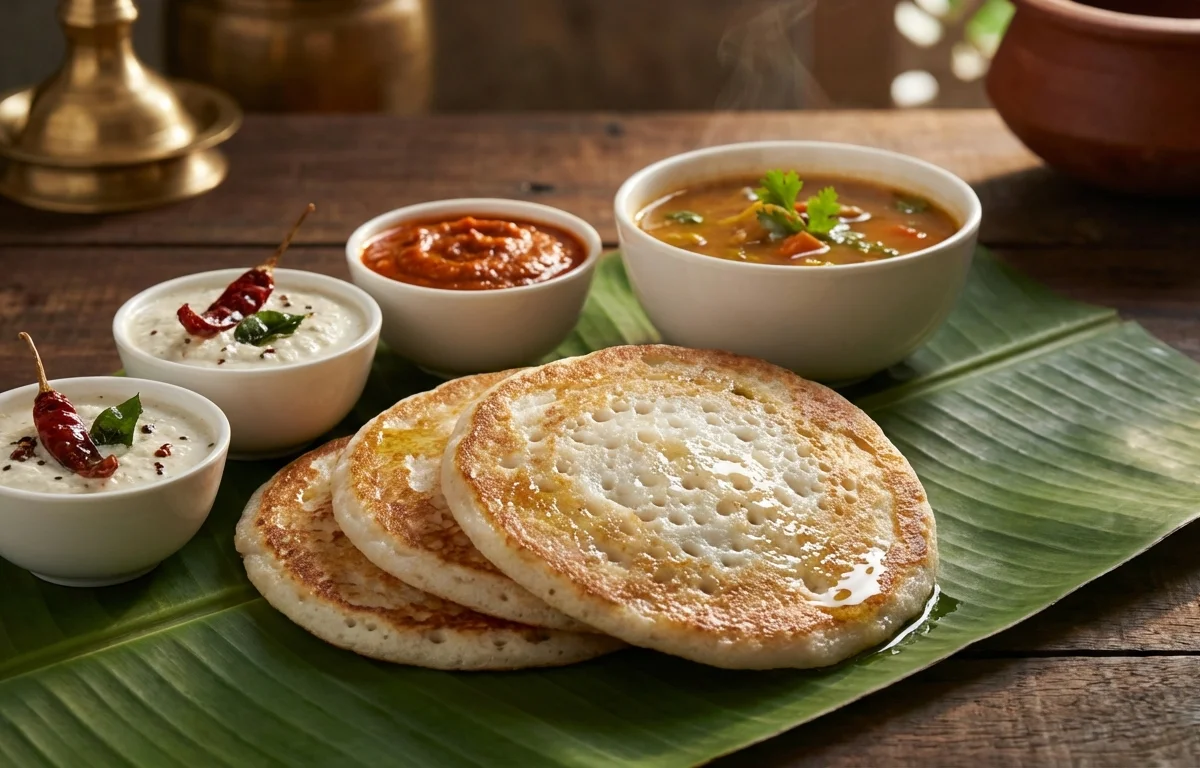
Thattu Dosa
A soft, thick South Indian dosa with a gently tangy flavor and sponge-like texture. Made from a fermented rice and lentil batter, it cooks up fluffy inside with lightly crisp edges and is perfect with chutney or sambar.
For 4 servings
- prep · ~360 min
Wash and soak the rice and lentils.
1.Rinse the idli rice 2 to 3 times until the water runs mostly clear.2.Rinse the urad dal and fenugreek seeds together in a separate bowl.3.Soak the rice in plenty of water for 6 hours.4.Soak the urad dal and fenugreek seeds in plenty of water for 6 hours.5.Soak the poha in water for 20 minutes before grinding.TIPLong soaking helps the batter grind smoother and ferment better. - mix · ~10 min
Grind the urad dal until light and fluffy.
Drain the urad dal and fenugreek seeds. Grind with a little water, adding more as needed, until the batter is smooth, airy, and slightly thick.
- mix · ~15 min
Grind the rice and poha to a smooth batter.
Drain the rice and poha. Grind them with water to a smooth batter with a slight fine grain, softer than regular dosa batter but not watery.
TIPKeep the batter thick enough to spread on its own into a small thick round. - mix · ~2 min
Combine the batters and add salt.
Transfer both batters to a large bowl. Add salt and mix well by hand for 1 to 2 minutes until fully combined and slightly aerated.
- rest · ~480 min
Ferment the batter until risen and bubbly.
Cover the bowl loosely and keep it in a warm spot for 8 hours, or until the batter looks puffy and smells pleasantly tangy.
TIPLeave enough space in the bowl because the batter will rise as it ferments. - mix · ~1 min
Stir the batter gently before cooking.
After fermentation, give the batter a light stir. If it looks very thick, add a spoon or two of water to get a pourable but thick consistency.
- fry · ~4 min
Cook the thattu dosa on a hot tawa.
1.Heat a tawa over medium heat until evenly hot.2.Lightly grease it with a little oil.3.Pour a ladle of batter in the center and let it spread slightly into a thick small round.4.Drizzle a few drops of oil around the edges.5.Cover and cook until the surface sets and the bottom turns light golden, about 2 to 3 minutes.6.Flip and cook the other side for 1 minute.TIPCook on medium heat so the center cooks through without browning too fast. - serve
Serve the thattu dosa hot.
What to keep in mind.
7 tips from the recipe — small details that make a real difference to the final dish.
- 1If your batter has not risen well, keep it in the oven with only the light on for a warmer fermentation spot.
- 2Grind the urad dal fluffy and slightly thick; this trapped air is what gives thattu dosa its soft, spongy interior.
- 3Do not spread the batter thin like regular dosa; let it settle into a small thick round for the proper texture.
- 4Covering the dosa while cooking helps the center steam and cook through before the base gets too dark.
- 5If the tawa is too hot, the batter will not settle properly; lower the heat briefly before pouring the next dosa.
- 6Stir fermented batter gently, not vigorously, so you do not knock out the air bubbles built during fermentation.
- 7Leftover batter keeps well refrigerated for 2 to 3 days; bring it closer to room temperature before making dosas.
Adapt it for your goals.
Low-oil
Use a well-seasoned cast-iron or nonstick tawa and brush on minimal oil; you still get a soft dosa with just lightly crisp edges.
more tangyMore-tangy
Ferment a little longer in cool weather for a sharper sour note, ideal if you enjoy thattu dosa with spicy chutney or sambar.
mini thattu dosaMini-thattu-dosa
Pour smaller rounds for easier flipping and quicker cooking; great for breakfast platters or serving children.
onion chiliOnion-chili
Scatter finely chopped onion, green chili, and curry leaves on top before flipping for a more savory, tiffin-style version.
Why this is on our healthy list.
Naturally Fermented Batter
The fermented rice and urad dal batter is traditionally valued for being lighter to eat and developing better flavor through natural fermentation.
Includes Lentil Protein
Urad dal adds plant protein and makes the dosa more sustaining than a rice-only batter.
Moderate Added Fat
Only a small amount of oil is used for cooking, so the richness comes more from texture than heavy fat.
Frequently asked questions
Usually the batter was under-fermented, the urad dal was not ground fluffy enough, or the dosa was cooked on heat that was too high for the center to steam properly.