
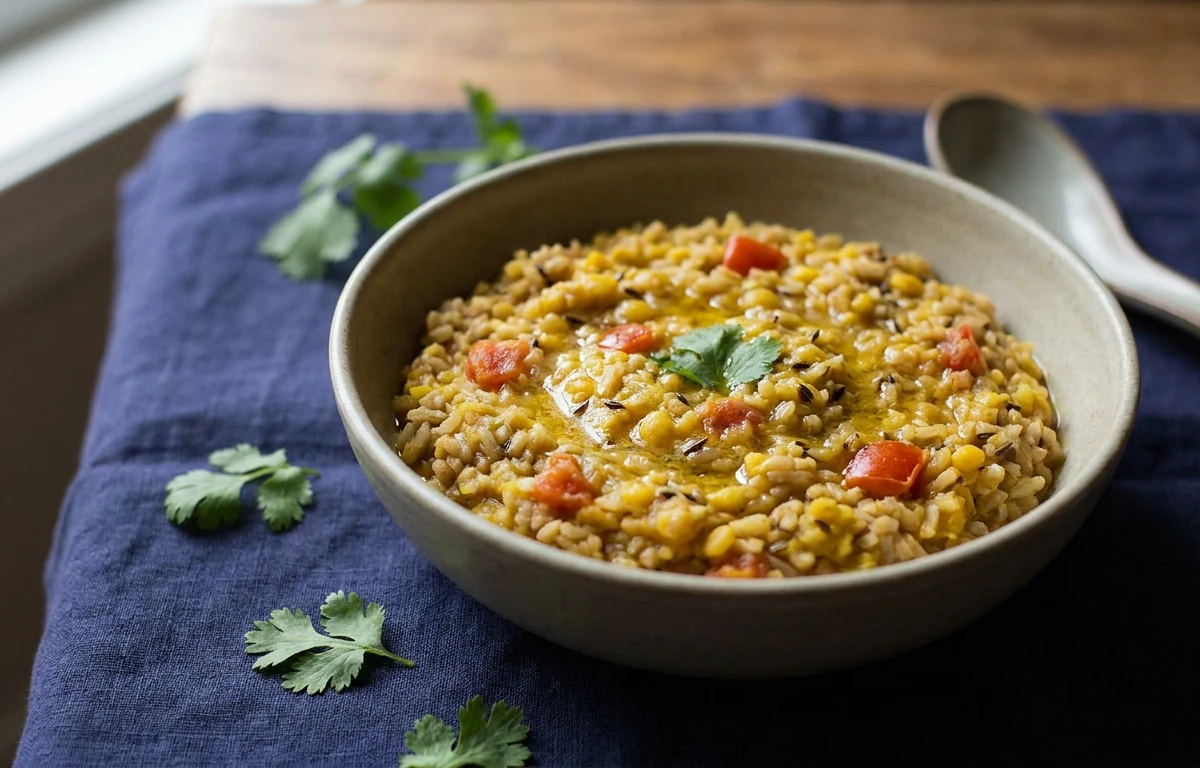
Toor Dal Khichdi
A warm, comforting one-pot meal of rice and split pigeon peas cooked together until soft and porridge-like. Lightly spiced with cumin and turmeric, this gentle Gujarati-style khichdi is easy on the stomach and perfect for a cozy lunch or dinner.
For 4 servings
- prep · ~20 min
Wash and soak the rice and dal.
1.Combine basmati rice and toor dal in a bowl.2.Wash 2-3 times with fresh water until water runs clear.3.Soak in enough water to cover for 20 minutes, then drain.TIPSoaking softens the dal and helps it cook evenly into a soft porridge. - temper · ~2 min
Make the tempering in the pressure cooker.
1.Heat ghee in a pressure cooker over medium heat.2.Add cumin seeds and let them crackle for 30 seconds.3.Add asafoetida and grated ginger. Saute for 10 seconds until fragrant.TIPKeep the heat medium — ghee burns quickly and turns bitter. - pressure cook · ~15 min
Pressure cook the khichdi.
1.Add the drained rice-dal mixture, turmeric, salt, and slit green chili.2.Pour in 4 cups of water and stir once.3.Close the lid and pressure cook on medium heat for 4 whistles.4.Let pressure release naturally before opening the lid.TIPNatural release is key — it lets the grains continue softening without burning. - mix · ~1 min
Mash and adjust consistency.
1.Open the cooker and mash the khichdi with the back of a ladle until creamy.2.If too thick, stir in a splash of hot water and simmer for 1-2 minutes.3.Whisk briskly until smooth and porridge-like.TIPWhisking well makes the texture silky — a traditional trick for soft khichdi. - garnish
Garnish with coriander and serve hot.
Ladle into bowls, top with fresh coriander leaves, and serve immediately with a dollop of ghee on top.
What to keep in mind.
7 tips from the recipe — small details that make a real difference to the final dish.
- 1Soak the rice and toor dal for at least 20 minutes to ensure even cooking and a creamy texture.
- 2Use a heavy-bottomed pressure cooker or pot to prevent the khichdi from scorching at the bottom.
- 3Let the pressure release naturally — quick release can make the grains hard and uneven.
- 4Mash the khichdi with a wooden ladle or whisk for a silky, porridge-like consistency.
- 5Adjust the water amount for your preferred consistency; add hot water if it thickens too much after cooking.
- 6Cook on medium heat during tempering — ghee burns easily and turns bitter if overheated.
- 7Serve immediately with a pat of ghee on top for authentic flavor and richness.
Adapt it for your goals.
Low-Oil
Replace ghee with 1 tsp neutral oil for tempering and skip the final ghee dollop. This reduces fat while keeping the tempering fragrant and the dish light.
High ProteinHigh-Protein
Add 1/4 cup moong dal or a handful of paneer cubes after pressure cooking. This boosts protein without altering the soft, soothing texture.
Grain FreeGrain-Free
Substitute rice with quinoa or cauliflower rice (finely grated). Quinoa adds protein; cauliflower keeps it low-carb. Adjust water to 3 cups for cauliflower.
VeganVegan
Use coconut oil instead of ghee for tempering and omit the final dollop. The result is still aromatic and satisfying for plant-based diets.
Hearty VegetableHearty Vegetable
Add 1/2 cup mixed veggies (carrots, peas, beans) along with the rice-dal mixture before pressure cooking. This makes it a complete one-bowl meal with extra fiber and vitamins.
Why this is on our healthy list.
Rich in Plant Protein
Toor dal (split pigeon peas) provides a good source of plant-based protein, essential for muscle repair and satiety.
Easily Digestible
The soft, porridge-like consistency and use of asafoetida aid digestion, making this dish ideal for sensitive stomachs or recovery.
Anti-Inflammatory Spices
Turmeric and ginger have natural anti-inflammatory properties that may support joint and immune health.
Low in Fat
With only 2 teaspoons of ghee in total, this khichdi is a low-fat meal that still delivers flavor through aromatic tempering.
Nutrient-Dense Comfort Food
Combining whole grains (rice) and legumes (dal) provides complex carbohydrates, fiber, and B vitamins for steady energy.
Frequently asked questions
You may need to reduce the water slightly, or cook for an extra whistle. Also, mashing after cooking is essential to release the starches and create a creamy texture.



.webp)
.webp)
.webp)