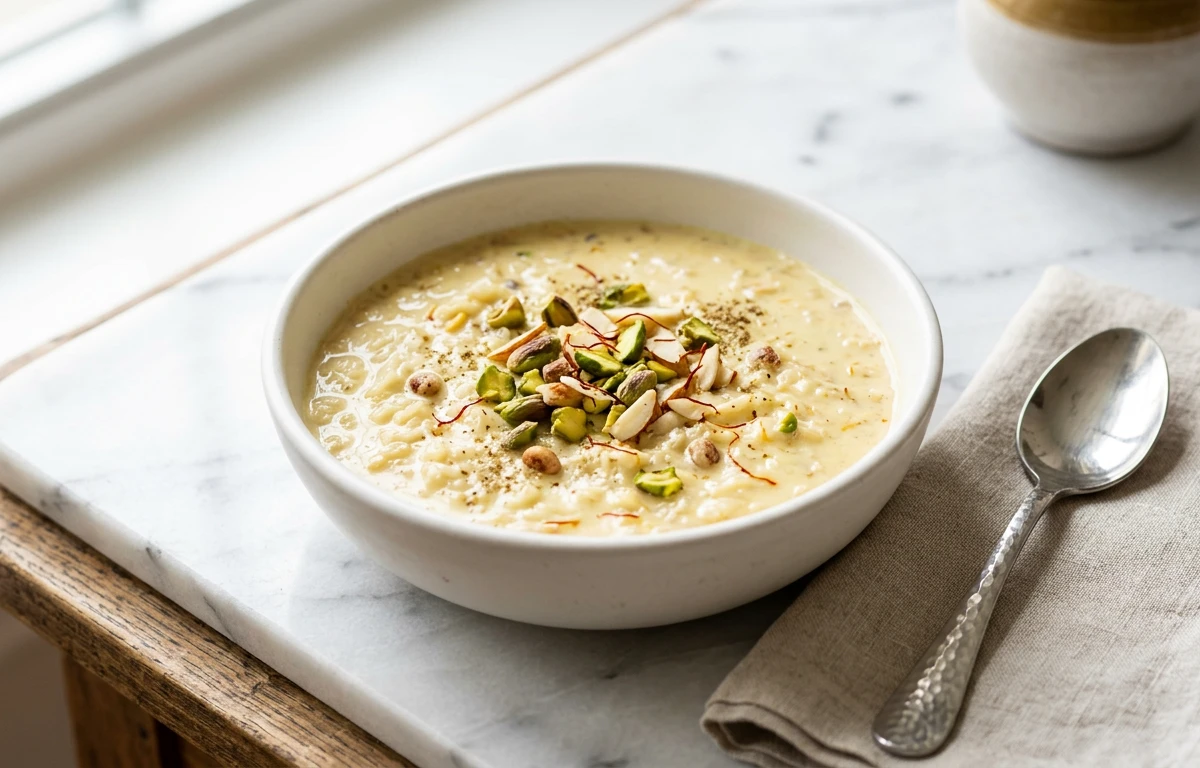
Traditional Jaggery Rice Kheer
A luscious, creamy rice pudding sweetened with earthy jaggery and fragrant with cardamom. This traditional Indian dessert comes together slowly on the stovetop, with rice simmered in full-fat milk until tender and the kitchen fills with the warm aroma of nuts and raisins. Perfect for festivals or a comforting finish to any meal.
For 4 servings
- prep
Rinse and soak the rice.
Wash the basmati rice under cold water until the water runs clear. Drain and soak in fresh water for 30 minutes, then drain completely.
TIPSoaking helps the rice cook faster and gives a creamier texture in the kheer. - boil · ~10 min
Bring the milk to a boil.
Pour the milk into a heavy-bottomed pan and place over medium-high heat. Bring it to a boil, stirring occasionally to prevent the milk from scorching at the bottom.
TIPUse a wide pan for faster evaporation and a thicker kheer. - simmer · ~30 min
Cook the rice in the milk.
Once the milk boils, reduce the heat to low and add the drained rice. Stir well and let it simmer gently, stirring every 2-3 minutes. Cook until the rice is completely soft and the milk has reduced by about a quarter, roughly 25-30 minutes.
TIPStirring frequently is essential; the milk will stick and burn if left unattended on low heat. - saute · ~2 min
Fry the nuts and raisins in ghee.
While the rice cooks, heat the ghee in a small pan over medium heat. Add the cashew nuts and sauté until golden. Toss in the raisins and fry for 30 seconds until they puff up. Remove from heat and set aside.
TIPDo not add the raisins before the cashews; they burn quickly. - simmer · ~5 min
Add jaggery and cardamom.
When the rice is cooked and the mixture looks creamy, reduce the heat to the lowest setting. Add the grated jaggery and crushed cardamom seeds. Stir continuously until the jaggery dissolves completely. Simmer for another 5 minutes; the kheer will thin slightly at first but thicken as it cools.
TIPNever add jaggery to boiling milk or it will curdle. Always lower the heat first. - mix · ~1 min
Fold in the fried nuts and raisins.
Stir in the fried cashews, raisins, and the pinch of salt. Reserve a few nuts for garnish. Turn off the heat.
- garnish
Garnish with slivered almonds and serve.
Ladle the warm kheer into serving bowls. Sprinkle the reserved nuts and fresh slivered almonds on top. Serve warm or chilled.
TIPThis kheer tastes wonderful chilled; it thickens as it cools, so add a splash of milk when serving cold if needed.
What to keep in mind.
5 tips from the recipe — small details that make a real difference to the final dish.
- 1Soak the basmati rice for 30 minutes to ensure even cooking and a creamier texture.
- 2Use a heavy-bottomed pan and stir frequently to prevent the milk from scorching.
- 3Always lower the heat before adding jaggery to avoid curdling the milk.
- 4Fry cashews first, then add raisins, as raisins burn quickly.
- 5The kheer will thicken as it cools; reserve a splash of milk to adjust consistency when serving chilled.
Adapt it for your goals.
Vegan
Replace milk with full-fat coconut milk and use coconut oil instead of ghee. This creates a dairy-free version with a tropical aroma that pairs beautifully with the jaggery.
low oilLow-oil
Skip the ghee and dry-roast the cashews and raisins in a non-stick pan. This reduces the fat content while still giving the nuts a toasty flavor.
saffron infusedSaffron-infused
Add a few strands of saffron soaked in 1 tablespoon of warm milk along with the jaggery. This lends a luxurious golden hue and floral notes, elevating the kheer for special occasions.
Why this is on our healthy list.
Rich in Calcium
Full-fat milk provides a good source of calcium, which supports strong bones and teeth.
Energy from Jaggery
Jaggery offers a source of quick energy and contains trace minerals like iron and magnesium, unlike refined sugar.
Healthy Fats from Nuts
Cashews and almonds contribute heart-healthy unsaturated fats and vitamin E, supporting skin health and overall wellness.
Frequently asked questions
Yes, you can use short-grain rice or even broken rice, but the cooking time and creaminess will vary. Basmati gives a distinct aroma and separate grains.