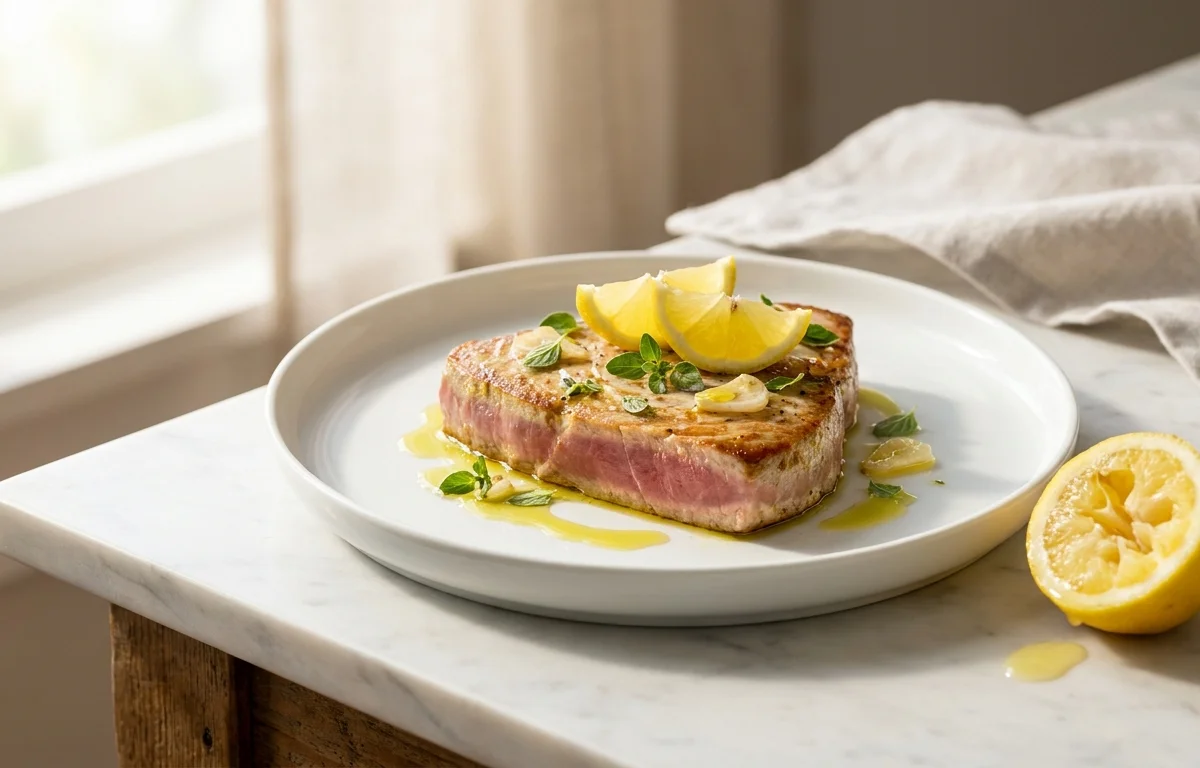
Tuna Steak with Lemon and Olive Oil
Thick, meaty tuna steaks seared to perfection with a golden crust and a tender, medium-rare center. Finished with a bright squeeze of fresh lemon and a drizzle of fruity olive oil, this simple preparation lets the natural flavor of the fish shine. Ready in under 15 minutes, it feels restaurant-quality but is easy enough for a weeknight dinner.
For 4 servings
- prep
Pat the tuna steaks dry and season.
1.Remove tuna steaks from refrigerator 20 minutes before cooking to come to room temperature.2.Pat each steak completely dry with paper towels on both sides.3.Drizzle both sides of the steaks with 1 tablespoon olive oil and rub to coat evenly.4.Season both sides generously with salt and freshly cracked black pepper.TIPDry tuna is crucial for getting a proper sear. Any moisture on the surface will steam the fish instead of browning it. - grill · ~6 min
Preheat the grill pan and sear the tuna steaks.
1.Place a grill pan or cast iron skillet over high heat and let it get screaming hot (2-3 minutes).2.Add the remaining 1 tablespoon olive oil to the pan and swirl to coat.3.Lay the tuna steaks in the pan away from you and press down gently with tongs.4.Sear undisturbed for 2-3 minutes until a golden-brown crust forms on the bottom.5.Flip the steaks, add smashed garlic cloves to the pan, and sear the other side for 2 minutes for medium-rare.TIPDon't move the tuna once it hits the pan. Letting it sit undisturbed creates that deeply browned, flavorful crust. For medium, cook 3 minutes per side. - garnish · ~2 min
Rest, slice, and finish with lemon and olive oil.
1.Transfer tuna steaks to a cutting board and let them rest for 2 minutes.2.Squeeze the juice of 1 lemon generously over the warm steaks.3.Slice each steak against the grain into ½-inch thick slices.4.Arrange on plates, drizzle with a little extra virgin olive oil, and scatter with chopped parsley.5.Serve immediately with lemon wedges on the side.TIPSlicing against the grain shortens the muscle fibers, making every bite more tender. Look for the faint lines running through the steak and slice perpendicular to them.
What to keep in mind.
6 tips from the recipe — small details that make a real difference to the final dish.
- 1Pat the tuna steaks completely dry before searing to ensure a deep golden crust.
- 2Bring the tuna to room temperature 20 minutes before cooking for even doneness.
- 3Use a screaming-hot grill pan or cast iron skillet to achieve a restaurant-quality sear.
- 4Do not move the steaks while searing; let them form a crust undisturbed.
- 5Slice against the grain after resting to maximize tenderness in each bite.
- 6Store leftover cooked tuna in an airtight container in the fridge for up to 1 day; serve cold or at room temperature.
Adapt it for your goals.
Spicy crust
Coat the tuna steaks with a mix of toasted sesame seeds, black pepper, and red pepper flakes before searing for a nutty, spicy crust that adds texture and heat.
herb marinadeHerb marinade
Marinate the tuna for 15 minutes in olive oil, lemon zest, fresh chopped dill or thyme, and a pinch of salt for a more herbaceous flavor profile.
soy sesame glazeSoy-sesame glaze
After searing, brush the tuna with a quick glaze of soy sauce, honey, and toasted sesame oil for a savory-sweet finish inspired by Japanese sashimi-style preparations.
citrus twistCitrus twist
Swap lemon for a mix of lime and orange juice and zest, and garnish with fresh cilantro or mint for a brighter, tropical variation.
Why this is on our healthy list.
Rich in Omega-3s
Tuna is an excellent source of long-chain omega-3 fatty acids (EPA and DHA), which support heart and brain health.
High-Quality Protein
A single tuna steak provides a generous amount of lean, complete protein essential for muscle repair and satiety.
Low in Saturated Fat
This recipe uses minimal oil, and tuna is naturally low in saturated fat, making it a heart-friendly protein choice.
Good Source of Selenium
Tuna is naturally rich in selenium, an antioxidant mineral that supports immune function and thyroid health.
Frequently asked questions
Yes, because the tuna is cooked to medium-rare, so using sushi-grade or at least very fresh high-quality tuna ensures safety and the best flavor.