
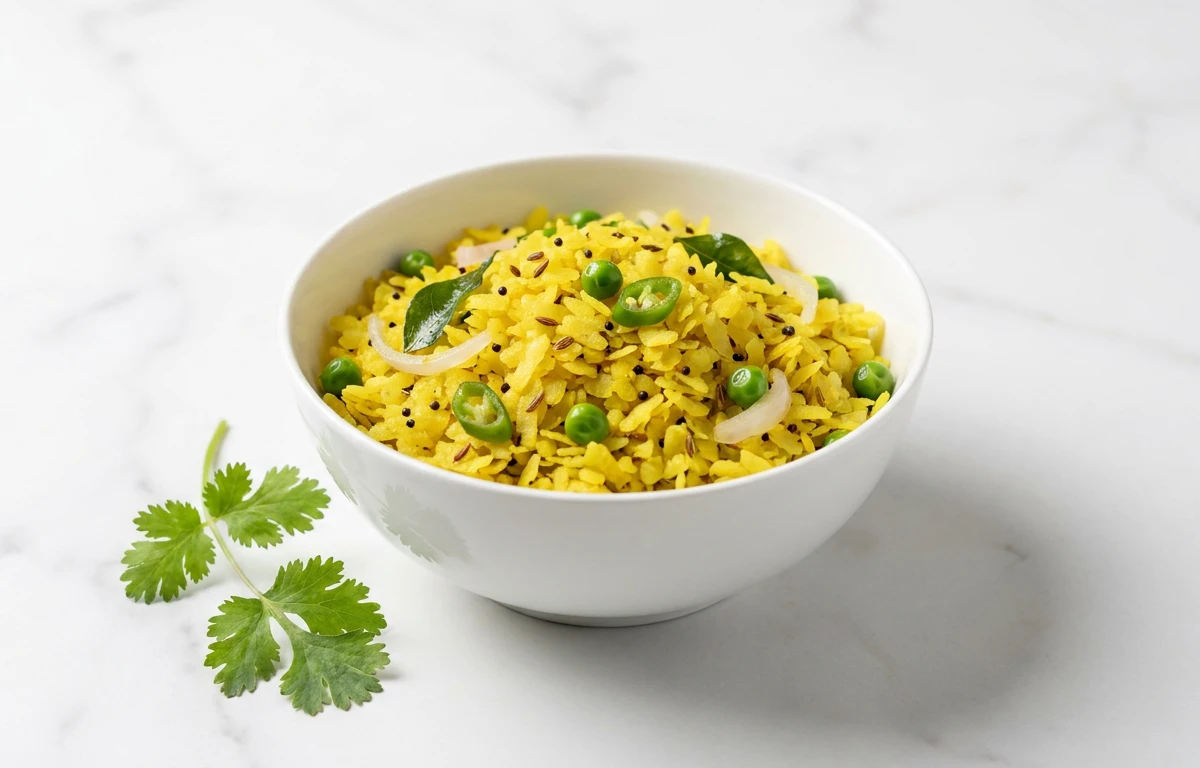
Turmeric Poha
Soft, fluffy flattened rice infused with golden turmeric and tempered with mustard seeds and curry leaves. This light, aromatic breakfast comes from the heart of Indian kitchens, ready in just 15 minutes with minimal ingredients and maximum comfort.
For 4 servings
- prep · ~3 min
Rinse and drain the poha.
1.Place poha in a colander and rinse under running water for 30 seconds.2.Let it drain completely for 3 minutes until the flakes soften but remain separate.3.Sprinkle salt and sugar over the drained poha and toss gently.TIPDon't soak poha — a quick rinse is enough. Over-soaking makes it mushy and clumpy. - temper · ~3 min
Make the tempering.
1.Heat oil in a large pan over medium heat.2.Add peanuts and stir until golden and crisp (1 minute). Remove and set aside.3.Add mustard seeds to the same oil and let them crackle (30 seconds).4.Add cumin seeds and sauté until fragrant (10 seconds).5.Drop in curry leaves and slit green chilies. Stir for 15 seconds.TIPFry peanuts first so they stay crunchy. Adding them at the end of tempering makes them soft. - saute · ~5 min
Sauté the onions with turmeric.
1.Add chopped onion to the pan and cook until translucent (3-4 minutes).2.Add turmeric powder and stir well to coat the onions evenly.3.Cook for another 30 seconds until the turmeric releases its aroma.TIPCook turmeric for at least 30 seconds in oil to remove its raw taste and bring out the golden color. - mix · ~3 min
Add poha and toss gently.
1.Add the drained poha to the pan.2.Fold everything together gently with a light hand until the poha is uniformly yellow.3.Cover and steam on low heat for 2 minutes.4.Uncover and fluff gently with a fork.TIPUse a folding motion, not stirring. Stirring breaks the delicate flakes and turns poha into a sticky mass. - garnish · ~1 min
Finish and serve hot.
1.Turn off the heat and sprinkle lemon juice over the poha.2.Add the reserved fried peanuts and toss once.3.Transfer to a serving bowl and top with grated fresh coconut and chopped coriander.4.Serve immediately with a wedge of lemon on the side.TIPAdd lemon juice off the heat — cooking it makes the dish bitter. Fresh coconut adds sweetness and a beautiful contrast.
What to keep in mind.
7 tips from the recipe — small details that make a real difference to the final dish.
- 1Use thick poha (flattened rice) — thin poha will turn mushy with just a rinse.
- 2Rinse poha in a colander, not a bowl; excess water drains away instantly.
- 3Let rinsed poha rest for 3 minutes — it softens evenly without clumping.
- 4Fry peanuts first until golden, then set aside; they stay crunchy as a topping.
- 5Cook turmeric in oil for 30 seconds to remove raw flavor and deepen color.
- 6Fold poha gently with a spatula — never stir vigorously or flakes will break.
- 7Add lemon juice only after turning off the heat to keep its fresh, bright taste.
Adapt it for your goals.
Vegan
The recipe is already vegan — skip the optional fresh coconut garnish or replace it with toasted sesame seeds for crunch.
Gluten FreeGluten-Free
Poha (flattened rice) is naturally gluten-free, so this dish is safe for gluten-sensitive eaters. Always check that curry leaves and spices are certified gluten-free.
SpicySpicy
Add 1–2 finely chopped green chilies along with the slit chilies, or sprinkle red chili powder during tempering for an extra kick.
Protein BoostProtein Boost
Double the peanuts or add a handful of boiled chickpeas or crumbled paneer after the onions are cooked for a more filling meal.
Low OilLow-Oil
Reduce oil to 1 teaspoon and dry-roast peanuts separately. Use a non-stick pan and spray oil for tempering to cut fat without losing flavor.
Why this is on our healthy list.
Light and Easy to Digest
Flattened rice is pre-cooked and requires minimal digestion, making poha a gentle option for breakfast or when recovering from illness.
Anti-Inflammatory Turmeric
A pinch of turmeric adds curcumin, known for its anti-inflammatory and antioxidant properties, even in small amounts.
Plant-Based Protein and Healthy Fats
Peanuts provide plant protein, vitamin E, and heart-friendly monounsaturated fats that help sustain energy levels.
Iron from Curry Leaves
Curry leaves contain iron and calcium, and are traditionally used in Indian cooking to boost mineral intake naturally.
Frequently asked questions
Thin poha becomes mushy very quickly. Use thick poha (sometimes labeled 'poha for chivda') and rinse only briefly for the best fluffy texture.


