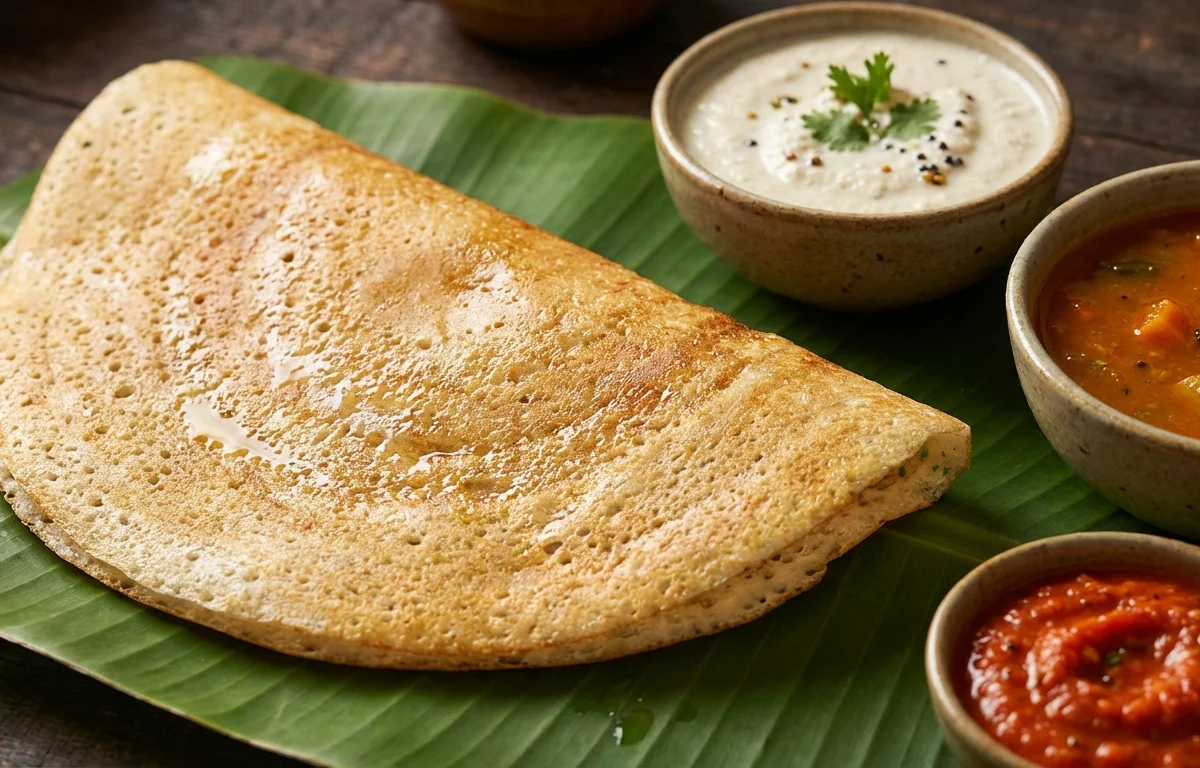
Urad Dal Dosa
Thin, crisp dosas made from a simple fermented batter of urad dal and rice. They cook up golden at the edges with a soft center, making them a classic South Indian breakfast that pairs well with chutney or sambar.
For 8 servings
- prep · ~360 min
Soak the dal and rice.
1.Wash the urad dal well and soak it with fenugreek seeds in enough water for 6 hours.2.Wash the rice well and soak it separately in enough water for 6 hours.3.Drain both completely before grinding.TIPSeparate soaking helps each ingredient grind to the right texture. - mix · ~20 min
Grind the batter.
1.Grind the urad dal and fenugreek seeds with a little water to a light, smooth batter.2.Grind the rice with a little water to a slightly grainy batter.3.Combine both batters in a large bowl and mix well with your hand for 1 minute.TIPKeep the urad batter fluffy and the rice batter slightly coarse for crisp dosas. - rest · ~480 min
Ferment the batter.
Add salt and mix well. Cover the bowl and leave the batter in a warm place for 8 hours, or until slightly risen and lightly tangy.
TIPLeave some space in the bowl because the batter expands as it ferments. - prep · ~2 min
Adjust the batter consistency.
Stir the fermented batter gently. If needed, add a little water to make a pourable batter that spreads easily but is not watery.
- fry · ~15 min
Cook the dosas.
1.Heat a flat tawa over medium heat until hot.2.Pour a ladle of batter in the center and spread it outward in a thin circle.3.Drizzle a little oil around the edges and over the top.4.Cook until the bottom turns golden and crisp and the top looks set.5.Fold or roll the dosa and remove it from the tawa.TIPIf the tawa gets too hot, sprinkle a few drops of water and wipe before pouring the next dosa. - serve
Serve the dosas hot.
What to keep in mind.
7 tips from the recipe — small details that make a real difference to the final dish.
- 1Grind the urad dal very smooth and airy, but keep the rice slightly grainy for the classic crisp-soft dosa texture.
- 2Mixing the combined batter with your hand helps kick-start fermentation and gives a better rise than a spoon.
- 3Use a large bowl for fermenting; this batter expands noticeably and can overflow overnight.
- 4If the batter becomes too thick after fermenting, add water a tablespoon at a time so it still spreads thinly on the tawa.
- 5Wipe the tawa lightly between dosas if it gets too hot, or the batter will catch and refuse to spread evenly.
- 6For crisper edges, drizzle oil mainly around the rim and cook until the surface loses all wet patches before folding.
- 7Refrigerate leftover batter once fermented and use within 2 to 3 days; stir gently before making the next batch.
Adapt it for your goals.
Low-oil
Cook on a well-seasoned cast-iron or nonstick tawa with just a few drops of oil for a lighter dosa that still crisps well.
set dosa styleSet-dosa-style
Keep the batter slightly thicker and spread less thin for softer, spongier dosas instead of very crisp ones.
masala dosaMasala-dosa
Fill the cooked dosa with a simple potato masala for a heartier breakfast or brunch version.
brown riceBrown-rice
Use brown rice in place of white rice for a nuttier flavor and a more wholesome texture, though the dosa may be slightly less crisp.
Why this is on our healthy list.
Plant-Based Protein
Urad dal adds plant protein, making these dosas more sustaining than a rice-only crepe.
Fermented and Easier to Digest
The fermented batter can be gentler on digestion and develops beneficial natural acidity and flavor.
Balanced Grain and Lentil Base
Using both rice and urad dal gives a mix of carbohydrates for energy and lentils for added nourishment.
Frequently asked questions
The batter may be too thick, the rice may have been ground too smooth, or the tawa may not be hot enough. Thin batter and an evenly heated tawa help create crisp dosas.