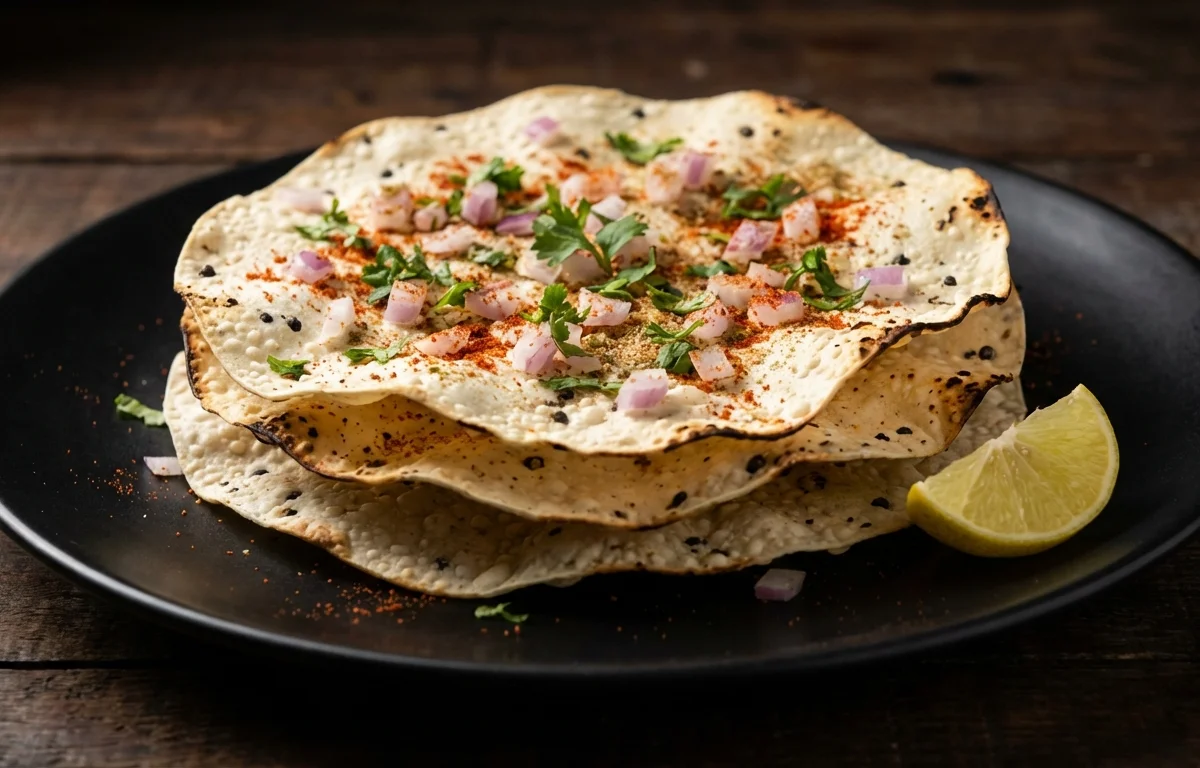
Urad Dal Papad
Thin, crisp lentil wafers made from urad dal dough, lightly spiced and sun-dried before roasting or frying. This pantry staple adds crunch and a savory bite to everyday Indian meals.
For 12 servings
- prep · ~360 min
Soak the urad dal.
Wash the urad dal well and soak it in plenty of water for 6 hours or overnight. Drain completely before grinding.
TIPDrain the dal very well so the dough stays firm enough for rolling. - mix · ~8 min
Grind the dal to a smooth paste.
1.Add the soaked urad dal to a grinder.2.Add very little water and grind to a thick, smooth paste.3.Scrape down the sides as needed to keep the paste even and fluffy.TIPUse the least water possible or the papad dough will become sticky and hard to shape. - boil · ~10 min
Cook the paste until it thickens.
1.Transfer the dal paste to a heavy pan over low heat.2.Cook, stirring continuously, until it thickens and starts leaving the sides.3.Turn off the heat once the mixture looks like a soft dough.TIPKeep the heat low and stir constantly so the mixture does not catch at the bottom. - knead · ~7 min
Knead in the spices.
1.Cool the mixture just enough to handle.2.Add black pepper, cumin seeds, asafoetida, salt, baking soda, and oil.3.Knead to a smooth, firm dough. - prep · ~15 min
Portion and flatten the papad.
1.Divide the dough into 12 equal balls.2.Lightly grease the work surface with a little oil.3.Roll each ball into a very thin round disc.TIPRoll the discs as thin as possible for papad that puffs and crisps well. - rest
Dry the papad completely.
Place the rolled papad on clean cloths or trays and sun-dry until fully dry and firm, turning once if needed. Store once completely dry or fry right away if using fresh after partial drying.
TIPAny moisture left in the papad can make it chewy instead of crisp. - fry · ~2 min
Fry the papad until crisp.
1.Heat oil for frying in a deep pan over medium heat.2.Slide in one papad at a time.3.Press lightly for a few seconds until it expands and turns crisp.4.Remove quickly and drain excess oil.TIPDo not over-fry or the papad can darken and turn bitter. - serve
Serve the urad dal papad.
What to keep in mind.
8 tips from the recipe — small details that make a real difference to the final dish.
- 1Drain the soaked urad dal very thoroughly before grinding, or the paste will stay loose and hard to roll thin.
- 2While cooking the dal paste, stir constantly on low heat until it clearly leaves the sides of the pan like soft dough.
- 3Knead the spices in while the mixture is still warm, not hot, so the dough smooths out without becoming greasy.
- 4If the dough sticks while rolling, lightly oil the board and rolling pin instead of dusting with flour.
- 5Roll each disc evenly thin; thick edges stay leathery while the center crisps too fast.
- 6Sun-dry until the papad feels completely firm and brittle, with no cool or soft spots in the middle.
- 7For frying, slide in one papad at a time and flip or press briefly so it expands without folding onto itself.
- 8Store fully dried papad in an airtight container with no moisture exposure, or they will lose their snap.
Adapt it for your goals.
Roasted
Roast the dried papad over an open flame or on a tawa instead of frying for a lighter finish with smoky flavor.
spicierSpicier
Add red chilli flakes or crushed green chilli to the dough for a hotter papad that pairs well with simple dal-rice meals.
ajwainAjwain
Replace some cumin with ajwain for a more aromatic, digestion-friendly papad with a classic North Indian touch.
garlicGarlic
Knead in a little garlic paste for a bolder savory note, especially good if serving the papad as a snack.
Why this is on our healthy list.
Protein from Urad Dal
Urad dal provides plant-based protein, making these papad more substantial than plain starch-based crisps.
Digestive Spice Support
Cumin, black pepper, and a pinch of asafoetida add flavor while traditionally helping make lentil-based foods easier to digest.
Flexible Cooking Method
Because the papad can be roasted as well as fried, you can choose a lighter preparation when serving them often.
Frequently asked questions
This usually happens if too much water was added while grinding or if the dal paste was not cooked long enough to thicken properly.