Vanilla Bean Panna Cotta
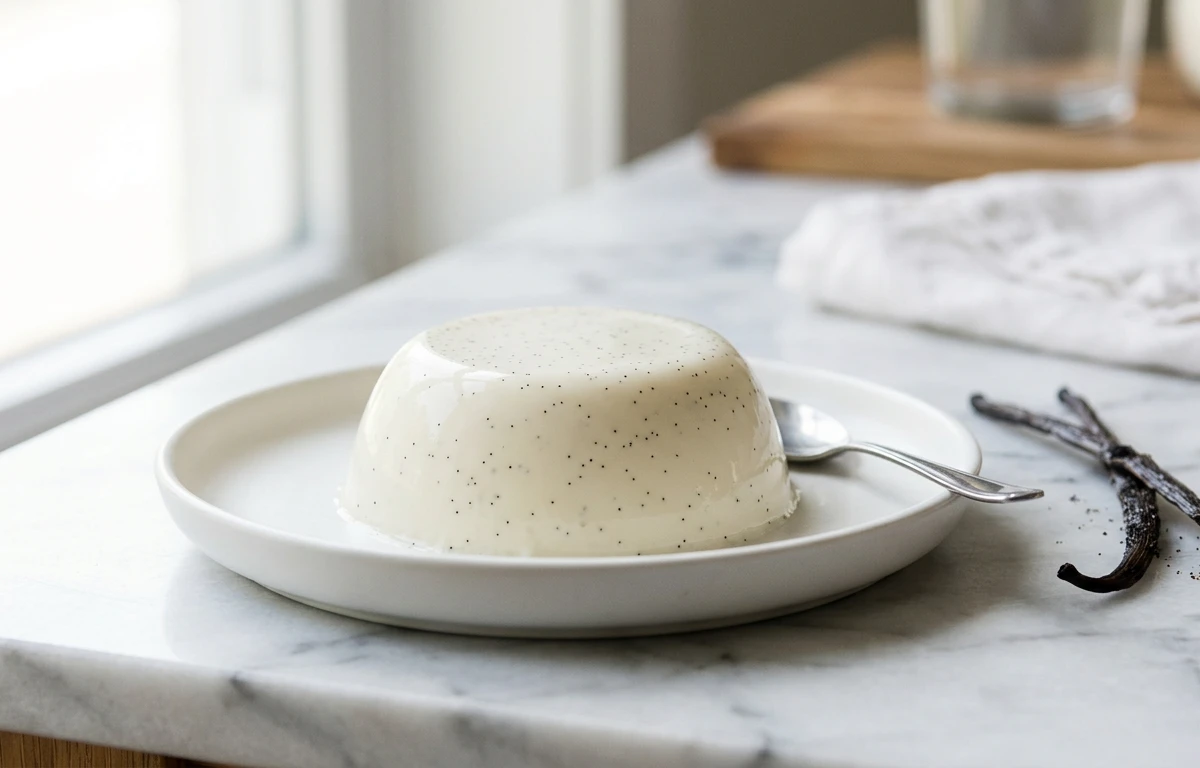
Silky, creamy Italian dessert with a delicate wobble and fragrant vanilla bean specks throughout. This elegant panna cotta sets to a perfect, spoonable texture and melts on the tongue, finished with a simple berry compote or enjoyed on its own.
For 4 servings
- prep · ~10 min
Bloom the gelatin.
In a small bowl, sprinkle gelatin powder evenly over the cold water. Let it sit for 5 to 10 minutes until the granules swell and the surface looks wrinkled and firm.
TIPNever stir gelatin during blooming — it creates lumps that won't dissolve later. - prep · ~2 min
Split and scrape the vanilla beans.
Using a paring knife, split each vanilla bean lengthwise. Scrape the sticky black seeds from both halves with the back of the knife. Reserve the pods.
- simmer · ~8 min
Warm the cream mixture.
1.Combine heavy cream, whole milk, sugar, vanilla seeds, and the scraped vanilla pods in a medium saucepan.2.Add a pinch of salt to balance the sweetness.3.Warm over medium heat, stirring occasionally, until sugar dissolves and tiny bubbles form around the edges. Do not let it boil.4.Remove from heat the moment it starts steaming heavily.TIPScalding the cream releases the vanilla bean's full aroma. Boiling will scorch the dairy and ruin the delicate flavor. - mix · ~2 min
Dissolve the bloomed gelatin.
Fish out and discard the vanilla pods. Whisk the bloomed gelatin slab into the hot cream mixture until it melts completely and no streaks remain. Strain the mixture through a fine-mesh sieve into a large measuring cup with a spout.
TIPStraining ensures a silky finish — it catches any undissolved gelatin bits and vanilla pod fragments. - assemble · ~240 min
Pour into ramekins and chill.
1.Lightly grease four 6-oz ramekins with a neutral oil or nonstick spray.2.Divide the strained cream mixture evenly among the ramekins.3.Tap each ramekin gently on the counter to release any air bubbles.4.Refrigerate uncovered for at least 4 hours, or until fully set and jiggly in the center.TIPCover only after the surface has firmed up (about 1 hour) to avoid condensation dripping onto the panna cotta. - serve · ~3 min
Unmold and serve.
1.Run a thin knife around the edge of each ramekin to loosen the panna cotta.2.Dip the bottom of the ramekin in hot water for 5 seconds.3.Invert onto a chilled dessert plate and give a firm shake until it releases.4.Top with fresh mixed berries and serve immediately.TIPIf the panna cotta refuses to release, dip again for 3-5 more seconds. Overheating will melt the delicate cream.
What to keep in mind.
6 tips from the recipe — small details that make a real difference to the final dish.
- 1Use a digital scale for gelatin powder to ensure consistent setting every time.
- 2Let the panna cotta chill at least 6 hours or overnight for the best wobble.
- 3Grease ramekins very lightly so the panna cotta slides out cleanly.
- 4Do not skip straining the cream base; it guarantees a velvety texture.
- 5If unmolding, dip ramekin in hot water no more than 5 seconds to avoid melting.
- 6For a make-ahead dessert, keep panna cotta covered in fridge up to 3 days.
Adapt it for your goals.
Citrus-Infused
Add 2 strips of lemon or orange zest to the cream while warming; remove before straining. This brightens the dessert with a fresh citrus note.
Dairy FreeDairy-Free
Substitute heavy cream and milk with full-fat coconut cream and a neutral plant milk. Use agar-agar instead of gelatin for a vegan-friendly panna cotta.
ChocolateChocolate
Whisk 2 tablespoons unsweetened cocoa powder into the warm cream mixture before adding gelatin. The chocolate deepens the richness and pairs beautifully with berries.
SpicedSpiced
Add 1 cinnamon stick and 2 cardamom pods to the cream while heating. The warm spices add complexity and make the dessert feel cozy for colder months.
Why this is on our healthy list.
Rich in Calcium
The heavy cream and whole milk provide a good natural source of calcium, which supports strong bones and teeth.
Moderate Protein Content
Dairy ingredients contribute a modest amount of protein to this indulgent dessert, making it more satisfying than many sugar-heavy sweets.
Berries Boost Antioxidants
Fresh mixed berries add vitamin C and anthocyanins, which help combat oxidative stress and inflammation.
Frequently asked questions
Too much gelatin or boiling the cream causes rubberiness. Stick to the 2¼ teaspoons and never let the mixture simmer.