
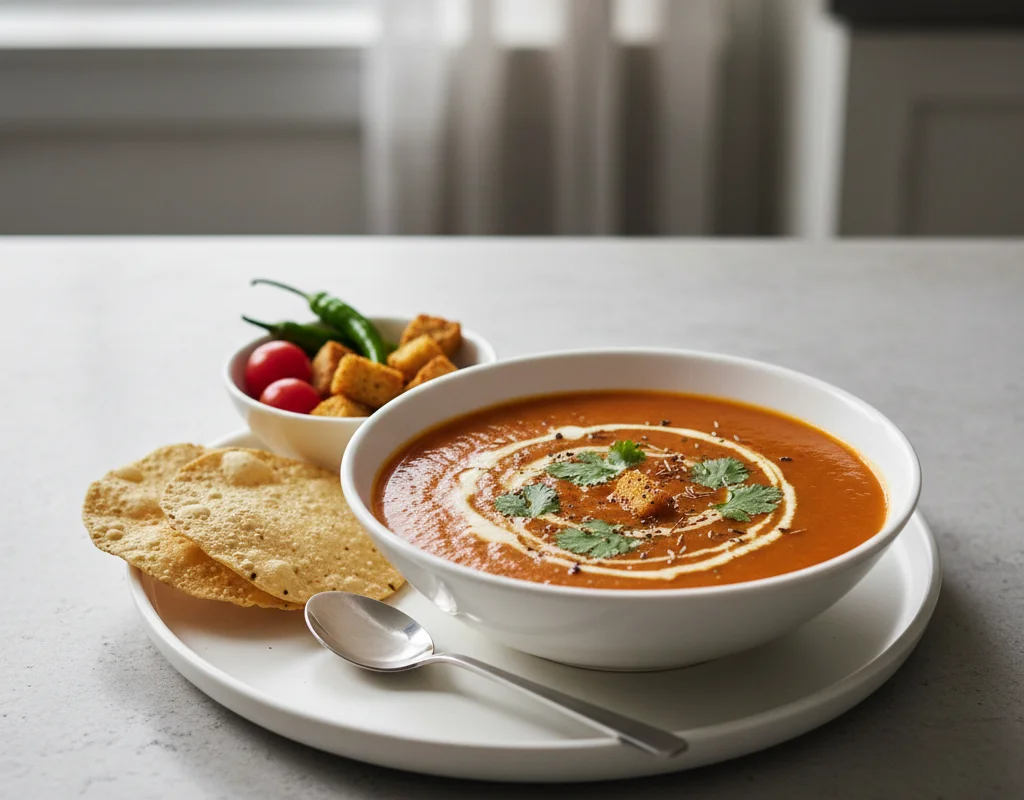
Vegan Coconut Lentil Curry
A light and flavorful South Indian lentil curry made with red lentils, spinach, and a hint of coconut milk. This wholesome and easy-to-make dal is perfect with steamed rice for a comforting meal.
For 4 servings
Cook the lentils.
In a pressure cooker, combine the rinsed masoor dal, 3 cups of water, turmeric powder, and salt. Cook for 3-4 whistles, or until the dal is soft and mushy. Let the pressure release naturally.
TIPIf you don't have a pressure cooker, you can cook the dal in a pot on the stovetop for 20-25 minutes until tender.Prepare the tempering.
- Heat the vegetable oil in a separate pan or kadai over medium heat.
- Once the oil is hot, add the mustard seeds and let them splutter.
- Add the dried red chilies, curry leaves, and a pinch of asafoetida. Sauté for 30 seconds until fragrant.
Sauté the aromatics.
- Add the finely chopped onion to the pan and sauté until it turns translucent, about 3-4 minutes.
- Add the ginger-garlic paste and cook for another minute until the raw smell disappears.
- Stir in the chopped tomatoes, red chili powder, and coriander powder. Cook until the tomatoes soften and oil begins to separate from the masala.
Combine and simmer the curry.
- Pour the cooked dal into the pan with the masala. Mix well.
- Add the chopped spinach and the light coconut milk. Stir to combine.
- Bring the curry to a gentle simmer and cook for 3-4 minutes, until the spinach has wilted and the flavors have melded together. Adjust salt if needed.
Finish and serve.
Turn off the heat. Stir in the fresh lemon juice and garnish with chopped coriander leaves. Serve hot with steamed rice or roti.
TIPAdding lemon juice at the end brightens up all the flavors and adds a fresh tang to the curry.
What to keep in mind.
4 tips from the recipe — small details that make a real difference to the final dish.
- 1For a creamier texture, you can lightly mash the cooked lentils with the back of a spoon before adding them to the masala.
- 2Ensure the mustard seeds pop completely during tempering to avoid a bitter taste.
- 3You can adjust the amount of water to achieve your desired consistency for the dal.
- 4This dal tastes even better the next day as the flavors have more time to develop.
Adapt it for your goals.
Healthy
To make it even healthier, reduce the oil to 1 teaspoon and add more vegetables like carrots or zucchini along with the spinach.
high proteinHigh protein
Stir in some cubed firm tofu or cooked chickpeas along with the spinach for an extra protein boost.
kid friendlyKid friendly
Omit the dried red chilies and reduce the red chili powder to a pinch to make it mild for children.
Why this is on our healthy list.
Rich in Plant-Based Protein
Red lentils are an excellent source of plant-based protein, which is essential for muscle repair, growth, and overall body function.
High in Dietary Fiber
The combination of lentils and spinach provides a significant amount of dietary fiber, which aids digestion, promotes gut health, and helps you feel full longer.
Good Source of Iron
Spinach and lentils are both good sources of iron, a mineral crucial for preventing anemia and maintaining energy levels.
Low in Saturated Fat
By using minimal oil and light coconut milk, this recipe is low in saturated fat, making it a heart-healthy choice.
Frequently asked questions
Yes, this curry is very healthy. It's packed with plant-based protein and fiber from lentils, vitamins from spinach and tomatoes, and uses only a small amount of light coconut milk and oil, making it low in saturated fat.


